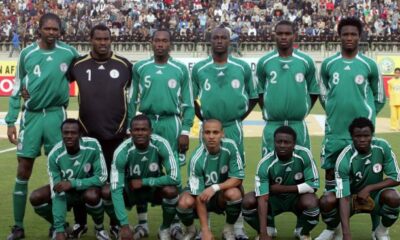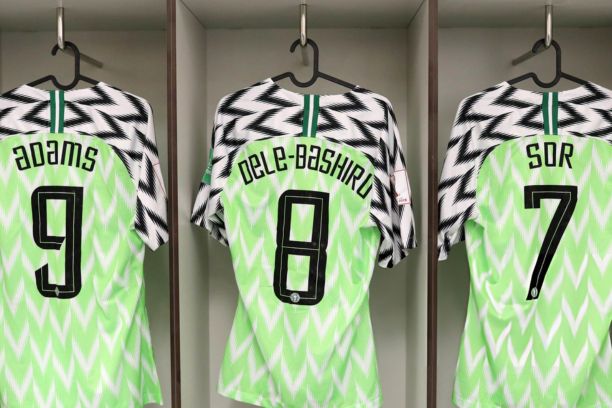
See the seven greatest Nigerian jersey designs ever made, ranked from iconic retro Super Eagles shirts to Nigeria’s unforgettable 2018 World Cup kit.
Few national teams have turned football shirts into cultural statements quite like Nigeria. From the colourful shirts of the 1990s to the globally celebrated 2018 World Cup design, the Nigerian jersey has repeatedly gone beyond football to become part of fashion, music, street culture and national identity.
The Super Eagles have worn dozens of home and away kits over the decades, supplied by brands including Adidas and Nike. Some are remembered because Nigeria produced unforgettable performances while wearing them; others became classics simply because the designs were impossible to ignore.
Today, an old Nigerian football jersey can be as attractive to football-shirt collectors as shirts belonging to some of the world’s most famous clubs.
So, which Nigeria kits truly deserve to be called the greatest?
For this ranking, we considered design originality, cultural influence, connection to memorable Super Eagles moments, longevity, collector appeal and fan reception. Football Kit Archive’s current fan ratings also provide useful context: among Nigeria’s highest-rated shirts are the 1994-95, 1996, 2018 and 2020 home kits.
We are counting backwards from number seven to the greatest Nigeria kit ever made.
Why Nigerian Football Jerseys Have Become So Iconic
Nigeria’s football identity has always been strongly connected to green and white, but the country’s greatest shirts rarely settle for simply putting those two colours together. Designers have repeatedly incorporated patterns, cultural references, unusual shades of green and visual elements inspired by the eagle.
That willingness to experiment is one reason the Nigerian jersey has developed a reputation far beyond African football.
Nigeria’s kit history is also unusual because it contains several clearly defined eras. Adidas supplied memorable designs around Nigeria’s emergence as an international force in the early 1990s.
Nike then became associated with the golden generation of the mid-to-late 1990s before Adidas returned for much of the 2000s and early 2010s. Nike came back in 2015 and eventually transformed Nigeria into arguably the most fashion-conscious national football brand in the world.
The country’s kits therefore tell a broader story. They represent Nigeria’s football achievements, but they also reflect changing ideas about Nigerian culture and how the country presents itself internationally.
Even the latest Nigeria jersey continues that approach. Nike’s 2026 home shirt uses Pine Green, Electric Green and white, while the away design takes a much more adventurous direction with green flame-inspired graphics on a white base.
Nike describes the current home shirt as continuing Nigeria’s tradition of designs capable of making a statement beyond the football field.
That is exactly what the best Nigerian kits have always done.
How We Ranked the Best Nigeria Jerseys Ever
There is obviously an element of personal preference when ranking football shirts. One supporter might choose a shirt because of its design, while another may love it because of the players or tournament associated with it.
Our ranking therefore goes beyond appearance alone.
A great Nigerian jersey should ideally combine several things: an instantly recognisable design, a meaningful connection to the national team, a strong Nigerian identity and enough staying power to still look good years after its original release.
Historical significance matters too. A beautiful shirt associated with a major Nigerian football achievement carries additional emotional weight. That is why kits connected to USA 1994, Atlanta 1996, France 1998 and Russia 2018 feature so prominently.
With those factors in mind, here are our seven greatest Nigeria football kits of all time.
Nigerian Jersey: Best 7 Kits of All Time!
- Nigeria 2018 World Cup Home Jersey
- Nigeria 1994 World Cup Home Jersey
- Nigeria 1996 Home Jersey
- Nigeria 2020 Home Jersey
- Nigeria 2020 Away Jersey
- Nigeria 1998 Home Jersey
- Nigeria 2022 Away Jersey
7. Nigeria 2022 Away Jersey
The countdown begins with one of Nigeria’s more underrated modern shirts: Nike’s 2022 away kit.
Released in September 2022, the shirt used a predominantly white base, but Nike avoided making it overly plain by introducing distinctive black graphics across the sleeves. Green details around sections of the collar and sleeve cuffs tied everything back to Nigeria’s traditional colours, while a black Nike Swoosh completed the look.
It was a particularly interesting Nigerian jersey because of the balance between simplicity and personality.
Nigeria’s modern Nike era is often associated with extremely expressive designs. The 2018 shirt was loud. The 2020 home shirt contained patterns almost everywhere. The 2022 away kit showed that Nigeria could still produce something distinctive without filling the entire shirt with graphics.
The white body gave the shirt a clean appearance, while the sleeves provided the visual personality. The result was something that worked equally well as football equipment and casual clothing.
That versatility matters when discussing modern Nigeria kits. The strongest Nigerian jersey designs are rarely shirts that look good only when worn with football shorts and socks. They are pieces supporters can combine with jeans, trainers or streetwear without looking as though they have just left a football pitch.
Football Kit Archive users have rated the 2022 away shirt above four stars, placing it among Nigeria’s stronger recent designs.
It perhaps lacks the major tournament memory required to challenge the shirts at the top of this ranking, but purely from a design perspective, it deserves recognition.
6. Nigeria 1998 Home Jersey
Nigeria arrived at the 1998 World Cup in France with one of the most exciting squads in international football.
Jay-Jay Okocha, Finidi George, Sunday Oliseh, Taribo West and several other members of Nigeria’s celebrated generation represented a team that had already announced itself on the world stage four years earlier.
Nike gave them a shirt that matched that confidence.
The 1998 home design featured a vibrant green base with contrasting white panels and distinctive white detailing on the sleeves. A white V-neck completed the straightforward late-1990s appearance.
Compared with Nigeria’s later patterned shirts, this Nigerian jersey was relatively simple. But simplicity is part of its charm.
The colour immediately identifies the Super Eagles. There are no unnecessary details competing for attention, and the classic Nike silhouette now gives the shirt exactly the kind of retro character collectors love.
Its appeal becomes even stronger when you remember what happened while Nigeria wore it.
In Nigeria’s opening match of France 1998, the Super Eagles faced a strong Spanish side containing players such as Fernando Hierro, Raúl and Luis Enrique.
Nigeria eventually won 3-2, with Sunday Oliseh scoring the famous long-range goal that decided the match. FIFA continues to celebrate Oliseh’s strike as one of the tournament’s memorable goals.
It remains one of the defining World Cup victories in Nigerian football history.
That is what transforms the 1998 shirt from a good retro kit into an important one. When supporters see it, they do not simply see green polyester and a Nike logo. They remember a fearless Nigeria side capable of defeating one of Europe’s biggest teams on football’s greatest stage.
The 1998 generation also embodied many of the qualities associated with Nigerian football at the time: skill, unpredictability, athleticism and swagger.
5. Nigeria 2020 Away Jersey
Following the enormous success of Nigeria’s 2018 collection was never going to be easy.
Instead of simply recreating the same formula two years later, Nike took Nigeria’s football identity in another direction.
The 2020 away shirt was predominantly dark green and appeared relatively restrained from a distance. Look closer, however, and the details became far more interesting.
Nike said the design drew inspiration from Onaism, an artistic movement connected to Nigerian craft and visual culture. An eagle-feather aesthetic appeared within the collar, cuffs and side detailing, giving the shirt a cultural foundation rather than relying on decoration for decoration’s sake.
That cultural connection is why this Nigerian jersey has aged so well.
The shirt does not scream for attention in the way the 2018 home kit does. Its strengths are more subtle. The deeper green gives it an elegant foundation, while the intricate detailing rewards anyone who studies the design closely.
It also demonstrates how Nike’s relationship with Nigeria changed following 2018.
Nigeria was no longer simply another national team requiring a new home and away strip every two years. The country’s kit had become an opportunity to tell stories about Nigerian identity through clothing.
That distinction matters.
When international shirts are created from standard templates, changing the crest and colours may be enough to produce something acceptable. Nigeria’s best modern designs feel different because there is usually an idea behind them.
The 2020 away kit is perhaps the clearest example of sophistication in the modern Super Eagles collection. It can be worn almost anywhere without looking excessively sporty, yet the details remain connected to the identity of the team.
Football Kit Archive currently gives the shirt an aggregate rating above four stars, further supporting its status as one of the country’s most admired modern away designs.
4. Nigeria 2020 Home Jersey
If the away shirt represented restraint, the 2020 home shirt represented the opposite.
Nike filled almost the entire front and sleeves with an intricate green-and-white hand-drawn pattern. According to Nike, the artwork drew inspiration from traditional agbada robes and included references connected to ideas such as nobility, family and destiny.
This was another Nigerian jersey designed to represent something larger than football.
Its structure immediately separated it from traditional national-team uniforms. A large white section ran through the centre, surrounded by green patterns featuring multiple shapes and shades. The Nigeria crest and Nike Swoosh were placed centrally, creating a symmetry that helped prevent the busy design from becoming visually chaotic.
The shirt felt Nigerian without simply relying on the national colours to communicate that identity.
That is an important achievement.
After 2018 became a worldwide success, the easiest commercial decision would have been to reproduce another neon-green zigzag shirt. Nike instead explored Nigerian visual traditions more deeply.
The result was a shirt that arguably contained more cultural storytelling than its famous predecessor.
Football Kit Archive currently rates the 2020 home kit at approximately 4.24 out of five from hundreds of votes, putting it among the highest-rated Nigeria shirts in its database.
It also reinforced an important principle for modern football-shirt design: heritage does not necessarily mean retro.
Designers can reference traditional clothing, art or architecture without producing something that looks old. Nigeria’s 2020 home kit was thoroughly modern, but its creative foundations were recognisably Nigerian.
Had it been attached to a historic World Cup campaign, it might be remembered even more strongly today. That lack of a defining global tournament moment is probably the main factor preventing it from challenging the top three.
As fashion, however, it remains exceptional.
3. Nigeria 1996 Home Jersey
For many Nigerian supporters, football shirts are inseparable from football memories.
Few memories are greater than Atlanta 1996.
Nigeria’s Olympic football team produced one of the most remarkable tournament runs in African football history, defeating Brazil in an extraordinary semi-final before beating Argentina 3-2 in the gold-medal match.
Nigeria thereby became the first African country to win Olympic men’s football gold. FIFA describes the achievement as a groundbreaking moment for African football.
The Nigerian jersey associated with that generation has consequently become legendary.
The Nike design featured large areas of green and white, prominent Nigeria branding and the strong geometric styling typical of mid-1990s football fashion. The 1996 home shirt is currently one of the highest-rated Nigeria shirts on Football Kit Archive, sitting at approximately 4.27 from hundreds of fan votes.
But statistics alone cannot explain the emotional value of this Nigerian jersey.
Think about the players associated with that era.
Nwankwo Kanu. Jay-Jay Okocha. Sunday Oliseh. Daniel Amokachi. Victor Ikpeba. Emmanuel Amunike. Celestine Babayaro. Taribo West.
These were not simply talented players; several would become some of the most recognisable African footballers of their generation.
The semi-final against Brazil alone would have been enough to establish the team’s mythology.
Nigeria trailed 3-1 before producing a remarkable comeback. Victor Ikpeba made it 3-2, Kanu equalised late in regulation time and then scored the golden goal in extra time to complete a 4-3 victory. Nigeria subsequently defeated Argentina in the final, with Amunike scoring the decisive late goal.
That victory changed how African football could be perceived internationally.
This Nigerian jersey therefore carries something the 2020 and 2022 designs cannot manufacture: historic achievement.
It is also still fashionable.
Retro football clothing has become increasingly popular, and the 1996 design fits naturally within that trend. Nike itself currently lists a Nigeria 1996 reissue among its Nigeria jersey products, evidence of the continuing commercial appeal of the design decades after its original appearance.
This Nigerian jersey is a combination of beautiful design, legendary players and Olympic history makes it nearly impossible to leave the 1996 kit outside the top three.
2. Nigeria 1994 World Cup Home Jersey
Before 1994, Nigeria had never played at the FIFA World Cup.
Then came the Super Eagles.
Nigeria entered USA 1994 as African champions and quickly became one of the tournament’s most entertaining teams. Their first World Cup match ended in a dominant 3-0 victory over Bulgaria, with Rashidi Yekini scoring Nigeria’s first goal in World Cup history before Daniel Amokachi and Emmanuel Amunike completed the win.
The image of Yekini holding the goal net and celebrating remains one of Nigerian football’s defining images.
And the Nigerian jersey in those memories remains instantly recognisable.
Adidas created a predominantly green home shirt with a white section around the neckline filled with distinctive black-and-green graphic motifs. Similar patterning appeared around the cuffs, producing a design that looked dramatically different from the plain national-team shirts commonly worn during the era.
This Nigerian jersey captured the personality of the team that wore it.
Nigeria were newcomers to the World Cup, but they did not behave like outsiders happy simply to participate. Their football was energetic and confident, and their kit looked equally fearless.
The 1994 design also demonstrates something that later became central to Nigeria’s kit identity: visual references capable of making the shirt feel specifically Nigerian rather than merely green.
That distinction would become increasingly important decades later.
When Nike designed the famous 2018 collection, it deliberately looked backwards at Nigeria’s earlier football identity. The manufacturer described the 2018 home shirt as containing references to the nation’s first World Cup appearance.
In that sense, 1994 helped create the design language that Nigeria would eventually take worldwide.
There is also the football context.
Nigeria had won the Africa Cup of Nations earlier in 1994 and entered the World Cup with a generation including Yekini, Okocha, Finidi, Amokachi, Amunike and Sunday Oliseh. They topped their World Cup group before narrowly losing to eventual finalists Italy in the round of 16.
The entire period represents the moment Nigeria became a genuinely global football nation.
And unlike many tournament shirts that eventually become little more than nostalgic souvenirs, the 1994 design still looks distinctive more than three decades later.
That longevity is perhaps its greatest achievement.
A great retro kit should tell you immediately which period it belongs to without looking hopelessly dated. Nigeria’s 1994 shirt does exactly that.
1. Nigeria 2018 World Cup Home Jersey
There could only be one winner.
Nigeria has produced shirts associated with greater footballing achievements, but no Nigerian jersey has ever had the worldwide cultural impact of Nike’s 2018 World Cup home kit.
It was a football shirt that became a global fashion event.
The design combined a bright green body with repeated white chevrons, while the white sleeves contained contrasting black graphics. Nike drew inspiration from earlier Nigeria designs, particularly the team’s 1994 football identity, while creating something unmistakably modern.
The result was unlike almost anything else being worn at the 2018 World Cup.
And people noticed.
Before the tournament even began, the Nigeria shirt had reportedly attracted around three million pre-orders. When it finally went on sale, supporters queued outside Nike’s flagship store in London, while online inventory disappeared rapidly.
This was no ordinary football-kit release.
It became a cultural moment.
People who barely followed the Nigerian national team wanted the shirt. Fashion publications discussed it. Football supporters from other countries admired it. The wider Naija collection expanded beyond the jersey into training wear, jackets, hats and other lifestyle pieces.
The Nigerian jersey suddenly occupied a space somewhere between football merchandise and streetwear.
That crossover is what separates 2018 from almost every other Nigeria kit.
Plenty of national teams have produced attractive shirts. Very few have created a design capable of becoming desirable independently of the team’s sporting results.
Nigeria exited the 2018 World Cup in the group stage, yet the shirt remained one of the tournament’s strongest cultural memories. That is highly unusual.
BBC Sport later included the Nigeria 2018 home shirt among its best World Cup shirts ever, describing it as a kit whose iconic reputation came largely from its cultural and fashion impact rather than a famous trophy-winning performance.
Football Kit Archive users continue to rate it extremely highly too. Its current rating sits around 4.25 out of five from more than 1,400 votes, placing it among the most popular Nigeria designs recorded on the site.
Why the 2018 Nigeria Jersey Changed Football Kit Culture
The significance of 2018 goes beyond sales.
Before that release, national-team kits were usually marketed primarily as football products. Nike’s Nigeria campaign showed how a federation collection could be treated almost like a lifestyle fashion launch.
The presentation mattered as much as the shirt.
Nigeria’s footballers were positioned alongside wider Nigerian culture. The word “Naija” appeared prominently across the collection, helping communicate a youthful and confident identity rather than simply presenting another official uniform.
The Nigerian jersey became a symbol of a broader moment in which Nigerian music, fashion and popular culture were receiving increasing international attention.
That timing helped the shirt enormously.
It was proudly Nigerian without feeling designed only for Nigerians.
Someone in London, New York, Lagos, Johannesburg or Paris could wear it because they supported the Super Eagles, because they appreciated Nigerian culture or simply because the shirt looked outstanding.
Few international football kits achieve all three.
Its design has also aged remarkably well. Many football shirts that depend heavily on unusual patterns become dated once trends move on. The 2018 Nigeria shirt still feels energetic because the graphics are so closely connected to the identity surrounding the Super Eagles.
That influence can be seen in what happened afterwards.
Nike’s 2020 designs went even deeper into Nigerian art and clothing traditions. Later kits continued experimenting with patterns, colours and lifestyle-oriented presentation. Even Nike’s description of the 2026 shirt emphasises Nigeria’s tradition of producing designs that work beyond the field.
2018 did not start Nigeria’s tradition of great kits.
But it changed expectations about what the national team’s clothing could become.
How the Nigerian Jersey Evolved From Football Kit to Fashion Statement
Looking through this ranking reveals a fascinating progression.
The 1994 and 1996 shirts became iconic largely because brilliant football teams created unforgettable memories while wearing them. The design and the sporting achievement became inseparable.
By 2018, the relationship had changed.
The Nigerian jersey itself could become the story.
Nigeria did not need to reach a World Cup final for people around the world to discuss its shirt. Clothing had become another way of projecting Nigerian identity.
That transition mirrors football culture more generally.
Retro jerseys are now everyday fashion items. Supporters combine football shirts with casual clothing, while vintage designs frequently return through official reissues and replica markets. A jersey does not necessarily disappear when the tournament ends anymore.
Nigeria is particularly suited to that environment because its strongest kits already possess characteristics associated with fashion: striking graphics, recognisable colour combinations and cultural storytelling.
The modern Nigerian Super Eagles jersey consequently represents much more than the eleven players wearing it on matchday.
It represents supporters, music, style, nostalgia and national pride.
That is why Nigeria remains one of the countries football-shirt fans watch closely whenever a new kit is announced.
What About the Latest Nigeria Jersey?
Nigeria’s kit story is still developing.
The latest Nigeria jersey collection for 2026 shows that Nike is continuing to treat the Super Eagles differently from teams receiving conservative template designs.
The home shirt uses multiple shades of green, while Nike describes the design as part of Nigeria’s tradition of football clothing that can make an impact beyond the pitch. The away kit is considerably more adventurous, using green flame graphics inspired by dirt-bike and motocross aesthetics across a white foundation.
Interestingly, the 2026 away shirt has already attracted strong fan ratings. Football Kit Archive currently places it among the highest-rated Nigeria kits in its database, although it is still too new to judge its long-term cultural impact against established classics.
That final point is important.
A new kit can look incredible on release, but becoming an all-time classic requires time.
The 1994, 1996 and 1998 shirts gained additional significance because of what happened on the football pitch. The 2018 design proved its staying power because people continued discussing and wearing it long after Russia 2018 ended.
The 2026 designs will need the same test of time.
Image Credit: GettyImages
Read more on Nigerian Jersey here!
Frequently Asked Questions About Nigerian Jerseys
What is the best Nigerian jersey of all time?
The 2018 Nigerian jersey is widely regarded as one of the greatest Super Eagles kits ever produced. Its bold green-and-white design became a global fashion phenomenon ahead of the 2018 FIFA World Cup and attracted huge international demand.
Why was the Nigeria 2018 jersey so popular?
The Nigeria 2018 jersey stood out because of its distinctive zigzag pattern, bright colours and strong connection to Nigerian culture. It crossed over from football into streetwear and fashion, making it popular even among people who were not Super Eagles supporters.
Who makes the Nigerian Super Eagles jersey?
Nike currently produces the official Nigerian Super Eagles jersey. The sportswear brand has created several memorable Nigeria kits, including the famous 1996, 2018, 2020 and more recent Super Eagles collections.
What colours are used for the Nigerian football jersey?
The traditional Nigerian football jersey primarily uses green and white, reflecting the colours of Nigeria’s national flag. Different designs have introduced darker greens, brighter shades, black detailing and distinctive patterns while maintaining the country’s identity.
Where can I buy an original Nigerian jersey?
Original Nigeria jerseys can usually be purchased through Nike’s official stores, authorised sportswear retailers and reputable football-shirt stores. When buying retro or limited-edition shirts, buyers should check the product labels, stitching and seller reputation to avoid counterfeit jerseys.
Related Articles
Super Eagles AFCON: Top 9 Historic Squads That Shaped Nigeria’s Legacy
Top 5 Greatest Super Eagles AFCON Squad – History-Making Heroes of Nigerian Football
World Cup 2026: 7 Reasons Super Eagles Failed to Qualify!
What the Super Eagles’ Recent Friendlies Reveal About Their Defense