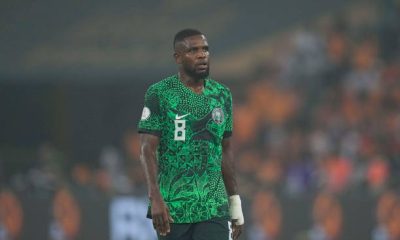
Nigeria missed World Cup 2026 despite a star-studded squad. Here are seven key mistakes that ended the Super Eagles’ qualification dream. Nigeria’s absence from the World Cup 2026 was one of the biggest disappointments in African football.
For a country with Nigeria’s football history, passionate fan base and abundance of talent across Europe’s top leagues, missing a second consecutive World Cup was difficult to accept. What made the failure even more painful was that qualification remained within reach until the final stage of the African play-offs.
The Super Eagles eventually lost to DR Congo on penalties after a 1-1 draw in the CAF play-off final in Rabat on November 16, 2025. But blaming Nigeria’s failure entirely on that penalty shootout would ignore everything that happened during the previous two years.
The journey to World Cup 2026 was damaged long before the decisive night against DR Congo.
Nigeria started the qualifying campaign poorly, changed managers during a critical period, repeatedly dropped points against teams they were expected to beat, became heavily dependent on Victor Osimhen and eventually found themselves fighting through a play-off route that could have been avoided.
Nigeria had been drawn in Group C alongside South Africa, Benin Republic, Rwanda, Zimbabwe and Lesotho. On paper, it looked manageable. Nigeria were the top seeds and had one of the strongest collections of football players in the group.
Instead, South Africa ultimately won Group C with 18 points, while Nigeria recovered late to finish second with 17 after destroying Benin 4-0 on the final day. That second-place finish earned Nigeria a place in the African play-offs rather than automatic qualification.
The comeback provided hope, but it could not erase the damage caused earlier in the campaign.
Nigeria defeated Gabon 4-1 after extra time in the African play-off semi-final, setting up a winner-takes-all meeting with DR Congo. Frank Onyeka scored after only three minutes in the final, but Meschack Elia equalised in the 32nd minute. Neither side scored again, and DR Congo eventually won the penalty shootout 4-3.
That result officially ended Nigeria’s hopes of playing at the FIFA World Cup 2026 in Canada, Mexico and the United States.
So, how did a team containing Victor Osimhen, Ademola Lookman, Alex Iwobi, Wilfred Ndidi, Samuel Chukwueze, Calvin Bassey, Ola Aina and several other established internationals fail to qualify?
Here are the seven biggest reasons.
1. Nigeria’s Terrible Start to the Qualifiers Created a Problem They Never Fully Solved
The biggest reason Nigeria failed to qualify for World Cup 2026 can be traced back to the very beginning of the campaign.
World Cup qualification is usually about consistency. Teams do not necessarily need to dominate every opponent, but they cannot repeatedly waste opportunities against supposedly weaker sides.
Nigeria did exactly that.
Their first qualifier should have provided a comfortable starting point. Instead, Nigeria were held to a 1-1 draw by Lesotho in Uyo in November 2023. Lesotho were among the lowest-ranked teams in Group C, making this exactly the type of home fixture Nigeria needed to win.
Things did not improve four days later.
Nigeria travelled to Rwanda to face Zimbabwe and again drew 1-1. Two matches that could realistically have produced six points had yielded only two.
CAF’s official fixture records confirm that Nigeria opened the campaign with consecutive 1-1 draws against Lesotho and Zimbabwe.
Those dropped points immediately reduced the margin for error.
When qualification resumed in June 2024, Nigeria faced South Africa in Uyo. It was a more difficult fixture, but home advantage again made victory important. Nigeria could only manage another 1-1 draw.
Three games. Three draws.
Then came the result that turned a disappointing start into a genuine crisis.
Nigeria faced Benin Republic in Abidjan and took the lead through Raphael Onyedika. But Benin recovered to win 2-1 through goals from Jodel Dossou and Steve Mounié. After four qualifiers, Nigeria had accumulated only three points.
Three points from a possible 12 was disastrous for a team expected to win the group.
This is important when analysing the failure because Nigeria’s later performances showed that the squad was capable of producing better results.
The problem was that the recovery started when the team was already chasing everyone else.
By March 2025, Nigeria finally recorded their first victory, defeating Rwanda 2-0 away with Osimhen scoring twice. Yet even after that victory, Nigeria were only fourth in Group C with seven points after five matches.
That is an extraordinary position for a country with Nigeria’s squad depth.
Every subsequent World Cup 2026 qualifier became almost a knockout match.
Instead of controlling qualification from the beginning, Nigeria spent the rest of the campaign calculating permutations, checking other results and hoping rivals would drop points.
South Africa’s eventual three-point deduction for fielding an ineligible player temporarily reopened the race. FIFA awarded Lesotho a 3-0 victory after ruling that Teboho Mokoena should not have played in their March 2025 encounter.
Nigeria were effectively handed another opportunity.
They still could not win the group.
Had Nigeria defeated Lesotho or Zimbabwe during the opening window, the entire qualification story could have been different.
Those early draws were not harmless mistakes.
They ultimately became some of the most expensive dropped points in recent Nigerian football history.
2. Coaching Instability Disrupted the Entire Qualification Campaign
Successful national teams usually have something Nigeria lacked for much of the qualification period: continuity.
Nigeria went through significant managerial uncertainty while attempting to reach World Cup 2026.
José Peseiro started the qualifying campaign and oversaw the disappointing draws against Lesotho and Zimbabwe.
Yet only a few months later, Nigeria’s football mood completely changed.
Peseiro guided the national team to the final of the Africa Cup of Nations in Côte d’Ivoire, where Nigeria lost 2-1 to the hosts. Despite reaching the final, his contract ended and he left the position in March 2024.
The Nigeria Football Federation then appointed former Ajax winger Finidi George.
Finidi had been Peseiro’s assistant, so there was an argument that his appointment could provide continuity. Instead, his time in charge became remarkably short.
His first two qualifiers as permanent coach produced the 1-1 draw with South Africa and the damaging 2-1 defeat against Benin.
Within weeks, Nigeria were changing direction again.
ESPN reported that the NFF decided to bring in an expatriate technical adviser following those poor results, and Finidi subsequently resigned.
Nigeria therefore entered a crucial period without the long-term coaching structure expected of a country chasing qualification for the FIFA World Cup.
More importantly, valuable time was lost.
Eric Chelle was not officially appointed until January 2025. CAF confirmed that his immediate responsibility was to rescue a qualification campaign already in serious trouble.
By then, Nigeria had played four games and collected just three points.
Chelle improved the results significantly.
Nigeria became more aggressive, more purposeful and ultimately recovered sufficiently to finish second. CAF later noted that the team recorded four wins and two draws across Chelle’s six group qualifiers.
That improvement actually strengthens the argument that managerial instability was costly.
Imagine if Nigeria had found that stability earlier.
Different managers naturally have different tactical preferences, training methods, player selections and ideas about how the team should attack.
Peseiro’s Nigeria became particularly comfortable playing a pragmatic system during AFCON. Finidi publicly talked about finding a different balance between attack and defence. Chelle subsequently brought his own emphasis on pressing, transitions and tactical flexibility.
Constant changes meant the players repeatedly had to adjust.
International football provides very little training time. A national-team coach may only have a few days with players before an important World Cup match.
That makes continuity even more important.
A club manager can spend weeks implementing a system. A national-team coach cannot.
Nigeria entered one of the most important qualification campaigns in its history without enough managerial stability, and the consequences appeared on the pitch.
3. Too Many Points Were Dropped in Matches Nigeria Should Have Won
There is a straightforward principle in World Cup qualifying: beat the teams you are expected to beat.
Nigeria failed to do that often enough.
This was perhaps the most frustrating aspect of the World Cup 2026 campaign.
Nobody should expect Nigeria to win every international match. African qualification has become considerably more competitive, and smaller football nations are better organised than they were decades ago.
However, qualification favourites must consistently convert superiority into points.
Consider the matches against Lesotho and Zimbabwe.
Nigeria drew 1-1 with Lesotho at home.
Nigeria drew 1-1 with Zimbabwe away.
Later, after finally defeating Rwanda in March 2025, Nigeria returned home to face Zimbabwe in Uyo.
Victor Osimhen scored in the 74th minute and Nigeria appeared ready to collect three valuable points.
Then Tawanda Chirewa equalised in the 90th minute.
Another 1-1 draw.
CAF described the result as a major blow to Nigeria’s qualification hopes, leaving the country well behind South Africa in the group.
That single late goal became enormously important.
Nigeria ultimately finished Group C one point behind South Africa.
One point.
Looking backwards therefore becomes unavoidable.
Turn just one of the draws against Lesotho or Zimbabwe into a victory and Nigeria would have collected two additional points.
The calculations would have changed completely.
That is why qualification was not lost solely in the DR Congo shootout.
It was gradually surrendered across several matches.
The strongest teams understand that qualification campaigns are usually decided by accumulated efficiency.
South Africa demonstrated this better than Nigeria.
Even after FIFA deducted three points for the use of an ineligible player, Bafana Bafana still finished first with 18 points. Nigeria finished with 17.
Nigeria’s late 4-0 demolition of Benin showed how dangerous the team could be when everything clicked.
Osimhen scored a hat-trick. Frank Onyeka added another. Nigeria overturned the goal-difference situation and jumped into second place.
But that explosive performance also raised an uncomfortable question.
Where had that version of Nigeria been earlier?
Had the same intensity been applied against Lesotho, Zimbabwe or Benin in previous rounds, Nigeria might have qualified automatically.
Instead, several supposedly routine games became difficult.
This is where the mentality required for qualification becomes important.
A talented squad cannot treat smaller opponents casually. Modern African football punishes teams that play slowly, fail to break compact defensive structures or assume individual quality will eventually solve the match.
For large parts of qualification, the Super Eagles looked considerably more dangerous when facing desperate situations than when they were expected to control games.
By the time that urgency became consistent, automatic qualification was almost gone.
4. Nigeria Became Too Dependent on Victor Osimhen
Every successful national team has star players.
But there is a difference between having a superstar and being dependent on one.
Nigeria crossed that line during the World Cup 2026 qualification campaign.
Victor Osimhen was easily Nigeria’s most decisive attacking player.
His speed, movement, pressing, aerial ability and finishing gave the team something no other Nigerian striker could reproduce at exactly the same level.
When Osimhen played well, Nigeria looked dramatically more dangerous.
He scored both goals in the 2-0 victory over Rwanda in March 2025.
He scored against Zimbabwe days later.
He produced the stunning hat-trick against Benin on the final day of the group stage.
Then, in the African play-off semi-final against Gabon, he scored twice in extra time as Nigeria won 4-1.
The pattern was obvious.
Nigeria’s route towards the FIFA World Cup 2026 increasingly depended on Osimhen producing decisive moments.
The problem became clear whenever he was unavailable or physically compromised.
Osimhen missed the June 2024 qualifiers against South Africa and Benin because of injury. Reuters reported before those fixtures that he had been ruled out for approximately four weeks.
Nigeria subsequently drew with South Africa and lost to Benin.
The problem resurfaced on the most important night of all.
Against DR Congo in the African play-off final, Osimhen went off at half-time. Nigeria had started well, but after losing their main striker they struggled to create meaningful attacking pressure.
DR Congo became increasingly comfortable and eventually took the game to penalties.
Having an elite striker is obviously an advantage.
The problem is when the attacking structure becomes significantly less dangerous without him.
Nigeria possessed several talented attacking football players.
Ademola Lookman had emerged as one of Africa’s outstanding forwards. Samuel Chukwueze offered one-on-one ability. Moses Simon brought pace and experience. Akor Adams, Tolu Arokodare, Cyriel Dessers and others offered different centre-forward profiles.
Yet Nigeria rarely developed an attacking identity capable of functioning at the same level regardless of who occupied the No. 9 position.
The best international teams build systems that maximise their stars without becoming completely dependent on them.
Nigeria needed more goals from midfield.
They needed more reliable combinations around the penalty area.
They needed alternative patterns for breaking down deep defensive blocks.
And they needed players other than Osimhen to consistently decide games.
The warning signs appeared throughout qualification.
Unfortunately, the final confirmation came during the biggest match of the campaign.
5. Tactical Inconsistency and Poor Game Management Cost Nigeria
Another major weakness was Nigeria’s inability to consistently control matches.
There were periods when the team looked excellent.
There were also long stretches when Nigeria possessed the ball without creating enough clear opportunities.
That inconsistency repeatedly hurt their World Cup 2026 campaign.
Football at international level is not simply about having the better individuals.
Teams need tactical relationships.
Who progresses the ball from defence?
Who operates between opposition lines?
How do the full-backs support attacks?
What happens when opponents defend with 10 players behind the ball?
How does the team protect a one-goal lead?
Nigeria did not always provide convincing answers.
The 1-1 draw against Zimbabwe in March 2025 is perhaps the clearest example of poor game management.
Osimhen scored in the 74th minute.
At that stage, qualification pressure meant the priority should have been straightforward: control the remaining minutes and take the three points.
Nigeria failed.
Zimbabwe scored in the 90th minute.
That result was particularly damaging because South Africa defeated Benin on the same day and strengthened their lead in the group.
These are the moments that separate teams that qualify from teams that spend the final rounds hoping for permutations.
Nigeria’s midfield balance also came under scrutiny.
Wilfred Ndidi, Frank Onyeka and Alex Iwobi are experienced internationals, but Nigeria sometimes struggled to consistently dictate the rhythm of matches through central midfield.
The team could be dangerous in transition, especially when Lookman, Simon, Chukwueze or Osimhen had space.
The challenge came when opponents removed that space.
Breaking organised defensive blocks requires patience, positional movement, combinations around the box and creativity between the lines.
Nigeria’s attacks sometimes became predictable: progress down the wings, deliver into the penalty area and hope individual quality produced the decisive moment.
When that failed, frustration followed.
There was also the issue of defensive concentration.
The defeat to Benin in June 2024 came after Nigeria had taken the lead.
The draw with Zimbabwe in March 2025 came after Nigeria had taken the lead.
The play-off final against DR Congo followed a similar pattern.
Frank Onyeka scored after only three minutes.
Nigeria had the perfect start to the most important World Cup match of their campaign.
Instead of using that advantage to establish control, Nigeria allowed DR Congo back into the contest, with Meschack Elia equalising in the 32nd minute. FIFA reported that DR Congo enjoyed the better spell of play for significant portions after the equaliser before the match eventually went to penalties.
That repeated inability to fully manage favourable match situations cannot be dismissed as bad luck.
It became a pattern.
6. The Recovery Came Too Late and Left Nigeria Depending on Other Teams
One of the strangest aspects of Nigeria’s qualification campaign is that the team eventually found good form.
The problem was timing.
By the time Nigeria started consistently playing like a team capable of reaching World Cup 2026, they were already chasing the group leaders.
Eric Chelle’s arrival improved results.
Nigeria defeated Rwanda 2-0 away in March 2025.
Although the Zimbabwe draw immediately slowed the momentum, Nigeria eventually defeated Rwanda again in September, with Tolu Arokodare scoring the winner.
They later defeated Lesotho 2-1 before producing their best performance of the entire campaign against Benin.
Yet Nigeria no longer controlled their destiny.
Going into the final round, Benin, South Africa and Nigeria could all still influence the qualification outcome.
Nigeria needed to beat Benin convincingly while hoping South Africa failed to get the result required against Rwanda.
Nigeria completed the difficult part brilliantly.
Osimhen scored three times as Nigeria demolished Benin 4-0.
Unfortunately, South Africa defeated Rwanda 3-0 and finished top of Group C with 18 points. Nigeria finished second with 17.
That single-point margin summarises the entire campaign.
Nigeria did enough over the closing stages to demonstrate their quality.
They simply did not do enough over the whole qualification period.
This is an important distinction.
Qualification tables do not reward late improvement more heavily than early victories.
A win in November 2023 is worth the same three points as a win in October 2025.
Nigeria behaved for too long as though there would always be another opportunity to repair the damage.
Eventually, the opportunities ran out.
Even the South African points deduction represented a huge lifeline.
FIFA’s decision transformed the standings and gave Nigeria renewed hope late in qualification. But rather than being in a position to capitalise fully, Nigeria were still forced into a complicated final-day scenario.
Finishing second meant the country had to navigate another route.
Under CAF’s format, the four best runners-up entered an African play-off tournament. Nigeria first had to beat Gabon and then defeat the winner of Cameroon versus DR Congo simply to advance to the inter-confederation play-off.
Even winning that stage would not have guaranteed qualification.
The African representative would still have needed to survive another play-off tournament for one of the final places at the FIFA World Cup.
That is a much more dangerous pathway than winning your group.
Every additional knockout game creates another opportunity for injuries, penalties, refereeing decisions, individual mistakes or one outstanding opponent performance to end the journey.
Nigeria voluntarily entered that dangerous territory by failing to take enough points earlier.
The late revival was admirable.
But it came too late.
7. Nigeria Failed to Finish the Job Against DR Congo
Ultimately, Nigeria still had an opportunity to overcome every previous mistake.
That opportunity arrived in Rabat on November 16, 2025.
Beat DR Congo and Nigeria would advance to the inter-confederation play-off.
Lose and the World Cup 2026 dream was finished.
Nigeria could hardly have asked for a better beginning.
Only three minutes into the match, Frank Onyeka’s effort found the net after taking a deflection.
Nigeria were ahead.
The atmosphere changed instantly.
After all the struggles of qualification, Nigeria were suddenly in control of the biggest match of the campaign.
But DR Congo did not panic.
The Leopards gradually imposed themselves and equalised in the 32nd minute through Meschack Elia after Nigeria failed to properly deal with a dangerous delivery from Cédric Bakambu.
Then came another major setback.
Osimhen was unable to continue after half-time.
Without him, Nigeria’s attack lost much of its threat.
DR Congo became increasingly comfortable, while Nigeria found it difficult to create the decisive opening required to avoid penalties.
Neither side scored during the second half or extra time.
The qualification campaign therefore came down to a shootout.
DR Congo coach Sébastien Desabre made an important tactical decision late in extra time, introducing goalkeeper Timothy Fayulu specifically for penalties.
It worked.
Fayulu made crucial saves and Chancel Mbemba eventually converted the decisive kick as DR Congo won 4-3. CAF and FIFA both confirmed that Nigeria’s qualification journey ended with the shootout defeat.
Penalty shootouts always contain an element of unpredictability.
But reducing Nigeria’s failure to “bad luck on penalties” would be far too convenient.
The larger question is why Nigeria were in that position at all.
Why did a team with significantly greater resources than many of its Group C opponents collect only three points from its opening four qualifiers?
Why were home matches against Lesotho and Zimbabwe not won?
Why did the national team go through managerial upheaval midway through qualification?
Why did Nigeria become so dependent on one striker?
Why was a 74th-minute lead against Zimbabwe not protected?
Why did Nigeria have to rely on South Africa dropping points and FIFA disciplinary decisions to revive automatic qualification hopes?
And why, after taking a third-minute lead against DR Congo, could Nigeria not finish the job?
Those questions provide a better explanation than the penalty shootout itself.
The defeat in Rabat was merely the final chapter of a qualification campaign filled with missed opportunities.
Nigeria Had Enough Talent to Qualify for the 2026 World Cup
That is perhaps what makes the failure especially difficult to accept.
Nigeria did not miss World Cup 2026 because the country lacked talented players.
The squad contained one of Africa’s leading strikers in Victor Osimhen and one of the continent’s most dangerous forwards in Ademola Lookman.
There was Premier League and European experience throughout the team.
Alex Iwobi, Calvin Bassey, Ola Aina, Wilfred Ndidi, Frank Onyeka, Samuel Chukwueze, Moses Simon and Stanley Nwabali provided international experience across almost every department.
This was not an underdog hoping to produce a miracle.
Nigeria entered qualification as one of Africa’s major football nations.
The expanded tournament also provided Africa with more qualification opportunities than previous editions.
CAF’s qualifying format offered nine automatic places to group winners, with an additional route available through the runners-up play-offs and inter-confederation competition.
Nigeria still could not reach the tournament.
That should force a deeper conversation about how the national team is managed.
Player quality alone is no longer sufficient in African football.
Countries such as Morocco and Senegal have demonstrated the value of long-term planning, tactical identity, coaching stability, federation structure and player development.
South Africa’s qualification from Nigeria’s own group offered another example.
Bafana Bafana were not necessarily superior to Nigeria in individual talent.
They were simply more consistent across the campaign.
Even after being deducted three points, they accumulated enough results to remain ahead.
That difference matters.
International tournaments are rarely won by collecting famous names.
They are won by creating functional teams.
Missing Consecutive World Cups Should Be a Major Warning
Nigeria’s failure to reach the tournament also created an uncomfortable piece of history.
The country missed the 2022 World Cup after losing to Ghana on away goals in the African play-offs.
Four years later, Nigeria failed again.
That means an entire eight-year World Cup cycle passed without Nigeria appearing on football’s biggest stage.
For younger supporters, it means some have barely experienced Nigeria at a World Cup.
For the players, it represents lost opportunities that cannot be recovered.
International careers are short.
A player at his peak in 2022 may no longer be at the same level by the next tournament. The same applies to 2026.
Nigeria therefore cannot simply treat qualification failure as an unfortunate sporting event and move on.
A serious review is required.
The issue should go beyond changing coaches whenever results become poor.
Nigeria needs a clear football philosophy across its national teams, better administrative planning, faster decision-making, stronger scouting and greater continuity between qualification cycles.
The country must also become better at identifying and integrating players before emergencies arise.
More importantly, Nigeria needs to rediscover the mentality that qualifying for major tournaments is a process rather than a rescue mission.
The goal should not be to wake up when elimination becomes possible.
The goal should be to dominate qualification from the opening fixture.
What Nigeria Must Learn Before the Next World Cup Qualification Campaign
There are several lessons Nigeria can take from the failure.
First, every qualifying match matters.
The idea that stronger teams can recover from early mistakes is increasingly dangerous in African football.
Second, coaching decisions must be made quickly.
A national team cannot afford months of uncertainty when qualification fixtures are approaching.
Third, Nigeria needs an attacking system that does not collapse whenever Osimhen is unavailable.
His quality should remain central to the team, but alternatives must be developed.
Fourth, game management has to improve.
Leading a qualifier late in the second half should usually produce three points.
Fifth, the national team must become more comfortable against compact opponents.
Nigeria will continue facing teams willing to defend deep, reduce space and attack on transitions. Complaining about defensive opponents is not a solution. Breaking them down is part of qualification.
Finally, Nigerian football administrators must understand that reputation provides no points.
The name “Nigeria” does not frighten opponents in the way it once might have.
Modern African teams are organised, physically prepared and increasingly populated by players competing in European leagues.
Every qualification campaign must therefore be approached with the seriousness of a major tournament.
Final Thoughts: Why Nigeria Really Missed World Cup 2026
Nigeria’s failure to qualify was not caused by one player, one manager, one penalty or one bad night.
It was the accumulated result of several mistakes.
The disastrous opening four games created immediate pressure.
Managerial instability prevented tactical continuity.
Too many points were dropped against teams Nigeria should have beaten.
The attack became overly dependent on Victor Osimhen.
Poor game management turned winning positions into draws or defeats.
The team’s strongest run arrived only after automatic qualification was slipping away.
And when one final opportunity appeared against DR Congo, Nigeria could not complete the job.
The penalty defeat was heartbreaking, but it should not become an excuse.
DR Congo simply took advantage of the opportunity Nigeria gave them.
Nigeria’s greater failure came much earlier.
For a football nation of Nigeria’s size, resources, history and talent, missing consecutive World Cups should trigger serious introspection.
The disappointment surrounding World Cup 2026 will eventually fade, but the lessons should not.
Nigeria must build a national team capable of winning qualification campaigns rather than constantly trying to rescue them.
Because when the next road to the World Cup begins, talent will once again be available.
The question will be whether Nigerian football has finally built the organisation, tactical identity, consistency and urgency required to make that talent count.
If those lessons are ignored, Nigeria risks repeating the same cycle.
If they are learned, however, the disappointment of missing World Cup 2026 could eventually become the catalyst for rebuilding a stronger, more consistent national team.
Image Credit: GettyImages
Read more on why Nigeria failed to qualify for Word Cup 2026 here!
Related Articles
The 9 Biggest Football Stadiums in Africa (Ranked!)
What the Super Eagles’ Recent Friendlies Reveal About Their Defense
How Eric Chelle is Reshaping the Super Eagles Lineup
Super Falcons Eye WAFCON Glory as Unpaid Bonus Row Clouds Title Defence