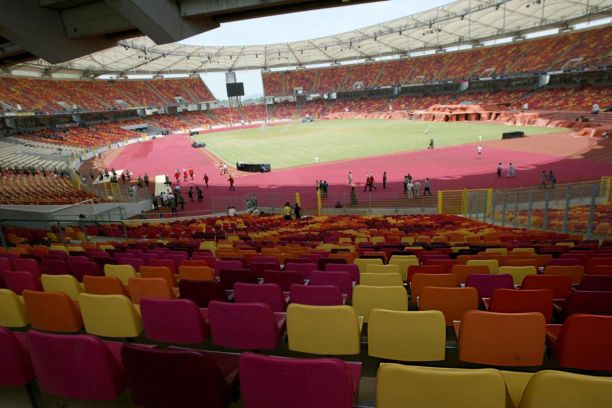
Nigeria has built some of West Africa’s most memorable sporting arenas, from the giant national complex in Abuja to historic grounds in Lagos, Ibadan and Enugu.
The biggest Nigerian stadiums are not simply rows of seats around a pitch; they are places where national-team drama, league rivalries, athletics, concerts and major public events have unfolded. This ranking looks at the 11 largest venues by their widely reported seating capacities, while also examining their history, architecture, tenants and place in Nigerian sport.
Because published capacities sometimes differ after renovations or changes in safety configuration, the figures below should be read as nominal capacities rather than a guarantee of how many spectators can be admitted for every event.
Top 11 Biggest Stadiums Across Nigeria at a Glance
Capacity is the clearest way to compare large arenas, but it does not tell the whole story. Some venues are newer and better equipped, while older grounds carry enormous historical weight. The table below gives a quick snapshot of the largest stadiums in Nigeria used or built for football and multi-sport events.
Where sources conflict, this article uses the most commonly reported contemporary figure and notes important discrepancies in the individual entry.
| Rank | Stadium | City / State | Reported capacity |
| 1 | Moshood Abiola National Stadium | Abuja, FCT | 60,491 |
| 2 | Jos International Stadium | Jos, Plateau | 60,000 (widely reported; some databases list 44,000) |
| 3 | Lagos National Stadium | Surulere, Lagos | 45,000 |
| 4 | Adokiye Amiesimaka Stadium | Port Harcourt, Rivers | 38,000 |
| 5 | Muhammadu Dikko Stadium | Katsina, Katsina | 35,000 |
| 6 | Godswill Akpabio International Stadium | Uyo, Akwa Ibom | 30,000 |
| 7 | Rojenny International Stadium | Oba, Anambra | About 30,000 |
| 8 | Confluence Stadium | Lokoja, Kogi | 25,000 |
| 9 | Obafemi Awolowo Stadium | Ibadan, Oyo | 25,000 |
| 10 | Teslim Balogun Stadium | Surulere, Lagos | 24,325 |
| 11 | Nnamdi Azikiwe Stadium | Enugu, Enugu | 22,000 |
The list also shows how widely Nigeria’s major sporting infrastructure is spread. The biggest grounds are not concentrated in one region: Abuja, Lagos, Plateau, Rivers, Katsina, Akwa Ibom, Anambra, Kogi, Oyo and Enugu all feature. That geographic reach helps explain why these major venues play different roles, from hosting the Super Eagles to serving as long-term homes for domestic clubs and community sporting events.
How We Ranked the Biggest Nigerian Stadiums
This ranking is primarily based on stated seating capacity, not on the physical size of the wider sports complex, land area, commercial value or the quality of the playing surface. That distinction matters. A 30,000-seat modern arena can provide a more polished matchday experience than an older 45,000-seat bowl, but the larger venue still ranks higher here. The list also focuses on established venues that are in use, have been used, or are commonly catalogued as football or multi-purpose stadiums.
Published capacity figures in Nigeria can be inconsistent. Lagos National Stadium is still occasionally described using its original 55,000 figure, although its capacity was later reduced to about 45,000. Jos International Stadium is often listed at 60,000, while some databases record 44,000.
Rojenny International Stadium is similarly cited at around 30,000 in several listings, while older competition records sometimes use lower operational figures. Rather than pretend those discrepancies do not exist, this guide flags them. That makes the ranking more useful for readers comparing Nigerian stadiums rather than simply repeating a single database.
1. Moshood Abiola National Stadium, Abuja – 60,491
At number one is the Moshood Abiola National Stadium in Abuja, the largest of the Nigerian stadiums by commonly reported football seating capacity. The 60,491-seat venue opened in 2003 as the centrepiece of the National Sports Complex built for the 2003 All-Africa Games. It was originally known as the National Stadium, Abuja, before being renamed in 2019 in honour of Moshood Kashimawo Olawale Abiola.
The arena was designed as a national showpiece rather than a club-specific ground. Its sweeping roof structure, athletics track, bowl-shaped seating and surrounding sports facilities made it one of the most ambitious sporting projects undertaken in Nigeria. It has hosted the national team, major athletics events, religious gatherings, political events and large ceremonies. For supporters, however, its strongest identity remains tied to big Super Eagles occasions, especially when a qualification campaign or high-profile international brings tens of thousands of fans into the capital.
The stadium’s scale also gives it symbolic weight in African football. Nigeria is one of the continent’s most successful football nations, and a national stadium of this size was meant to reflect that status. It has not always been the automatic venue for every major Super Eagles match—Uyo has frequently been preferred in recent years—but Abuja remains the country’s flagship national sports complex. When discussing the biggest football stadiums across the country, this is still the benchmark against which the others are measured.
2. Jos International Stadium, Jos – 60,000
Jos International Stadium is generally listed second, with a widely reported capacity of 60,000. That headline number places it just 491 seats behind Abuja. It is one of the more complicated entries in any ranking of Nigerian stadiums, however, because different football and venue databases have published different capacity figures, including 44,000. For that reason, 60,000 is best understood as the widely cited maximum or planned figure rather than a universally agreed matchday capacity.
The stadium is associated with Plateau State and with football in Jos, a city with a deep sporting culture and a strong tradition of producing and supporting elite talent. Plateau United have been closely linked with the venue, although the city’s stadium landscape has also included the older Rwang Pam Stadium. The newer international stadium was conceived as a larger, more modern home for major football and public events.
What makes Jos important is not just the number beside its name. Plateau State has long supplied coaches, academies and football players to the Nigerian game. A major stadium there gives the region the capacity to stage high-attendance league fixtures, continental matches and national events when the facility is fully operational. Its disputed capacity is a reminder that ranking stadiums requires context: the theoretical number, certified configuration and actual seats opened to spectators can be three different things.
3. Lagos National Stadium, Surulere – 45,000
Few Nigerian stadiums carry as much history as the Lagos National Stadium in Surulere. Built in the early 1970s, the venue originally held about 55,000 spectators and was a centrepiece of the 1973 All-Africa Games. Its later seating configuration reduced the commonly accepted capacity to around 45,000, but the stadium’s importance cannot be measured by capacity alone.
The ground is woven into the story of Nigeria’s first Africa Cup of Nations title. On 22 March 1980, Nigeria defeated Algeria 3-0 in the final in Lagos, producing one of the most celebrated nights in the country’s sporting history. The stadium later hosted matches at the 1999 FIFA World Youth Championship and the 2000 Africa Cup of Nations. For generations of supporters, Surulere was where the biggest matches happened and where the national team’s identity was forged in front of vast, noisy crowds.
The stadium fell into prolonged decline after its peak years, and its condition became a recurring national discussion. Renovation efforts have periodically tried to restore sections of the complex. Even with those challenges, it remains one of the most recognisable football stadiums in the country. Its legacy connects Nigeria’s modern football culture with an era when Lagos was the undisputed centre of major national sporting occasions.
4. Adokiye Amiesimaka Stadium, Port Harcourt – 38,000
Opened in 2015, the Adokiye Amiesimaka Stadium gave Rivers State a large contemporary venue on the outskirts of Port Harcourt. With a reported capacity of about 38,000, it sits comfortably among the biggest Nigerian stadiums. The ground was named after Adokiye Amiesimaka, a former Nigerian international who was part of the squad that won the 1980 Africa Cup of Nations.
The stadium opened with a competitive international: Nigeria beat Congo 2-1 in an Olympic qualifier in July 2015. Domestic clubs from Rivers State have also used the venue, and its broad footprint makes it suitable for more than football. Like many large Nigerian arenas, it has hosted religious and civic gatherings in addition to sporting events.
Its importance lies partly in regional balance. Port Harcourt is one of Nigeria’s largest cities and has a strong football history, so a venue of this scale gives the South-South region a platform for matches that might otherwise be concentrated in Abuja, Lagos or Uyo. The stadium’s relatively modern construction also gives it advantages in access, changing facilities and event logistics compared with several older multi-purpose grounds built decades earlier.
5. Muhammadu Dikko Stadium, Katsina – 35,000
Muhammadu Dikko Stadium in Katsina ranks fifth with a stated all-seater capacity of 35,000. The project had a long development history before it was completed and opened in 2013 as Karkanda Stadium. It was later renamed after Muhammadu Dikko, a former Emir of Katsina. Today, it is closely associated with Katsina United and is one of northern Nigeria’s largest modern sports venues.
The stadium includes football and athletics facilities and was designed to support major state and national events. Its completion provided Katsina with a venue capable of staging large NPFL crowds and high-profile fixtures. At different points it has also accommodated teams displaced from their usual home grounds, demonstrating the practical value of a large, serviceable stadium in the region.
Muhammadu Dikko stands out because it shows how state-level investment has reshaped the national venue map. Nigeria’s major stadium story is no longer only about the historic federal grounds. State governments have increasingly built or upgraded facilities to attract competitions, strengthen local clubs and create venues for ceremonies and entertainment. Katsina’s 35,000-seat stadium is one of the clearest examples of that shift.
6. Godswill Akpabio International Stadium, Uyo – 30,000
Godswill Akpabio International Stadium may be sixth by capacity, but many supporters would rank it first for modern matchday quality. The 30,000-seat venue in Uyo opened in 2014 and quickly earned the nickname “Nest of Champions.” Its distinctive exterior, covered seating, strong sightlines and high-quality pitch helped establish it as one of Nigeria’s preferred venues for major international matches.
The stadium was inaugurated with Nigeria beating Ghana 1-0 in November 2014. Since then, Uyo has hosted numerous Super Eagles qualifiers and has frequently been chosen for matches where pitch condition, crowd control and television presentation are especially important. This has allowed the venue to build a modern history at remarkable speed compared with older grounds in Lagos, Ibadan or Enugu.
The rise of Uyo shows why capacity alone cannot determine prestige. A 30,000-seat stadium that consistently provides a strong surface, modern facilities and an intense atmosphere can be more attractive to African football teams than a larger venue with ageing infrastructure. Among current Nigerian stadiums, Godswill Akpabio International Stadium arguably offers the clearest example of how design, maintenance and fan experience can matter as much as sheer size.
7. Rojenny International Stadium, Oba – About 30,000
Rojenny International Stadium in Oba, Anambra State, is one of the most unusual venues on this list because it forms part of the privately developed Rojenny Tourist and Games Village. The stadium is widely cited at around 30,000 capacity, although operational figures in older competition records have sometimes been lower. Using the commonly reported maximum puts it seventh in this ranking.
The wider complex was conceived as a recreational and sports destination, giving the stadium a different origin from federal showpieces such as Abuja or state-owned grounds such as Uyo and Katsina. It has been associated with football, athletics, police games and community events over the years. Its location near the Onitsha–Owerri corridor also places it within one of the busiest commercial zones in southeastern Nigeria.
Rojenny’s inclusion highlights an important point about Nigerian stadiums: not all of the country’s largest venues have the same institutional profile or level of international use. Some are household names because the Super Eagles play there regularly; others are large on paper but less visible to television audiences. For a capacity ranking, though, Rojenny deserves attention because several current venue lists continue to place it around the 30,000 mark.
8. Confluence Stadium, Lokoja – 25,000
Confluence Stadium in Lokoja has a reported capacity of 25,000 and serves as an important sporting hub for Kogi State. Built in the late 1990s and upgraded in the following decade, it has hosted men’s and women’s club football, including Kogi United and Confluence Queens, as well as teams using it temporarily when their own grounds were unavailable.
The venue’s name reflects Lokoja’s identity at the meeting point of the Niger and Benue rivers, while its sporting role is similarly connective: it gives north-central Nigeria a sizeable football venue outside Abuja. The stadium is multi-purpose, so it has also been used for public ceremonies, political gatherings and religious events.
For a 25,000-seat ground, atmosphere can change dramatically depending on the event. A normal league fixture may use only part of the available bowl, while a cup match, women’s football showcase or major state event can transform the same arena. That flexibility is a recurring feature of Nigerian stadiums, where facilities often serve communities in ways that go well beyond the weekly football calendar.
9. Obafemi Awolowo Stadium, Ibadan – 25,000
The Obafemi Awolowo Stadium in Ibadan is one of Nigeria’s great historic grounds. Opened in 1960 as Liberty Stadium, it was built at the dawn of Nigerian independence and became a major sports centre for the old Western Region. The stadium now carries the name of Chief Obafemi Awolowo and is generally listed with a capacity of 25,000.
Its historical importance reaches beyond domestic competition. Ibadan was a host city during the 1980 Africa Cup of Nations, staging Group B matches and Nigeria’s semi-final victory over Morocco. The stadium has also been associated with athletics, boxing and other sports, reflecting the multi-purpose philosophy that shaped many large African venues in the post-independence era.
In a list dominated by bigger or newer arenas, Ibadan’s place is secured by longevity. Generations of fans and football players have passed through the ground, and its name remains inseparable from sporting culture in Oyo State. When people discuss Nigerian stadiums as heritage sites rather than just match venues, the former Liberty Stadium belongs near the top of the conversation.
10. Teslim Balogun Stadium, Lagos – 24,325
Teslim Balogun Stadium sits beside the Lagos National Stadium in Surulere, creating one of the country’s most recognisable sporting districts. With a capacity of 24,325, it is smaller than its famous neighbour but has often been far more active in recent decades. The stadium officially opened for major events in the 2000s and was used during the 2009 FIFA U-17 World Cup.
Its importance grew as the older National Stadium became less suitable for top-level football. Teslim Balogun consequently hosted Super Eagles matches, domestic cup finals, club fixtures and other events. That practical availability made it one of Lagos’s key football venues even without the enormous historical aura of the stadium next door.
The ground illustrates how Nigerian stadiums can rise or fall in relevance independently of capacity. A smaller facility that is maintained, certified and available can become more important than a larger but underused arena. For clubs, broadcasters and supporters, reliable floodlights, a playable surface, security planning and working spectator facilities are often more valuable than another 20,000 theoretical seats.
11. Nnamdi Azikiwe Stadium, Enugu – 22,000
Nnamdi Azikiwe Stadium in Enugu completes the top 11 with a capacity of around 22,000. Known as “The Cathedral,” it is the home of Rangers International and one of the most atmospheric club grounds in the country. Its history stretches back to the late 1950s, when the site was associated with the Nigerian Railway Corporation, and it was later developed into the stadium familiar to generations of Enugu supporters.
The venue’s identity is inseparable from Rangers. Few Nigerian clubs have a stronger connection between city, supporters and home ground, and visiting teams know that a packed stadium in Enugu can create a hostile competitive atmosphere. The ground has undergone renovations at different periods and remains an important venue for domestic and continental football.
That club identity distinguishes it from several larger Nigerian stadiums built primarily for national or multi-sport events. Enugu’s stadium is not simply an arena waiting for an occasional showcase; it is part of an active football culture. In terms of emotional significance to supporters, its 22,000 seats can feel every bit as important as the much bigger bowls above it on this list.
What Makes a Great Stadium Beyond Capacity?
Size attracts attention, but the best stadium is not automatically the one with the most seats. Modern football places heavy demands on the pitch, drainage, lighting, broadcast positions, media facilities, dressing rooms, medical areas, security zoning, turnstiles, emergency routes and spectator comfort. A stadium can be enormous and still struggle to host an international fixture if those systems are not maintained to the required standard.
This is especially important for African football because national teams often move home matches between cities based on pitch quality, certification, logistics and security. Nigeria’s experience demonstrates the point clearly. Abuja is the national stadium and Lagos has the deepest historical legacy, yet Uyo has become the preferred venue for many high-stakes internationals because its facilities have generally offered a more consistent modern environment.
A strong stadium also needs a relationship with its community. Regular club football keeps a venue alive, creates local jobs and builds traditions that cannot be manufactured for a one-off tournament. Grounds used by Rangers, Katsina United or Kogi teams therefore contribute in a different way from national showpieces. The health of the country’s major grounds depends on finding a balance between large-event ambition and everyday use.
How Stadium Design in Nigeria Has Changed
Nigeria’s largest sports grounds reveal several generations of stadium thinking. Older venues such as Ibadan and Lagos were built as broad civic monuments: large concrete bowls, athletics tracks and multiple sports within the same complex. Their purpose was national or regional spectacle. They were designed to host independence-era festivals, multi-sport games and major football occasions, often with far fewer of the premium hospitality areas, television compounds and controlled-access zones expected today.
By the 2000s, stadium design had become more specialised. Abuja combined a huge national bowl with an extensive sports complex, while newer venues in Uyo, Katsina and Port Harcourt placed more emphasis on modern seating, changing rooms, media operations, floodlighting and event-day circulation. The shift also reflects changes in television. A major match is now a broadcast product as well as a live event, so camera positions, lighting consistency, interview zones, mixed zones and stable power supply are part of the stadium’s basic working infrastructure.
Another change is the growing importance of maintenance planning. A stadium can look impressive on opening day and deteriorate quickly if the pitch, roof, seats, drainage, toilets, electrical systems and access roads are not continuously funded. This is one reason modern venue management increasingly depends on year-round programming. Concerts, athletics, club matches, school competitions, conferences and community events can help keep a complex active instead of allowing it to sit idle between occasional internationals.
The next generation of Nigerian venue development will likely be judged less by opening-day capacity claims and more by operating quality. Supporters want clean seats, safe entry and exit, good sightlines, reliable transport, working facilities and a pitch that allows the game to flow. Teams want secure dressing rooms, training areas and predictable surfaces. Broadcasters need connectivity and power. Those practical details determine whether a ground becomes a living part of the sports economy or an expensive monument that is only impressive from a distance.
Why Nigeria’s Stadiums Matter to the Country’s Football Identity
Nigeria’s football story has always been tied to place. Surulere evokes the 1980 AFCON triumph. Ibadan recalls Liberty Stadium and an earlier era of national sport. Enugu is inseparable from Rangers. Uyo represents a more modern standard, while Abuja reflects the federal ambition to build a national sporting capital. Together, these venues create a physical map of the country’s football history.
They also matter to the wider continent. Nigeria has hosted major CAF and FIFA tournaments, and its large venues have welcomed some of the best African football teams across different generations. Those matches have given supporters outside Lagos and Abuja opportunities to experience international football directly, while exposing visiting players to the intensity of Nigerian crowds.
For the next era, maintenance will matter as much as construction. Building a large stadium is expensive, but allowing it to decline can be even more costly because restoration, safety upgrades and lost event revenue accumulate over time. The future of Nigerian stadiums will depend on consistent management, realistic maintenance budgets, commercially useful event calendars and clear standards for the playing surface and spectator areas.
Honourable Mentions: Large Stadiums Just Outside the Top 11
Several notable venues narrowly miss this ranking. Stephen Keshi Stadium in Asaba is widely listed at 22,000, the same capacity as Nnamdi Azikiwe Stadium, and has hosted major athletics competitions as well as football. Gateway Stadium in Ijebu-Ode and Warri Township Stadium are commonly listed around 20,000, while Kwara State Stadium in Ilorin remains another important regional venue.
There are also older capacity claims for grounds such as Ahmadu Bello Stadium, Sani Abacha Stadium and Enyimba International Stadium that differ considerably depending on the source and renovation period. This is why any list of stadiums in Nigeria should be treated as a snapshot rather than a permanent table. Seats can be removed, sections can be closed, new stands can be built, and safety certification can alter the practical matchday figure without changing the stadium’s overall footprint.
Conclusion
Nigeria’s largest stadiums tell the story of the country’s sporting ambition across more than six decades. Abuja leads on capacity, Lagos carries unmatched historical memories, Uyo represents the modern standard, while Enugu, Ibadan, Lokoja, Katsina, Port Harcourt, Jos and Anambra add their own regional identities. The most important lesson is that size should be supported by maintenance, regular use and a strong matchday experience. If those elements come together, the biggest Nigerian stadiums can remain more than giant concrete structures: they can continue to be stages where national memories are created.
Image Credit: GettyImages
Read more here: Biggest Stadiums in Nigeria (2026)
Frequently Asked Questions
Question 1: What is the biggest stadium in Nigeria?
The Moshood Abiola National Stadium in Abuja is generally regarded as Nigeria’s largest stadium, with a football seating capacity of 60,491. It opened in 2003 and forms part of a wider national sports complex built for the All-Africa Games.
Question 2: Which stadium is considered the most modern in Nigeria?
Ans: Godswill Akpabio International Stadium in Uyo is widely regarded as one of the country’s most modern major venues. It has 30,000 seats, a covered bowl, strong spectator sightlines and a record of hosting important Super Eagles fixtures. Among the leading Nigerian stadiums, it has become especially associated with high-quality international match presentation.
Question 3: What is the capacity of Lagos National Stadium?
Ans: The Lagos National Stadium was originally built for about 55,000 spectators, but its later seating configuration is generally listed at around 45,000. Historical attendance figures sometimes exceeded both numbers because crowd-control and seating practices were very different in earlier decades.
Question 4: Which Nigerian stadium hosted the 1980 AFCON final?
Ans: Lagos National Stadium in Surulere hosted the 1980 Africa Cup of Nations final, where Nigeria defeated Algeria 3-0 to win the country’s first continental title. The match remains one of the defining moments in Nigerian sporting history.
Question 5: Why do stadium capacity figures differ between sources?
Ans: Capacity can change after renovations, conversion to all-seater layouts, temporary closure of sections, safety restrictions or competition-specific configurations. Some databases also preserve an original design capacity while others use a newer operational figure. That is why the same venue may appear with two different numbers in otherwise credible sources.
Related Articles
Nigerian Jersey: Best 7 Kits of All Time!
Ranked! 5 Greatest Super Eagles Squads Ever
Top 11 Greatest Nigerian Goalkeepers of All Time!
What the Super Eagles’ Recent Friendlies Reveal About Their Defense