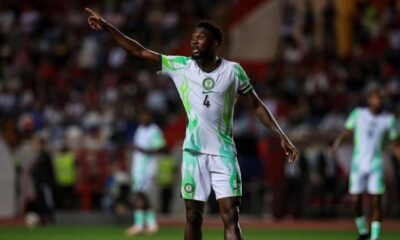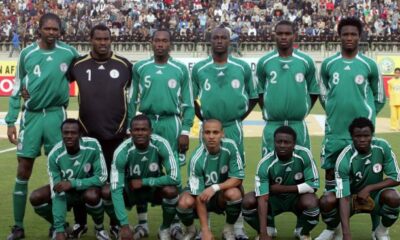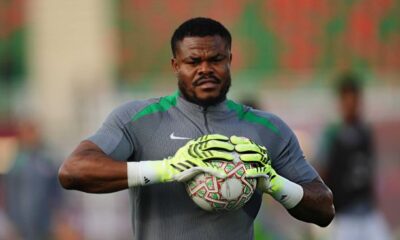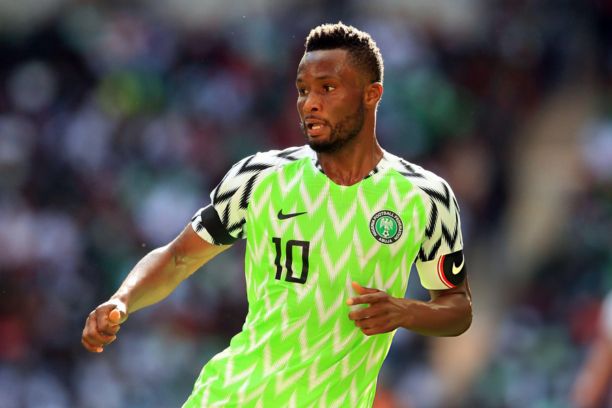
Nigeria has produced exceptional footballers across generations, but wearing the captain’s armband carries a different level of responsibility. The greatest Super Eagles captains were not simply the most talented players in the squad; they were leaders trusted to represent the team during defining moments, from Africa Cup of Nations triumphs to World Cup appearances.
Their stories are woven into the history of Nigerian football, while several also became influential figures in African football.
Some captains lifted trophies. Others guided Nigeria through difficult transitions or led the country onto football’s biggest stage. A few managed to combine longevity, individual quality, major tournament performances and leadership over several years.
That distinction matters when ranking the greatest captains in the history of the national team.
The senior national team has passed through different identities and generations. Christian Chukwu captained the Green Eagles before Nigeria later adopted the Super Eagles name, while Stephen Keshi, Austin “Jay-Jay” Okocha, Nwankwo Kanu, Joseph Yobo, John Obi Mikel and others carried the armband in subsequent eras.
A recent historical record of Nigeria’s principal captains traces the leadership line through those generations, while World Cup records show six different Nigerian captains at the country’s six World Cup appearances from 1994 to 2018.
So, who deserves to be regarded among the seven best Super Eagles captains of all time?
The ranking below considers what each player achieved while occupying a leadership role, how long he influenced the national team, his performances at major tournaments and the historical importance of the teams he helped lead.
How We Ranked the Greatest Super Eagles Captains
Ranking football captains is more complicated than simply counting appearances or trophies. Captaincy is partly measurable and partly about influence.
A player who lifted the Africa Cup of Nations obviously has a powerful argument, but that does not automatically erase the achievements of another captain who led Nigeria successfully at a World Cup. Likewise, having more international caps does not necessarily mean someone had a greater period as captain.
For this ranking, particular importance was given to major trophies, World Cup leadership, longevity, influence on teammates and the historical significance of a captain’s era. The performances of the Super Eagles while each player held significant leadership responsibility also matter.
This approach means several outstanding Nigerian players narrowly miss the seven. It also explains why a footballer’s position on this list may differ from where that player would appear in a straightforward ranking of Nigeria’s greatest-ever footballers.
Recent ranking-style coverage of Nigerian captains has similarly distinguished between pure playing ability and captaincy legacy, highlighting accomplishments such as AFCON titles, World Cup leadership, longevity and influence over different generations.
With those factors considered, here are our best seven, beginning with number seven.
Best 7 Super Eagles Captains of All Time
- Stephen Keshi
- Christian Chukwu
- Austin “Jay-Jay” Okocha
- Uche Okechukwu
- Joseph Yobo
- John Obi Mikel
- Nwankwo Kanu
7. Nwankwo Kanu
Few Nigerian footballers have carried as much international prestige as Nwankwo Kanu.
By the time Kanu became one of the senior leaders of the national team, he had already achieved almost everything imaginable at club and international level. He was the inspirational figure behind Nigeria’s historic Olympic football triumph at Atlanta 1996 and went on to enjoy an outstanding European career with Ajax, Inter Milan, Arsenal, West Bromwich Albion and Portsmouth.
But this ranking is about captaincy rather than club success, and Kanu’s importance to the Super Eagles went far beyond his famous name.
Kanu was part of Nigeria’s senior national team for an extraordinarily long period. He represented the country at three World Cups and gradually progressed from being one of the gifted young players of the celebrated 1990s generation to becoming one of the most respected senior figures in the squad.
Following the Okocha era, Kanu became one of Nigeria’s principal captains. His leadership period eventually took him to the 2010 FIFA World Cup in South Africa, where he was officially named captain of the Nigerian squad. Contemporary reporting confirmed that Kanu was selected to lead the team at what was his third World Cup.
Nigeria’s 2010 World Cup itself did not go according to plan. The team collected only one point in a difficult group containing Argentina, Greece and South Korea and failed to reach the knockout rounds. That limits Kanu’s position when compared with captains who lifted major trophies or led successful World Cup campaigns.
However, captaincy is not measured by one tournament alone.
Kanu’s importance came from continuity. He represented the link between Nigeria’s celebrated mid-1990s generation and a newer group containing players such as Joseph Yobo, Vincent Enyeama and John Obi Mikel. His stature in the dressing room was enormous, and younger internationals were playing alongside someone who had won major European honours and twice been named African Footballer of the Year.
Kanu’s influence is also part of the broader story of the Super Eagles of Nigeria. Few internationals remained connected to the national team across so many different eras.
His leadership may not have produced the senior international trophy that some players higher on this ranking achieved, but longevity, experience and the respect attached to his name give him seventh place.
6. John Obi Mikel
John Obi Mikel’s version of leadership was considerably different from the charismatic style associated with Jay-Jay Okocha or the imposing defensive authority of Stephen Keshi.
Mikel was composed, controlled and rarely dramatic.
That personality suited the role he eventually inherited.
After making his senior international debut in 2005, Mikel became one of Nigeria’s most consistent players over the following decade. By the middle of the 2010s, virtually every important national-team campaign passed through him.
He had already been an influential member of the side that won the 2013 Africa Cup of Nations before eventually becoming Nigeria’s principal captain. In March 2016, he was formally named captain, replacing Ahmed Musa, who had briefly held the role.
Mikel subsequently led the Super Eagles through another period of transition.
Perhaps his most important assignment as senior national-team captain came during qualification for the 2018 FIFA World Cup. Nigeria navigated a difficult qualifying group before travelling to Russia, where Mikel captained the team.
FIFA’s official match records from the tournament identify Mikel as captain, including Nigeria’s decisive final group match against Argentina.
Nigeria began the competition with defeat against Croatia before recovering with a 2-0 victory over Iceland. That result left qualification in the team’s hands heading into the final match against Argentina.
For much of that game, Nigeria was heading into the knockout stage. Victor Moses’ penalty cancelled out Lionel Messi’s opener before Marcos Rojo scored Argentina’s late winner.
It remains one of those painful “what if?” moments in modern Nigerian international history.
Mikel’s national-team contribution, however, extended well beyond Russia. He played at two World Cups and multiple AFCON tournaments and was part of the team that finally ended Nigeria’s 19-year wait for an African championship in 2013.
He also provided valuable leadership during an era when numerous younger players were entering the national team.
Mikel ranks sixth because his period wearing the armband did not produce a senior international title. Nevertheless, his experience, consistency and calm authority place him comfortably among the finest captains Nigeria has produced.
5. Joseph Yobo
Joseph Yobo’s international career is an outstanding example of durability.
For more than a decade, Nigerian coaches could build their defence around him.
Yobo made his senior international debut in 2001 and eventually accumulated 101 appearances for Nigeria, becoming the country’s first men’s player to reach the century mark. Historical international appearance records confirm his 101 caps.
More importantly for this ranking, Yobo eventually became captain and achieved something only a small number of Nigerian skippers have done: lift the Africa Cup of Nations trophy.
The former Everton and Fenerbahçe defender had already worn the armband occasionally before officially succeeding Kanu. Yobo later explained that he regularly served as playing captain when senior captains were unavailable and that after Kanu’s retirement in 2010 he became the team’s established captain.
His defining moment arrived three years later.
Nigeria travelled to South Africa for the 2013 Africa Cup of Nations without being universally regarded as the tournament’s dominant team. As the competition progressed, however, Stephen Keshi’s squad grew stronger.
Nigeria eliminated tournament favourites Côte d’Ivoire in the quarter-final, defeated Mali 4-1 in the semi-final and faced Burkina Faso in the final.
Sunday Mba scored the decisive goal as Nigeria won 1-0.
Yobo, the squad captain, lifted the trophy.
That alone gives him a special place in Super Eagles history.
It is worth adding context. Yobo was no longer an automatic starter during that tournament. Kenneth Omeruo and Godfrey Oboabona had developed an effective central-defensive partnership, meaning the captain’s contribution increasingly came through experience and dressing-room leadership.
Rather than diminishing his achievement, that situation demonstrated another side of captaincy. Leadership is not limited to players dominating every minute on the pitch.
Yobo remained part of the collective structure and received the trophy as Nigeria became African champions for the third time.
He also represented Nigeria at three FIFA World Cups—2002, 2010 and 2014—and six Africa Cup of Nations tournaments, giving him remarkable experience at international level.
Among all Nigerian players to have captained the senior team, very few can match Yobo’s combination of longevity, 100-plus international appearances and continental silverware.
That earns him fifth place.
4. Uche Okechukwu
Uche Okechukwu is sometimes overlooked when conversations about Nigeria’s greatest captains centre on more globally famous names.
That would be a mistake.
Few defenders were more important during Nigeria’s extraordinary footballing rise in the 1990s.
Okechukwu was already an established member of the national team before Nigeria won the 1994 Africa Cup of Nations. He became one of the foundations of the defence that helped turn the country into one of the most feared teams in African football.
At the 1994 FIFA World Cup, Okechukwu played throughout Nigeria’s historic debut campaign as the team topped a group containing Argentina, Bulgaria and Greece before narrowly losing to Italy in the round of 16.
Four years later, he entered the tournament with greater leadership responsibility.
Okechukwu captained Nigeria during the 1998 World Cup in France. Records from the famous opening victory against Spain identify him as captain, and he again wore the armband when Nigeria defeated Bulgaria 1-0.
That Spanish game alone occupies an important place in Nigerian football history.
Spain arrived with a powerful squad containing Fernando Hierro, Raúl, Luis Enrique and Andoni Zubizarreta. Nigeria twice fell behind but twice recovered before Sunday Oliseh’s famous long-range strike completed a remarkable 3-2 victory.
The result immediately established Nigeria as one of the most dangerous teams at France ’98.
A second victory against Bulgaria secured qualification for the knockout rounds with a game remaining.
Nigeria would eventually lose 4-1 to Denmark in the round of 16, ending what had started as a promising tournament. Nevertheless, Okechukwu had captained Nigeria into the World Cup knockout stage.
That achievement becomes more impressive when placed alongside everything else he had accomplished internationally.
He was part of the 1994 African championship-winning squad and was also one of the experienced players involved in Nigeria’s historic Olympic football success two years later.
Okechukwu’s leadership style was based on composure. He rarely generated the same headlines as the attacking stars ahead of him, but he provided organisation and security from central defence.
When discussing the great Super Eagles teams of the 1990s, names such as Yekini, Okocha, Amokachi and Finidi understandably dominate the conversation.
Okechukwu deserves to be mentioned alongside them.
His captaincy of Nigeria at France ’98, combined with his broader influence during arguably the strongest period in Nigerian international football, earns him fourth place.
3. Austin “Jay-Jay” Okocha
There are captains who lead through discipline.
There are captains who lead through vocal authority.
And then there are captains whose teammates look towards them because they possess the ability to change a match almost by themselves.
Austin “Jay-Jay” Okocha belonged to the third category.
Okocha was one of the most naturally gifted footballers Nigeria has ever produced. His close control, improvisation, passing and willingness to attempt the unexpected turned him into an international football icon.
But there was substance behind the entertainment.
By the beginning of the 2000s, Okocha had progressed from the exciting youngster who emerged during Nigeria’s golden generation into one of the national team’s senior leaders.
He captained Nigeria at the 2002 FIFA World Cup and continued as an important skipper through subsequent AFCON campaigns. Contemporary reporting before the 2004 Africa Cup of Nations confirmed that Okocha would lead the national team at the tournament.
What made Okocha particularly valuable was that captaincy did not reduce his creative responsibility.
At the 2004 AFCON in Tunisia, he delivered one of his finest tournaments in a Nigerian shirt.
CAF records list Okocha as one of the competition’s joint leading scorers with four goals and, crucially, as the tournament’s best player.
Nigeria eventually finished third.
That outcome reflected one of the frustrations surrounding Okocha’s period as captain. The Super Eagles remained consistently competitive but failed to add another AFCON championship despite possessing significant talent.
Nigeria collected bronze medals at the 2002, 2004 and 2006 editions, but the trophy remained elusive.
Yet Okocha’s importance cannot be reduced to medals.
He represented a particular image of Nigerian football: expressive, confident and technically fearless.
When Nigeria needed control in midfield, he could slow the game. When a defender needed beating, he could dribble. When the team required inspiration, he could shoot from distance, take a free kick or create something seemingly impossible.
His personality also allowed him to carry the enormous expectations attached to Nigeria’s number 10 shirt.
Okocha had already experienced AFCON triumph in 1994 and Olympic glory in 1996 before becoming the senior captain, which meant younger players were following someone who understood what successful Nigerian teams required.
He sits third because the two captains ahead of him combined comparable leadership influence with perhaps the two most historically important captaincy achievements in Nigeria’s football history.
As a footballer, Okocha may rank above almost everyone.
As captain, third place is still an extraordinary legacy.
2. Christian Chukwu
Before Stephen Keshi, Okocha, Yobo or Mikel, there was Christian Chukwu.
Nicknamed “Chairman”, Chukwu represented authority long before modern discussions about leadership statistics, international appearance records or social-media debates about Nigeria’s greatest captain.
He commanded Nigeria’s defence during one of the most important periods in the country’s football history.
Nigeria entered the 1980 Africa Cup of Nations as hosts, still searching for its first continental title.
Expectations were enormous.
The Green Eagles progressed through the group stage and defeated Morocco in the semi-final to set up a final against Algeria at the National Stadium in Lagos.
On March 22, 1980, Nigeria produced one of its most memorable international performances.
Segun Odegbami scored twice, Mudashiru Lawal added another, and Nigeria defeated Algeria 3-0.
At the centre of the celebrations was captain Christian Chukwu.
He became the first Nigerian captain to lift the Africa Cup of Nations trophy. Nigeria Football Federation accounts of his career emphasise both his captaincy of that historic side and the authority that earned him the “Chairman” nickname.
The importance of that achievement is difficult to exaggerate.
Modern fans are accustomed to seeing Nigeria arrive at AFCON tournaments with expectations of reaching the latter stages. In 1980, there was no previous Nigerian AFCON championship to point towards.
Chukwu and his teammates created that history themselves.
That triumph established a standard every future Super Eagles generation would be judged against.
Chukwu’s influence was not restricted to lifting the trophy.
He was an imposing central defender whose organisation and reading of the game gave the team stability. Leadership came naturally from his position because so much of Nigeria’s defensive structure was visible in front of him.
The NFF later described him as strong, dedicated and disciplined, emphasising the authority he demonstrated both on and off the field.
Another reason Chukwu ranks so highly is symbolism.
Someone had to be first.
Before the expectation that Nigeria should challenge for AFCON trophies existed, Chukwu captained the team that created that expectation.
The modern Super Eagles of Nigeria owe part of their continental identity to the achievements of that generation.
He narrowly misses first place, but Christian Chukwu’s status as the captain who delivered Nigeria’s first African championship guarantees him a permanent position among the country’s greatest leaders.
1. Stephen Keshi
Stephen Keshi stands at number one because his captaincy represents much more than a single trophy or tournament.
He was central to a transformation.
By the late 1980s and early 1990s, Nigeria had produced talented national teams before, but the country was still attempting to establish itself consistently among the leading football nations on the continent and qualify for its first FIFA World Cup.
Keshi became one of the personalities around whom that ambition was built.
Known as the “Big Boss”, the defender possessed precisely the qualities associated with a traditional captain: physical presence, confidence, organisational ability and an instinct for leadership.
His greatest year as a player came in 1994.
Nigeria arrived at the Africa Cup of Nations in Tunisia with an exceptional generation of talent. Rashidi Yekini was one of Africa’s most feared strikers. Emmanuel Amunike, Daniel Amokachi, Finidi George, Sunday Oliseh and the emerging Jay-Jay Okocha gave Nigeria extraordinary quality across the pitch.
Keshi was their captain.
Nigeria reached the final against Zambia and won 2-1 through two goals from Amunike.
CAF’s historical account confirms that Keshi captained the 1994 championship-winning Nigerian generation, although injury kept him out of the final itself.
The trophy alone would place Keshi among the country’s elite captains.
What followed made his legacy even bigger.
Months later, Nigeria appeared at the FIFA World Cup for the first time.
For decades, qualification had escaped one generation after another. The 1994 team finally broke that barrier, and Keshi was the squad captain.
Nigeria did not merely participate.
The Super Eagles defeated Bulgaria 3-0 in their opening match, lost narrowly to Argentina and then beat Greece to finish top of their group. They subsequently came within minutes of eliminating Italy in the round of 16 before Roberto Baggio changed the match and eventually ended Nigeria’s tournament.
Keshi’s injuries meant other senior players wore the armband during parts of the competition, but historically he remained the captain of the squad that took Nigeria to its first World Cup. The record of Nigeria’s World Cup captains identifies him as the country’s 1994 skipper.
That combination—winning AFCON and helping lead Nigeria into its first World Cup, gives Keshi an exceptional captaincy record.
Yet there is another layer to his story.
Nearly two decades later, Keshi returned to the national team as head coach.
In 2013, he led Nigeria to another Africa Cup of Nations championship, defeating Burkina Faso in the final in Johannesburg.
CAF records that the achievement made Keshi only the second person, after Egypt’s Mahmoud El Gohary, to win the Africa Cup of Nations as both a player and a coach.
Strictly speaking, his coaching achievement does not form part of his record as captain. However, it reinforces what his playing career had already demonstrated: leadership was fundamental to Stephen Keshi’s relationship with Nigerian football.
He influenced teammates as a player and later another generation as a manager.
Keshi also played an important role in changing perceptions around Nigerian footballers abroad. During an era when opportunities in European football were much more limited for African players, he built a successful career in Belgium and helped create pathways that later internationals would follow.
The best captain is not necessarily the player with the most caps, the greatest technical ability or even the longest period wearing the armband.
Sometimes it is the player most closely associated with changing what a national team believed was possible.
For Nigeria, that player was Stephen Keshi.
That is why the Big Boss ranks first among the greatest Super Eagles captains of all time.
Other Great Super Eagles Captains Who Deserve Recognition
Reducing decades of national-team history to seven players inevitably means leaving out outstanding leaders.
Ahmed Musa has a particularly strong argument. His extraordinary longevity eventually made him Nigeria’s most-capped men’s international, with the NFF listing him on 111 appearances as of 2026. He also remains Nigeria’s highest scorer at the men’s FIFA World Cup with four goals.
Vincent Enyeama is another significant omission. The goalkeeper passed 100 international appearances and captained Nigeria at the 2014 FIFA World Cup, helping the team reach the round of 16. He was also an essential member of the 2013 AFCON-winning side.
Sunday Oliseh brought enormous personality and authority to midfield and later wore the captain’s armband. His career included the 1994 AFCON triumph, two World Cups and one of Nigeria’s most famous World Cup goals—the thunderous winner against Spain in 1998.
William Troost-Ekong also strengthened his captaincy legacy during the 2023 Africa Cup of Nations, played in 2024, where Nigeria reached the final. His performances demonstrated that the tradition of strong national-team leadership continued into another generation.
The Super Eagles have therefore rarely lacked experienced players capable of taking responsibility.
That depth also explains why debates over Nigeria’s greatest captain are unlikely to disappear.
Image Credit: GettyImages
Read more here: Best Super Eagles Captains
Frequently Asked Questions
Who is the greatest Super Eagles captain of all time?
Stephen Keshi is widely regarded as one of the greatest Super Eagles captains because he led Nigeria’s celebrated 1994 generation, won the Africa Cup of Nations as captain and was the recognised leader of the squad at Nigeria’s first FIFA World Cup.
Who was the first Nigerian captain to win the Africa Cup of Nations?
Christian Chukwu was the first Nigerian captain to lift the Africa Cup of Nations trophy. He captained Nigeria to its first AFCON title in 1980 after a 3-0 victory over Algeria in the final in Lagos.
Which Super Eagles captains have won the AFCON?
Nigeria’s three AFCON-winning squad captains are Christian Chukwu in 1980, Stephen Keshi in 1994 and Joseph Yobo in 2013. Each played an important leadership role during a historic period for Nigerian football.
Was Jay-Jay Okocha a Super Eagles captain?
Yes. Austin “Jay-Jay” Okocha captained the Super Eagles during the 2000s, including at major international tournaments. He was known for combining leadership with creativity, technical ability and match-winning performances.
Who has made the most appearances for the Super Eagles?
Ahmed Musa holds the record for the most appearances for Nigeria’s men’s senior national team. His longevity, World Cup performances and years of leadership have also made him one of the notable captains in Super Eagles history.
Related Articles
Nigerian Jersey: Best 7 Kits of All Time!
Ranked! 5 Greatest Super Eagles Squads Ever
Top 11 Greatest Nigerian Goalkeepers of All Time!
What the Super Eagles’ Recent Friendlies Reveal About Their Defense