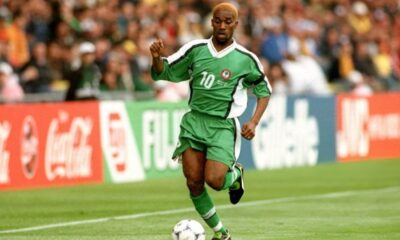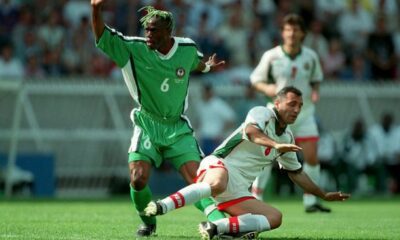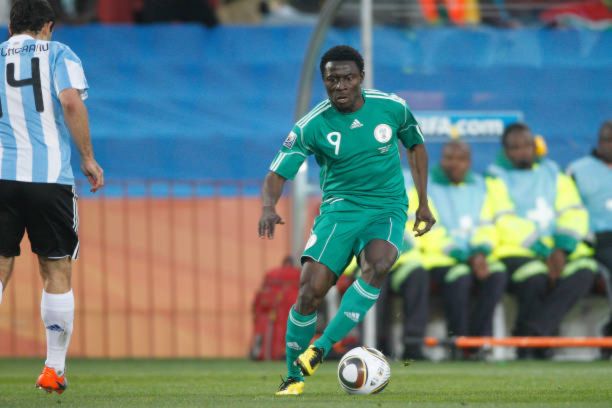
The history of the Super Eagles is filled with legendary strikers who have entertained millions of fans, scored unforgettable goals, and helped establish Nigeria as one of Africa’s greatest football nations. From Rashidi Yekini’s historic World Cup goal to Victor Osimhen’s remarkable achievements in European football, Nigeria has consistently produced exceptional attacking talents.
Over the decades, these players have represented their country with pride, determination, and extraordinary skill. Some became household names through their performances at the Africa Cup of Nations, while others earned international recognition by dominating European leagues.
The story of Nigerian football would be incomplete without acknowledging these remarkable goalscorers. Their achievements have inspired generations of young athletes, strengthened Nigeria’s reputation internationally, and contributed significantly to the development of the sport across the continent.
In this article, we rank the 11 greatest Nigerian strikers of all time, examining their international performances, club achievements, playing styles, major honours, and lasting contributions to the national team.
How We Ranked the Greatest Nigerian Strikers
Identifying the greatest strikers in Nigeria’s history requires more than simply comparing international goals. Although scoring records are important, some forwards contributed to the national team’s success through creativity, leadership, movement, and their ability to perform under pressure.
Our ranking considers international goals, performances in major tournaments, overall footballing ability, consistency, individual honours, club achievements, and the influence each player had on Nigeria’s footballing history.
Particular importance is placed on performances at the FIFA World Cup and Africa Cup of Nations, where the quality of opposition and significance of each match can define a player’s legacy.
The ranking also recognises that football has changed considerably over time. Earlier generations operated in different tactical systems, had fewer international fixtures, and experienced different opportunities to play professionally abroad.
For that reason, this is an editorial ranking of overall greatness rather than a strict list of the country’s highest international goalscorers. It includes traditional centre-forwards, second strikers, and attacking players who regularly operated in advanced positions.
11. Odion Ighalo
Odion Ighalo deserves recognition among the finest strikers to represent Nigeria in the modern era. Although his international career was not as long as those of some other national-team legends, his efficiency in front of goal and outstanding performances at the 2019 Africa Cup of Nations secured his place in Nigerian football history.
Born in Lagos on June 16, 1989, Ighalo developed his professional career through Nigeria and Norway before establishing himself in European football. His journey eventually took him to Italy, England, China, and Saudi Arabia, where he demonstrated an impressive ability to adapt to different footballing environments.
His most productive spell in English football came with Watford. During the 2015–16 Premier League season, Ighalo scored 15 league goals, earning widespread recognition for his intelligent movement, composure, and ability to finish difficult chances.
However, his greatest achievement with Nigeria came at the 2019 Africa Cup of Nations in Egypt. Ighalo scored five goals to finish as the tournament’s leading goalscorer, helping Nigeria secure third place.
His performances were particularly important because the national team needed a dependable centre-forward capable of converting limited opportunities. Ighalo responded by scoring important goals and consistently challenging opposing defenders.
Unlike strikers who rely heavily on spectacular skills or long-range shooting, Ighalo built his reputation on excellent positioning. He frequently anticipated defensive mistakes, attacked spaces between centre-backs, and used his strength to protect possession inside the penalty area.
His ability to remain calm under pressure made him especially dangerous during one-on-one situations. Ighalo also experienced a memorable period with Manchester United in 2020. His move to the English club attracted considerable attention in Nigeria because he had supported the team while growing up.
Although his international career included difficult moments, particularly criticism following Nigeria’s unsuccessful 2018 World Cup campaign, his response demonstrated resilience. Rather than allowing criticism to define his legacy, he returned to deliver an exceptional continental tournament.
Ighalo’s position on this list reflects his impressive goal-scoring efficiency, professional achievements, and contribution to Nigeria’s 2019 AFCON campaign.
10. Julius Aghahowa
Julius Aghahowa remains one of the most entertaining strikers in Nigeria’s history. Famous for his extraordinary pace, explosive movement, and trademark acrobatic goal celebrations, Aghahowa brought excitement whenever he represented the national team.
Born on February 12, 1982, in Benin City, Aghahowa emerged as one of Nigeria’s most promising young attacking talents during the late 1990s. He quickly established himself internationally, eventually earning a move to Ukrainian club Shakhtar Donetsk.
His career in Ukraine was particularly successful. Aghahowa became an important attacking figure at Shakhtar, helping the club compete domestically while gaining valuable experience in European competitions.
At the 2002 FIFA World Cup, Aghahowa scored Nigeria’s only goal of the tournament against Sweden. Although Nigeria lost the match 2–1, the goal remains memorable because of the spectacular series of somersaults he performed in celebration.
That celebration became one of the defining images of Nigeria’s participation in the tournament. Aghahowa was more than an entertaining personality: his greatest strength was his acceleration, which allowed him to escape defenders and create scoring opportunities from seemingly harmless situations.
He was particularly effective when attacking spaces behind defensive lines. When teammates delivered passes into open areas, Aghahowa could use his speed to reach the ball before opposing defenders.
His direct approach also made him difficult to contain. Rather than spending too much time controlling possession, he frequently attempted to move toward goal immediately.
Aghahowa played an important role in Nigeria’s continental campaigns and contributed to the national team’s attacking development during the transition from the celebrated 1990s generation.
While he did not achieve the international goal totals of Rashidi Yekini or Victor Osimhen, his energetic performances and memorable moments created a lasting connection with supporters.
9. Emmanuel Emenike
Emmanuel Emenike was one of the most physically intimidating strikers to lead Nigeria’s attack. His combination of strength, speed, powerful shooting, and determination made him an essential member of the national team that won the 2013 Africa Cup of Nations.
Born on May 10, 1987, in Otuocha, Anambra State, Emenike followed an unconventional route to international recognition. He developed his professional career outside Nigeria, including spells in South Africa and Turkey, before emerging as a prominent European-based forward.
His breakthrough came through impressive performances in Turkish football, particularly with Karabükspor and Fenerbahçe. Emenike possessed an unusual combination of physical attributes. Despite his powerful build, he could accelerate rapidly, challenge defenders in open spaces, and score from considerable distances.
These qualities became especially important during the 2013 Africa Cup of Nations in South Africa. Under head coach Stephen Keshi, Nigeria entered the tournament with a squad that included several players who had not previously experienced major international success.
Emenike quickly established himself as a leading attacking threat. He scored an important equaliser against Burkina Faso during the group stage and contributed further goals against Zambia, Côte d’Ivoire, and Mali.
His goal against Côte d’Ivoire in the quarter-finals was particularly memorable. He struck a powerful free kick that helped Nigeria overcome one of the tournament favourites.
Emenike finished the competition with four officially credited goals and shared the tournament’s leading scorer honour with Ghana’s Mubarak Wakaso. Although injury prevented him from playing in the final, his contributions throughout the competition were instrumental in helping Nigeria secure its third continental championship.
Beyond the goals, Emenike regularly created space for teammates by occupying defenders and forcing opponents to retreat. His strength allowed him to hold up the ball, while his willingness to shoot from outside the penalty area made him unpredictable.
At the 2014 FIFA World Cup, he continued to provide Nigeria with an important physical presence in attack as the team reached the Round of 16. His place in this ranking reflects the exceptional impact he made during one of Nigeria’s greatest modern tournament victories.
8. Samson Siasia
Samson Siasia was among the most technically intelligent strikers of Nigeria’s celebrated golden generation. Although he was not always the central goalscorer, his ability to combine attacking movement, precise finishing, and creative passing made him an important member of the national team.
Born on August 14, 1967, in Lagos, Siasia developed a professional career that took him from Nigeria to Belgium, France, and other international football destinations.
He became particularly recognised during his time at FC Nantes, where he helped the club secure the French league championship in the 1994–95 season.
Siasia’s playing style differed considerably from that of traditional centre-forwards such as Yekini. Instead of remaining close to the opposing goal throughout a match, he frequently moved into deeper positions to connect midfielders with the attacking line.
This movement created passing opportunities for teammates and made Nigeria’s attacking system more flexible. He was also capable of scoring spectacular goals.
One of his most memorable international moments came against Argentina at the 1994 FIFA World Cup. During the group-stage encounter, Siasia scored with an excellent chipped finish to give Nigeria an early lead. Although Argentina eventually won 2–1, his goal demonstrated the technical quality and composure that characterised his playing career.
Siasia was part of the squad that won the 1994 Africa Cup of Nations, contributing to a team widely regarded as one of the strongest in Nigeria’s history.
Another important aspect of his career was his understanding of space. Siasia could identify gaps between defenders, receive possession under pressure, and quickly release the ball to teammates in dangerous positions.
After retiring, Siasia continued his association with Nigerian football through coaching. He guided Nigeria’s Olympic teams to silver at Beijing 2008 and bronze at Rio 2016. Although those coaching achievements are separate from his playing career, they demonstrate his longstanding contribution to the country’s football development.
7. Obafemi Martins
Obafemi Martins was one of the fastest and most explosive strikers ever produced by Nigeria. Nicknamed Obagoal, Martins became internationally recognised for his remarkable acceleration, powerful left foot, and ability to score spectacular goals.
Born on October 28, 1984, in Lagos, Martins began attracting international attention at a young age. His professional journey took him to Italy, where he established himself with Inter Milan before moving to Newcastle United in the English Premier League.
At Inter Milan, Martins developed into an exciting attacking talent capable of troubling some of Europe’s most experienced defenders.
His pace was particularly dangerous during counterattacks. When his teammates regained possession, Martins often accelerated into open spaces, forcing opposing defenders to retreat immediately.
What made him especially difficult to defend against was his ability to combine speed with powerful finishing. Unlike players who depended entirely on pace, Martins could score from outside the penalty area, finish quickly inside the box, and produce unexpected shots from challenging angles.
Martins joined Newcastle United in 2006, where he became an important attacking figure. His performances included several spectacular long-range goals, demonstrating the shooting ability that helped establish his reputation.
Later, he played in Germany, Russia, Spain, the United States, and China. One of his most significant club achievements came with Birmingham City in 2011. Martins scored the winning goal against Arsenal in the League Cup final, securing a memorable trophy for the English club.
For Nigeria, Martins was a regular attacking option during the 2000s. He represented the national team at major international tournaments and contributed important goals during World Cup qualifying campaigns.
While some forwards preferred receiving the ball with their backs to goal, Martins was most dangerous when facing defenders and attacking open spaces. This quality made him especially effective against teams that pushed their defensive lines high up the pitch.
Although Nigeria did not win a major senior international trophy during his most prominent years, Martins remained one of the country’s most recognisable attacking players.
6. Yakubu Aiyegbeni
Yakubu Aiyegbeni, popularly known as The Yak, was among the most reliable strikers produced by Nigeria during the 2000s. His achievements in English football made him one of the most successful African centre-forwards of his generation.
Born on November 22, 1982, in Benin City, Yakubu began his professional career in Nigeria before moving to Israel, where he played for Maccabi Haifa.
His performances attracted attention from European clubs, eventually leading him to Portsmouth in England. Yakubu subsequently represented Middlesbrough, Everton, Blackburn Rovers, and other clubs.
His most remarkable achievement was his consistency in the English Premier League. Across his Premier League career, Yakubu scored 175 goals overall, establishing himself as one of the competition’s most productive Nigerian players.
He developed a reputation for combining physical strength with intelligent positioning and composed finishing. Unlike forwards who depended on spectacular dribbling, Yakubu preferred efficient movements that placed him in dangerous positions.
Inside the penalty area, he was particularly effective at identifying gaps between defenders. His ability to receive passes under pressure, control the ball, and finish with either foot made him a dependable attacking option.
Yakubu also possessed excellent strength, allowing him to compete with powerful Premier League defenders. At Everton, he became an important member of the attacking lineup and demonstrated his ability to score against high-quality opposition.
His Premier League performances helped increase international recognition of Nigerian players competing in Europe’s most demanding leagues.
For the national team, Yakubu contributed regularly during the 2000s and represented Nigeria at the 2010 FIFA World Cup. Although his international career included memorable goals and important qualifying performances, it is sometimes overshadowed by a missed opportunity against South Korea at the 2010 World Cup.
During that match, Yakubu failed to convert a close-range chance that appeared relatively straightforward. The incident became one of the most discussed moments of his international career.
However, evaluating Yakubu solely through that mistake would ignore years of excellent performances and significant professional achievements. Football history contains numerous examples of outstanding goalscorers missing important opportunities.
Yakubu’s longevity in English football is particularly noteworthy because maintaining consistent performances against elite defenders requires exceptional physical conditioning, tactical understanding, and mental strength.
5. Segun Odegbami
Long before Nigeria became a regular participant at the FIFA World Cup, Segun Odegbami had already established himself as one of the country’s most influential strikers and attacking footballers.
Popularly known as Mathematical Odegbami, he became famous for his precise movement, excellent ball control, intelligent finishing, and ability to create goals from wide attacking positions.
Born on August 27, 1952, Odegbami developed into one of Nigeria’s most respected footballers during the 1970s. He spent much of his professional career with Shooting Stars, becoming a leading figure in Nigerian domestic football.
His nickname reflected the accuracy and technical intelligence that characterised his performances. Odegbami was not a conventional central striker. He frequently played from wide attacking positions, using his speed and creativity to challenge defenders.
Nevertheless, his finishing ability and contributions to the national team’s goalscoring record justify his inclusion among Nigeria’s greatest attacking legends.
His most important international achievement came during the 1980 Africa Cup of Nations, which Nigeria hosted. At the time, Nigeria had never won the continental championship.
Playing in front of passionate home supporters, Odegbami became one of the most influential players in the tournament. Nigeria progressed to the final against Algeria, creating an opportunity to secure its first major continental title.
In the championship match, Odegbami scored twice as Nigeria defeated Algeria 3–0 at the National Stadium in Lagos. His goals helped deliver a historic victory and established Nigeria as an emerging continental football power.
Odegbami finished the tournament with three goals, sharing the leading scorer position with Morocco’s Khalid Labied.
The significance of that achievement extends beyond the goals themselves. The 1980 championship represented a major breakthrough for Nigeria, demonstrating that the national team could compete successfully against the continent’s established football nations.
Odegbami was central to that transformation. His precise passing, intelligent attacking movement, and ability to control the rhythm of play made him exceptionally difficult to defend against.
After retiring as a striker, Odegbami continued to influence Nigerian sport through commentary, administration, and public discussions about football development.
4. Daniel Amokachi
Daniel Amokachi was one of the most powerful and influential strikers in Nigeria’s celebrated 1990s generation. Nicknamed The Bull, Amokachi combined tremendous physical strength with surprising speed, intelligent attacking movement, and a relentless desire to compete.
Born on December 30, 1972, in Kaduna, he began his professional career with Ranchers Bees before moving to Europe. He subsequently represented Club Brugge in Belgium, Everton in England, and Beşiktaş in Turkey.
At Club Brugge, Amokachi established himself internationally through performances that demonstrated his physical dominance and finishing ability. He was particularly effective when challenging defenders directly.
Rather than avoiding physical contact, Amokachi frequently used his strength to protect the ball, retain possession, and create opportunities for teammates. His powerful running style made him especially dangerous during counterattacks.
For Nigeria, Amokachi became an essential member of the team that won the 1994 Africa Cup of Nations. That achievement remains one of the defining moments in the history of African football, particularly because Nigeria combined the continental victory with its first FIFA World Cup appearance later that year.
At the 1994 World Cup, Amokachi scored against Bulgaria during Nigeria’s historic 3–0 victory. He also scored in Nigeria’s 2–0 win against Greece, helping the country advance to the knockout stage.
His performances showcased the strength and attacking confidence of Nigeria’s golden generation. Amokachi was not simply a goalscorer; he played an important tactical role by attracting defenders and creating additional space for teammates.
At club level, he enjoyed an important period with Everton, helping the English club win the 1995 FA Cup. One of his most memorable performances came during the semi-final against Tottenham Hotspur, when he scored twice after entering the match as a substitute.
Amokachi’s career was eventually affected by injuries, which restricted his opportunities during the later stages of his professional journey. Nevertheless, his influence on Nigeria’s international success remains significant.
He represented a generation of football players who helped change international perceptions of the national team. Before the 1990s, Nigeria had not appeared at a senior men’s FIFA World Cup. By the middle of that decade, the country had developed a team capable of competing against some of the world’s strongest football nations.
3. Nwankwo Kanu
Nwankwo Kanu, affectionately known as Papilo, occupies a unique position among the greatest strikers and attacking players Nigeria has ever produced.
While many forwards built their reputations on speed, strength, or goalscoring efficiency, Kanu distinguished himself through extraordinary technique, creativity, composure, and an almost effortless ability to control matches.
Born on August 1, 1976, in Owerri, Kanu emerged as an exceptional young talent before beginning a successful European career. He played for Ajax, Inter Milan, Arsenal, West Bromwich Albion, and Portsmouth.
His achievements at Ajax were particularly important in establishing his international reputation. As part of the Dutch club’s outstanding young team, Kanu helped Ajax win the 1995 UEFA Champions League.
He later joined Inter Milan before moving to Arsenal in 1999, where he became one of the most recognisable African players in Premier League history.
At Arsenal, Kanu developed a reputation for scoring memorable goals and producing moments of extraordinary creativity. His exceptional close control allowed him to retain possession in crowded areas, while his vision helped him identify passing opportunities that other forwards might overlook.
Kanu’s famous hat-trick against Chelsea in 1999 remains one of his most celebrated performances. With Arsenal trailing 2–0, he scored three goals to secure an extraordinary 3–2 victory.
His winning goal, scored from an extremely tight angle, demonstrated the imagination and technical confidence that made him such a special player.
Kanu won two Premier League titles with Arsenal and was part of the club’s unbeaten 2003–04 league campaign.
However, his greatest international achievement came before his most successful years in England. At the 1996 Olympic Games in Atlanta, Kanu captained Nigeria’s football team to a historic gold medal.
The tournament’s most memorable moment came during the semi-final against Brazil. Nigeria trailed 3–1 before staging a remarkable comeback. Kanu scored the equaliser to make it 3–3 and then delivered the golden goal in extra time to secure a 4–3 victory.
Nigeria subsequently defeated Argentina in the final to become the first African nation to win Olympic gold in men’s football.
That victory was a defining moment for the Super Eagles of Nigeria and the country’s wider football development, although the Olympic side was an age-restricted national team rather than the senior squad.
Kanu also won the African Footballer of the Year award twice, in 1996 and 1999. His achievements were particularly remarkable considering the serious heart condition identified during his career, which required surgery.
Rather than allowing that challenge to end his professional journey, Kanu returned to compete at the highest level. His resilience became an important part of his legacy.
Although he was not Nigeria’s most prolific international goalscorer, his ability to create opportunities, influence difficult matches, and inspire teammates placed him among the country’s greatest attacking talents.
Kanu demonstrated that an exceptional forward could contribute much more than goals. His movement, passing, technical creativity, and composure made him one of the most distinctive African footballers of his generation.
2. Victor Osimhen
Victor Osimhen has established himself as one of the most complete strikers in modern international football. His outstanding pace, physical strength, aerial ability, finishing instincts, and relentless work rate have transformed him into one of Nigeria’s most important attacking players.
Born on December 29, 1998, in Lagos, Osimhen developed his footballing talent through local competitions before achieving international recognition at the 2015 FIFA U-17 World Cup.
He scored ten goals at the tournament, winning the Golden Boot as Nigeria secured the championship. His performances attracted the attention of European clubs, eventually leading him to Wolfsburg in Germany.
Although his early professional development included challenges, Osimhen steadily improved through subsequent spells in Belgium and France. His performances at Charleroi and Lille demonstrated his potential to develop into an elite centre-forward.
In 2020, Napoli signed him in a major transfer that reflected the Italian club’s confidence in his abilities. Osimhen eventually became one of the most influential players in Napoli’s modern history.
During the 2022–23 season, he scored 26 Serie A goals, finishing as the league’s leading goalscorer and helping Napoli win its first Italian league title in 33 years.
In December 2023, Osimhen won the CAF African Player of the Year award, becoming the first Nigerian man to receive the honour since Kanu in 1999.
At club level, Osimhen’s success demonstrated how effectively a Nigerian centre-forward could perform in one of Europe’s most tactically demanding leagues.
Unlike traditional penalty-area poachers, Osimhen contributes throughout the attacking phase. He presses opposing defenders, challenges for aerial possession, makes intelligent runs behind defensive lines, and frequently creates chances through individual determination.
His jumping ability is particularly impressive. Despite competing against physically strong defenders, Osimhen regularly wins aerial duels through excellent timing and explosive athleticism.
He is also capable of scoring with both feet, attacking crosses, and converting opportunities while moving at considerable speed.
For the national team, Osimhen has become a central figure in Nigeria’s attacking system. He played an important role in Nigeria’s qualification for the 2023 Africa Cup of Nations, finishing as the leading scorer in the qualifying campaign.
At the tournament, which took place in early 2024, Nigeria reached the final before losing to host nation Côte d’Ivoire.
Although his goalscoring output during the finals was relatively modest, Osimhen contributed through pressing, movement, physical battles, and the space he created for other attackers.
By January 2026, Osimhen had increased his senior international goal tally to 35, according to historical international records, leaving him close to Rashidi Yekini’s established record of 37.
Contemporary defenders benefit from extensive video analysis, sophisticated tactical systems, and highly organised defensive structures. Osimhen has nevertheless continued to demonstrate his ability to score against different opponents.
His playing style also reflects the evolution of modern centre-forward responsibilities. Today’s leading forwards are expected to contribute defensively, participate in build-up play, and maintain constant attacking pressure.
Beyond his individual achievements, his success has inspired a new generation of young Nigerian players hoping to establish themselves in international football.
Although his professional career remains ongoing, Osimhen has already secured an exceptional legacy. His international goals, European achievements, and individual awards place him among the greatest forwards Nigeria has produced.
1. Rashidi Yekini
When discussing the greatest strikers in Nigeria’s football history, one name continues to stand above the rest: Rashidi Yekini.
Widely regarded as Nigeria’s most iconic goalscorer, Yekini combined extraordinary finishing ability, physical strength, intelligent movement, and an unmatched record of important international goals.
Born on October 23, 1963, in Kaduna, Yekini began his professional career in Nigeria before moving abroad to pursue opportunities in European football.
He played for several clubs during his career, but his most productive period came at Vitória de Setúbal in Portugal. At the Portuguese club, Yekini developed an exceptional reputation as a prolific goalscorer.
His strength, positioning, and ability to convert difficult opportunities made him extremely dangerous inside the penalty area.
Unlike forwards who depended heavily on dribbling or elaborate attacking movements, Yekini possessed the natural instincts of a traditional centre-forward. He frequently anticipated where the ball would arrive before defenders could react.
His ability to finish with either foot and challenge opponents in the air made him particularly effective against physically demanding defensive teams. Yekini was also known for his powerful shooting.
Even when opponents attempted to restrict his movement, he could create enough space to produce accurate and forceful attempts on goal. However, his greatest achievements came while representing Nigeria.
Yekini’s Historic 1994 FIFA World Cup Goal
The most famous moment of Yekini’s career occurred on June 21, 1994, during Nigeria’s opening FIFA World Cup match against Bulgaria in the United States.
Nigeria was participating in the World Cup for the first time. With millions of supporters watching, Yekini scored Nigeria’s first goal in the competition’s history.
The goal came after an attacking move that allowed him to finish from close range. Although the finish itself was straightforward, the significance of the moment was extraordinary.
After scoring, Yekini ran into the goal, grabbed the net, and celebrated with visible emotion. The image became one of the most memorable celebrations in World Cup history.
Nigeria eventually defeated Bulgaria 3–0, announcing its arrival on football’s biggest stage. For millions of Nigerian supporters, the celebration represented more than a football result.
It symbolised years of ambition, national pride, and the achievement of a long-awaited dream. Yekini became the face of that historic breakthrough.
His Role in Nigeria’s 1994 AFCON Victory
Before Nigeria’s memorable World Cup debut, Yekini had already helped the country win the 1994 Africa Cup of Nations in Tunisia.
He played a decisive role throughout the competition, scoring five goals and finishing as the tournament’s leading goalscorer. His performances also earned him the Player of the Tournament award.
Nigeria eventually defeated Zambia 2–1 in the final, securing its second continental championship. That victory established the team as one of the strongest sides in Africa and strengthened expectations ahead of the World Cup.
Yekini’s contributions were particularly important because he provided the attacking consistency required to overcome difficult opponents. His ability to score during crucial moments gave teammates confidence.
Yekini’s Individual Awards and International Legacy
In 1993, Yekini became the first Nigerian to win the African Footballer of the Year award. That achievement reflected his outstanding club performances and contribution to Nigeria’s growing international reputation.
He also represented Nigeria at multiple continental tournaments and two FIFA World Cups. His 37 senior international goals remain the established Nigerian record in the historical dataset maintained by the Rec.Sport.Soccer Statistics Foundation.
While different historical databases sometimes report varying appearance and goal totals because of differences in match classification, Yekini’s status as one of Nigeria’s greatest international goalscorers is undisputed.
His overall influence extends far beyond those statistical records. Yekini helped establish a standard of centre-forward excellence that subsequent generations have attempted to match.
He represented a period when Nigeria transitioned from a respected continental team into a recognised international football force.
He died on May 4, 2012, but his achievements continue to be celebrated by supporters, former teammates, and the international football community.
Yekini remains the benchmark against which Nigeria’s greatest centre-forwards are measured. For these reasons, he deserves the number-one position in our ranking of the greatest attacking players in the history of the Super Eagles of Nigeria.
Honourable Mentions: Other Legendary Nigerian Attackers
Although this ranking focuses on 11 players, several other outstanding football players deserve recognition for their contributions to Nigeria’s attacking history.
Victor Ikpeba was one of the country’s most technically gifted forwards during the 1990s. He enjoyed an outstanding career at AS Monaco and won the African Footballer of the Year award in 1997. His combination of intelligence, pace, and finishing ability made him an important figure in Nigeria’s golden generation.
Emmanuel Amunike also deserves special recognition. He scored both goals in Nigeria’s 2–1 victory over Zambia in the 1994 Africa Cup of Nations final and later scored the decisive goal in Nigeria’s 1996 Olympic final victory over Argentina. His tournament-winning contributions make him one of the strongest candidates for inclusion in any expanded ranking.
Ikechukwu Uche was another exceptionally talented forward. His intelligent movement, technical ability, and impressive international scoring record established him as one of Nigeria’s most effective attacking players during the late 2000s and early 2010s.
Ahmed Musa became one of Nigeria’s most recognisable international attackers through his extraordinary speed and memorable FIFA World Cup performances. He scored twice against Argentina in 2014 and twice against Iceland in 2018, becoming Nigeria’s leading World Cup goalscorer.
Peter Odemwingie also deserves recognition for his achievements in European football, particularly during his successful Premier League career with West Bromwich Albion.
These players demonstrate why selecting only 11 individuals from Nigeria’s rich football history is such a difficult task.
Conclusion
Nigeria’s football history is filled with extraordinary strikers who have inspired generations of supporters and helped establish the Super Eagles as one of Africa’s most respected national teams.
From Segun Odegbami’s performances in the 1980 Africa Cup of Nations to Nwankwo Kanu’s historic Olympic achievements and Victor Osimhen’s modern success, each generation has contributed something special.
These players have demonstrated that greatness is not measured solely by goals. Creativity, leadership, consistency, resilience, and the ability to perform during important matches are equally significant.
While Victor Osimhen continues to build an exceptional legacy, Rashidi Yekini remains our choice as Nigeria’s greatest striker because of his international goalscoring record, major tournament performances, and historic contributions to the national team.
As new talents emerge, the future of Nigerian attacking football remains promising, and supporters will continue debating which legendary forward deserves the greatest recognition.
Image Credit: GettyImages
Read more here: Nigerian Football Players of All Time
Frequently Asked Questions
Question 1: Who is the greatest Super Eagles striker of all time?
Ans: Rashidi Yekini is our choice. His 37 international goals, 1993 African Footballer of the Year award, 1994 AFCON triumph, and historic first Nigerian World Cup goal establish an exceptional legacy.
Question 2: Who has scored the most goals for Nigeria?
Ans: Rashidi Yekini leads the referenced historical international scoring record with 37 goals, while Victor Osimhen had reached 35 by January 2026. Databases can vary in their treatment of international matches.
Question 3: Is Victor Osimhen better than Rashidi Yekini?
Ans: Both players have outstanding achievements. Osimhen possesses exceptional modern athleticism and significant European success, while Yekini’s international record and historic contributions remain extraordinary.
Question 4: Was Nwankwo Kanu a traditional centre-forward?
Ans: Kanu frequently operated as a second striker or creative forward rather than a conventional penalty-area centre-forward. His greatest strengths included technical intelligence, close control, passing, and creativity.
Question 5: Which Nigerian striker has won the African Footballer of the Year award?
Ans: Nigerian attacking winners include Rashidi Yekini (1993), Emmanuel Amunike (1994), Nwankwo Kanu (1996 and 1999), Victor Ikpeba (1997), and Victor Osimhen (2023).
Related Articles
Nigerian Jersey: Best 7 Kits of All Time!
Ranked! 5 Greatest Super Eagles Squads Ever
Top 11 Greatest Nigerian Goalkeepers of All Time!
What the Super Eagles’ Recent Friendlies Reveal About Their Defense