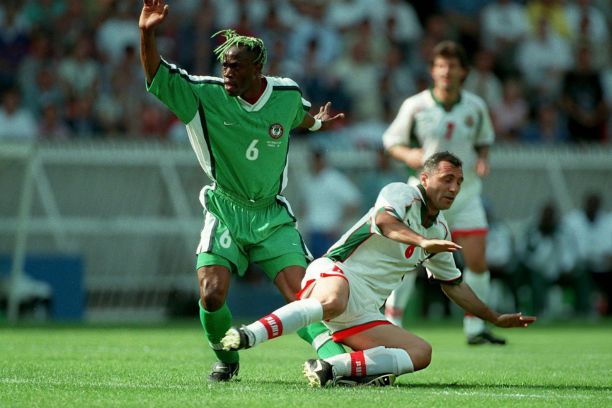
Nigeria has produced unforgettable forwards and gifted playmakers, but its greatest teams were also built around defenders who could survive pressure, organize teammates and deliver when trophies were on the line.
The finest Nigerian defenders combined physical courage with tactical intelligence, and their stories stretch from the country’s first continental title in 1980 to modern tournament finals. This ranking celebrates eleven players whose work at the back shaped different generations of the national team.
It also asks a difficult question: how should we compare a commanding centre-back from the 1980s with a modern full-back or a player who spent a decade competing in Europe?
How we ranked the greatest defenders
There is no perfect statistical formula for an all-time football list. Available match data are uneven across eras, and defending involves far more than tackles, blocks or clean sheets. We therefore weigh five connected factors: performance for Nigeria, importance in major tournaments, quality and longevity of club careers, positional ability, and lasting influence on teammates and supporters.
A gold medal or continental trophy is a major advantage, but it does not automatically put a player ahead of someone who was excellent for many years.
The emphasis here is on men who primarily played as defenders. That excludes outstanding defensive midfielders who sometimes helped their back line but made their reputations elsewhere. The ordering remains an editorial judgment, not an official federation or tournament ranking.
Fans of Nigerian football will naturally disagree about several positions, especially when comparing generations that competed under very different tactical conditions. That disagreement is part of what makes such a list worth discussing.
Top 11 Nigerian Defenders Defenders Ever!
- Stephen Keshi
- Christian Chukwu
- Uche Okechukwu
- Joseph Yobo
- Taribo West
- Celestine Babayaro
- Augustine Eguavoen
- Kenneth Omeruo
- William Troost-Ekong
- Benedict Iroha
- Efe Ambrose
1. Stephen Keshi
Stephen Keshi sits at the top because his influence reached beyond individual defending. He offered the authority of a captain, the composure of an organizer and the willingness to take responsibility for an entire unit. In a national side full of outstanding attacking personalities, that kind of leadership mattered. Keshi helped establish the confidence associated with Nigeria’s golden era and captained the team that won the 1994 Africa Cup of Nations.
His club career also reflected a pioneering generation that opened doors abroad. Particularly in Belgium, where he represented Anderlecht, Keshi built a reputation that demonstrated how Nigerian defenders could thrive in demanding European competitions.
He was not only a physical presence; he understood spacing, marking and the rhythm of a match. When pressure rose, he could direct the players around him rather than simply chase the ball.
The 1994 side reached the World Cup knockout stages in its debut appearance, a major milestone for the country. Keshi belonged to that squad, although evaluating his legacy means looking across his wider career rather than treating one tournament as the whole story.
He represented a transition from regional respectability to international ambition. His prominence subsequently grew even further through coaching, including leading Nigeria to the 2013 continental title, but this list judges him primarily as a player.
What makes Keshi the leading choice is the combination of technical competence and historic stature. He helped define what a national-team defensive leader should look like: authoritative without losing perspective, competitive without becoming reckless, and capable of turning talented individuals into a unit. Among Nigerian defenders, few left such a broad footballing legacy.
2. Christian Chukwu
Before the global spotlight of the 1990s, Christian Chukwu helped give Nigeria the belief that major continental honours were achievable. As captain of the team that claimed the 1980 Africa Cup of Nations on home soil, he occupies a foundational place in the country’s football history.
Nigeria beat Algeria 3–0 in the final, but the importance of the campaign extended beyond the score. It marked the arrival of a national team capable of turning expectation into achievement.
Chukwu was a defender who led through positioning, commitment and steady judgment. Nicknamed “Chairman,” he became associated with authority on the field. The title was not simply about shouting instructions. A defender at his level needed to read danger early, marshal teammates and give an attacking side the stability to take chances further forward.
In a period with less extensive television coverage and fewer detailed public statistics, contemporary impact must be understood through team achievement and reputation as well as footage.
At club level, his association with Enugu Rangers anchored his standing in domestic football. That part of the story is important. All-time lists can overvalue European careers and overlook players whose most influential years came before international transfers became routine. Chukwu’s accomplishments helped establish standards that later professionals inherited, especially the expectation that Nigeria could compete with the continent’s strongest sides.
His place near the top is also a reminder that defending is an act of collective leadership. When younger generations measure international greatness mainly by club brands or social media highlights, Chukwu offers a different benchmark: command, identity and national achievement.
He remains one of the best defenders in Nigeria’s history not because he played in the most commercially visible era, but because he helped create a winning one.
His case adds an important perspective to any ranking of Nigerian defenders: the position rewards judgment over reputation alone.
3. Uche Okechukwu
If an ideal centre-back is someone whose decisions make difficult situations seem routine, Uche Okechukwu deserves a place near the summit. He was a central figure during Nigeria’s extraordinary 1990s and combined a powerful frame with unusually composed defending.
Rather than treating every challenge as a test of strength, he could hold his position, wait for the right moment and deny opponents the space they wanted.
Okechukwu was part of the 1994 Africa Cup of Nations-winning generation and later helped Nigeria capture Olympic football gold in Atlanta in 1996. Those two achievements are compelling evidence of his adaptability.
Tournament football brings very little time to repair mistakes, and good defending depends on concentration from the opening whistle to the final seconds. Okechukwu’s experience made him an important stabilizing presence alongside younger players.
His long career in Turkey, notably with Fenerbahçe, adds another dimension. Longevity at a major club requires a defender to adjust to different managers, partners and expectations.
It also exposes weaknesses quickly. Okechukwu’s sustained presence illustrated that his game was built on more than one outstanding international summer. He could cope with routine league matches and intense rivalries as well as national-team occasions.
Perhaps his most underrated quality was restraint. The most memorable defender is not always the one making a spectacular recovery tackle; often it is the player whose positioning prevents the chance from developing. Okechukwu understood that distinction.
Supporters looking back at Nigerian defenders from the 1990s may remember the hairstyles, celebrations and giant victories, but his disciplined decisions were part of what allowed those moments to happen.
4. Joseph Yobo
Joseph Yobo made elite-level consistency an essential part of his case. Spending most of his Premier League career with Everton, he experienced season after season against physically strong, tactically diverse opponents.
That environment rewards defenders who can anticipate runs, recover ground and respond quickly after setbacks. Yobo developed into a dependable centre-back and became a captain at both club and international level.
His Nigeria career reached 100 senior appearances, culminating at the 2014 World Cup. He also belonged to the squad that won the 2013 Africa Cup of Nations. Those milestones reveal different forms of achievement: selection across multiple coaching periods, trust inside a changing dressing room, and membership of a title-winning group.
A century of caps is particularly meaningful for a defender because international managers continually test whether partnerships remain reliable.
One notable chapter at Everton was his role in the club’s rise under David Moyes. He contributed to a team that earned Champions League qualification in 2005 and reached the 2009 FA Cup final.
He was among the players whose professionalism helped the side compete beyond the financial power of several rivals. His game demanded repeated concentration rather than the occasional highlight-reel intervention.
Yobo was not flawless. Few defenders are, especially over a career so long and visible. But greatness cannot be assessed only by isolated errors. It also requires asking how often a player was trusted, how many different attackers he faced and how successfully he adjusted.
For observers of the Super Eagles, Yobo became a familiar and reassuring figure over more than a decade. His legacy is the argument for endurance as a form of excellence.
His case adds an important perspective to any ranking of Nigerian defenders: the position rewards judgment over reputation alone.
5. Taribo West
Taribo West may be the most instantly recognizable player on this list, but his reputation was built on far more than distinctive hairstyles. An aggressive, athletic centre-back, he could make an opponent uncomfortable from the first challenge.
He was comfortable defending with urgency and gave Nigeria a formidable edge during an era when international matches often became intense physical battles.
West was an important member of the 1996 Olympic gold-medal side. The achievement remains historic: Nigeria defeated Brazil in the semifinal and Argentina in the final to become the first African nation to win the men’s Olympic football tournament.
Winning those matches required attacking ambition, certainly, but also the resilience to survive periods of severe pressure. West’s pace and competitiveness suited that demanding environment.
His European journey supplied further credentials. After establishing himself in France with Auxerre, West played for Inter Milan and was associated with the club’s 1998 UEFA Cup triumph. He also represented AC Milan. That combination of elite club experience and international tournament success is rare enough to command respect even in a crowded all-time debate.
West’s approach carried risks. High-energy defending can invite unnecessary fouls or pull a player out of position if not carefully controlled. However, at his best, he turned controlled aggression into a genuine tactical weapon. Strikers needed to think twice before trying to overpower him.
Among the Nigerian players who helped reshape perceptions of the country during the 1990s, West stands out as proof that defenders can possess star power of their own.
His case adds an important perspective to any ranking of Nigerian defenders: the position rewards judgment over reputation alone.
6. Celestine Babayaro
Celestine Babayaro offered a different profile from the centre-backs above him. Fast, mobile and adventurous, he could protect his side of the pitch and then surge forward to support attacks. That blend makes him one of Nigeria’s most interesting defenders to revisit today, when full-backs are increasingly expected to become key figures in possession rather than remain fixed near their own penalty area.
A remarkable youth career included success with Nigeria at the 1993 under-17 World Cup and Olympic gold in 1996. Babayaro subsequently became a familiar presence in English football with Chelsea and later Newcastle United. At Chelsea, he competed for his place amid major changes in the club’s ambitions and personnel, an experience that tested both his stamina and tactical flexibility.
It is worth being precise about his honours. Babayaro belonged to Chelsea’s 1997–98 Cup Winners’ Cup-winning squad, but injury kept him out of the final. He later made a more direct on-field contribution to other campaigns and was part of the 2000 FA Cup-winning era.
There is no need to inflate his record: his attacking ability, European experience and international achievements already provide a strong case.
What made him valuable was the difficulty he posed for opponents. A winger could not assume Babayaro would stay behind him, and a defending full-back could not entirely ignore his overlapping runs. Yet pace alone does not make an excellent defender; recovery timing and awareness also matter. Babayaro’s best performances brought those qualities together. He helped broaden the image of what Nigerian defenders could offer in the modern game.
7. Augustine Eguavoen
Augustine Eguavoen sometimes receives less attention than the more flamboyant members of Nigeria’s 1994 squad, but that may be exactly why his contribution deserves examination. As a defender, particularly on the right side, he provided balance in a team famous for direct attacking football. When wingers pushed forward and midfielders tried ambitious passes, someone had to judge when to hold the line and when to engage.
Eguavoen was part of the squad that won the 1994 Africa Cup of Nations and participated in Nigeria’s first World Cup later that year. That was a period of enormous possibility for the national side, but also a genuine tactical challenge.
The team faced opponents accustomed to the highest international level. Keeping a back four coordinated required discipline as well as bravery.
His club career included football in Belgium, among other destinations. Playing abroad exposed him to professional structures and different defensive demands at a moment when opportunities for African footballers were expanding.
He was not always the headline performer, yet team success often depends on exactly that sort of positional specialist: a player willing to perform difficult, repetitive tasks with little public praise.
Eguavoen later worked in coaching, a natural continuation for someone whose playing strengths involved reading matches and understanding shape. His coaching results should be assessed separately from his work on the pitch, but they underline a sustained connection to the game.
In any discussion of Nigerian defenders, his case highlights a crucial truth: good teams need players who make the entire structure function, not merely those who dominate photographs and match compilations.
8. Kenneth Omeruo
Kenneth Omeruo emerged during a period when Nigeria needed a fresh defensive generation. He brought athleticism, confidence and the willingness to contest difficult duels.
His name will always be associated with the 2013 Africa Cup of Nations, when Nigeria won the title under Stephen Keshi. Omeruo was part of the youthful defensive group that helped make that run possible.
His professional career took him through several European settings, with important playing time in the Netherlands, England’s football system, Spain and Turkey. Moving between leagues is rarely straightforward for a defender.
The pace of attacks, the refereeing threshold for contact, and the space behind the defensive line can all change substantially. Such transitions demand learning as well as physical ability.
Omeruo’s career is also a useful reminder to distinguish a transfer to a famous club from meaningful first-team experience. Although linked with Chelsea for years, he built much of his match record through loan spells and moves elsewhere. Those appearances, rather than a club name alone, should shape how his career is assessed. He earned his standing through the challenges of regular competitive football.
At international level, his involvement extended beyond a single victorious tournament and included major World Cup campaigns. Consistency across several competitions made him an important bridge between Nigeria’s 2013 champions and later squads.
While there were occasional lapses, the courage to defend high-pressure situations remained a recurring strength. Among Nigerian defenders of the 2010s, his combination of national-team honours and cross-league experience gives him a legitimate place in the historical conversation.
9. William Troost-Ekong
William Troost-Ekong represents a newer model of Nigerian defensive leadership: vocal, organized and accustomed to the scrutiny that follows major international tournaments. A centre-back with strong aerial presence, he has often been asked to manage shape, keep the line connected and provide direction when the side faces sustained pressure. Those responsibilities become especially visible in knockout football.
His journey through clubs in multiple European countries gave him experience of different tactical systems. That matters because a centre-back cannot rely on athletic traits alone. Whether a side sits deep or presses aggressively, the defender must assess danger and communicate quickly.
Troost-Ekong developed a reputation for taking that responsibility seriously, including when partnering players with different strengths and levels of experience.
His most memorable international period included Nigeria’s run to the final of the delayed 2023 Africa Cup of Nations, played in early 2024. He captained the side and was named player of the tournament, an exceptional recognition for a defender. Nigeria did not win the final, but the performance offered strong evidence of his influence.
A tournament award does not determine an all-time ranking by itself; it does show that defensive leadership can receive recognition usually reserved for attacking stars.
Troost-Ekong’s standing will be debated against players with longer club careers or more trophies. Nevertheless, he belongs in this eleven because his contributions were both visible and consequential at continental level. His story shows that Nigerian defenders remain central to the team’s identity even as tactics, player development and expectations continue to change.
10. Benedict Iroha
Benedict Iroha brought important flexibility to Nigeria’s celebrated 1990s squad. Comfortable on the left side of defence and able to contribute further forward, he suited a national team that wanted to attack without abandoning defensive structure.
In an era when formations were sometimes less fluid than those seen today, a player capable of handling more than one responsibility provided coaches with useful choices.
Iroha was a member of Nigeria’s victorious 1994 Africa Cup of Nations squad and took part in the country’s first World Cup that year. Those achievements place him in a historic generation. More importantly, his presence reflected how that team operated: flair in attack supported by players ready to cover space, contest aerial balls and provide width at appropriate moments.
His professional journey included clubs in Europe and the United States. Such movement gave him experience of varied playing styles, while his international performances required him to operate under the expectations of a football-loving nation. Unlike some players whose careers can be reduced to a single spectacular match, Iroha’s reputation rests on functional value: he could do what the game demanded in different phases.
There is a temptation to place every member of a famous winning team at the top of a historical list. That would be too easy. Iroha ranks here because his international success is supported by versatility and useful longevity, not simply association with celebrated teammates.
His example also demonstrates why comparisons among Nigerian defenders should look at the responsibilities of full-backs and wide defenders rather than judging everyone by the standards of a centre-back.
11. Efe Ambrose
Efe Ambrose completes the eleven because he offers another kind of career: a defender whose value came from adaptability, substantial club experience and involvement in a title-winning national team. Able to feature centrally or on the right, he served managers who needed a player willing to adjust his duties to fit the side. That versatility can be underappreciated until injuries or tactical changes leave a team short of options.
Ambrose belonged to Nigeria’s 2013 Africa Cup of Nations-winning squad. In that competition, every defensive decision carried consequences, and the team’s success required contributions beyond its most recognizable scorers.
Ambrose also accumulated significant European experience, including years in Scottish football with Celtic, where domestic expectations and continental fixtures could test a defender in very different ways.
His career was not without errors, and his inclusion should not imply otherwise. A defender who takes on difficult responsibilities can be remembered disproportionately for mistakes, especially when a single incident produces a goal. A fairer assessment considers his entire record: the ability to play in multiple systems, sustained professional involvement and the trust he received from different managers.
Ambrose is arguably the most debatable selection here, particularly when compared with other candidates from Nigeria’s history. That is appropriate for the final place on an editorial list. He illustrates how footballing value is sometimes practical rather than glamorous.
Not every member of the Super Eagles of Nigeria needs to be a celebrated captain to contribute to the country’s greatest achievements; some build their careers by solving the recurring problems of a difficult position.
His case adds an important perspective to any ranking of Nigerian defenders: the position rewards judgment over reputation alone.
What made these defenders exceptional?
The eleven players did not all defend in the same way. Keshi and Chukwu supplied historic authority; Okechukwu brought calm anticipation; West specialized in confrontational intensity; and Yobo made durability part of his professional identity.
Babayaro and Iroha showed the attacking potential of wide defenders, while Omeruo, Troost-Ekong and Ambrose represent later generations adapting to more varied tactical systems.
It is also important to remember that football has changed. Modern centre-backs may be expected to initiate attacks, hold a high defensive line and defend enormous spaces in transition. Earlier generations often worked with different pressing patterns, pitches, medical support and training methods.
A fair list cannot pretend those differences do not exist. The history of African football is richer when players are judged partly against the demands of their own eras.
Leadership is the thread connecting many of these names. Good organization makes individual brilliance easier, while poor communication can make talented players look uncertain. The greatest back lines use anticipation and teamwork to prevent danger before viewers notice it. That is why an apparently quiet ninety minutes can be an outstanding defensive performance.
For students of Nigerian football, defensive history is a story of changing responsibilities as much as famous victories. The careers of these Nigerian players also helped create professional pathways for those who followed.
The best defenders balance positional understanding with the courage to act at exactly the right time.
Honourable mentions and the hardest omissions
No selection of eleven will satisfy every supporter. Godfrey Oboabona deserves recognition for his contributions to the 2013 continental champions, while Uche Okafor played a role in the 1994 golden generation. Chidi Nwanu and Michael Emenalo also belong in discussions of the nation’s earlier international defenders.
More recent names, including Ola Aina and Leon Balogun, invite debate for their positional quality and significant time around the national side.
Some will prioritize the individual ceiling of a player, others national-team medals, and others the number of years spent in elite club competitions. It is especially hard to compare a wing-back whose attacking contribution is essential with a centre-back who rarely crosses midfield.
This list does not claim to end those arguments. Instead, it gives supporters a defensible starting point for a much larger conversation about Nigerian defenders and their roles in successive national teams.
If this ranking were based exclusively on one tournament, certain names would rise quickly. If it were based exclusively on European club longevity, the order would change again. The combined approach is intended to reward careers that were influential in several different ways.
The influence of Nigerian defenders is therefore measured both in trophies and in the standards they leave for future generations.
How to judge a truly great defender
A spectacular tackle is exciting, but it may also suggest that a defender was forced to recover from poor positioning. Strong evaluation begins earlier in the sequence: did the player anticipate the pass, guide an attacker into a less dangerous area, coordinate with teammates and protect the goalkeeper? A defender who consistently answers yes can be invaluable even without dramatic footage.
Next comes context. Was the player asked to defend near the halfway line, leaving space behind? Was he part of a deep block facing repeated crosses?
Did his team control possession, or did he spend long stretches under pressure? These questions help explain why numbers alone are insufficient. Playing alongside excellent teammates can strengthen performance, but it can also conceal individual weaknesses.
Finally, there is the ability to respond when the stakes rise. International knockout matches often offer few chances to recover from a lapse.
Watching the Super Eagles at decisive moments reminds us that concentration, temperament and communication can matter as much as raw speed. Those characteristics separate capable professionals from defenders remembered long after their final appearance.
Conclusion
Nigeria’s football reputation has often been carried by brilliant goals and unforgettable attacking displays. Yet the foundation of its major achievements includes defenders who held their positions, won difficult duels and gave their teams confidence.
From Chukwu’s pioneering triumph in 1980 to the Olympic winners of 1996, the 2013 continental champions and recent tournament finalists, the defensive story is inseparable from the national story.
Keshi leads this ranking for his rare combination of captaincy, playing achievement and historic influence, while the ten names behind him offer distinct interpretations of excellence. The next generation will undoubtedly produce new challengers.
For now, celebrating these Nigerian defenders means recognizing the judgment, resilience and unglamorous effort behind some of the country’s greatest football moments. The Super Eagles of Nigeria have never relied on attackers alone, and that should remain central to how their history is told.
Read more on Nigerian defenders here: Top 5 Nigerian Defenders of All Time!
Frequently Asked Questions (FAQs) About Nigerian Defenders
Question 1: Who is the greatest Nigerian defender of all time?
Ans: Stephen Keshi is widely regarded as one of the greatest Nigerian defenders of all time. Known for his leadership, defensive intelligence, and commanding presence, Keshi captained Nigeria to victory at the 1994 Africa Cup of Nations (AFCON). He also made history by winning the tournament as Nigeria’s head coach in 2013, cementing his legacy as one of the country’s most influential football figures.
Question 2: Who are the most famous Nigerian defenders in football history?
Ans: Some of the most famous Nigerian defenders include Stephen Keshi, Joseph Yobo, Taribo West, Uche Okechukwu, Celestine Babayaro, and Taye Taiwo. These players made significant contributions to the Super Eagles and enjoyed successful careers with European clubs. Their defensive abilities, consistency, and achievements helped establish Nigeria’s reputation as a competitive football nation.
Question 3: Which Nigerian defender has the most international appearances?
Ans: Joseph Yobo holds the record for the most international appearances by a Nigerian defender, earning 101 caps for Nigeria between 2001 and 2014. The former Everton centre-back represented the country at three FIFA World Cups and helped Nigeria win the 2013 Africa Cup of Nations. His longevity, consistency, and leadership made him one of the most respected defenders in Nigerian football history.
Question 4: Have any Nigerian defenders won major European trophies?
Ans: Yes, several Nigerian defenders have won major European trophies during their professional careers. Taribo West won the UEFA Cup with Inter Milan in 1998, while Celestine Babayaro won the UEFA Cup Winners’ Cup with Chelsea in the same year. Babayaro also won domestic honours in England, demonstrating the significant impact Nigerian footballers have made at the highest levels of European club football.
Question 5: Who are the best Nigerian defenders in the modern era?
Ans: William Troost-Ekong, Calvin Bassey, and Ola Aina are among the most prominent Nigerian defenders of the modern era. Troost-Ekong played an instrumental role in Nigeria’s journey to the 2023 Africa Cup of Nations final, earning the tournament’s Player of the Tournament award. Meanwhile, Bassey has impressed with his physical strength, versatility, and ball-playing abilities, while Aina has established himself as a dependable full-back in European football. These players represent the continuing evolution of Nigeria’s defensive talent.
Image Credit: GettyImages
Related Articles
Nigerian Jersey: Best 7 Kits of All Time!
Ranked! 5 Greatest Super Eagles Squads Ever
Top 11 Greatest Nigerian Goalkeepers of All Time!
What the Super Eagles’ Recent Friendlies Reveal About Their Defense