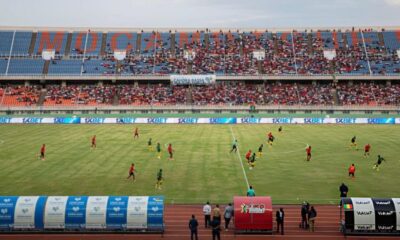
There is something special about a continental tournament arriving in a region that has waited generations to host it. AFCON 2027 will bring Africa’s biggest men’s international football competition to Kenya, Tanzania and Uganda, with supporters preparing for a month of national pride, intense rivalries and memorable nights.
The dates are confirmed, the qualifying race is already producing major stories, and the three-country hosting arrangement is a first in the competition’s history. Yet several important details, particularly the final stadium allocations and match-by-match schedule, still await official confirmation.
Here is a practical, up-to-date guide to what is known, what comes next and why this edition could matter far beyond the pitch.
AFCON 2027 at a Glance: Dates, Hosts and Key Facts
The tournament is scheduled to begin on Saturday, 19 June 2027, with the final on Saturday, 17 July 2027. The Confederation of African Football, commonly known as CAF, confirmed both dates in May 2026. It will be the 36th edition of the men’s Africa Cup of Nations and the first staged jointly by three countries. Kenya, Tanzania and Uganda are the co-hosts, and all three have automatic places in the 24-team final tournament.
AFCON 2027 carries the name PAMOJA, a Swahili word meaning “together.” That description is more than a marketing slogan: the hosts will need to coordinate competition operations, travel, accommodation, security, broadcasting and the movement of large groups of supporters across national borders. The same collaboration could give East Africa a more prominent position on the global sports calendar if preparations are delivered effectively.
There is a crucial distinction between dates that are fixed and details that remain provisional. CAF has announced the overall tournament window, but its official overview did not finalize the full stadium list, the detailed match calendar or the countries that will stage the opening game and final. Online schedules that assign teams to particular cities should therefore be treated cautiously unless they link to a subsequent official CAF announcement.
Why This Tournament Is Historic for East Africa
AFCON 2027 will return the continental finals to East Africa for the first time since Ethiopia hosted the competition in 1976. In a region where football is followed in crowded neighbourhood viewing centres, schools, workplaces and homes, that long gap gives the occasion an emotional weight that statistics cannot fully describe. Generations of supporters have watched major tournaments unfold elsewhere; this time, the sound and spectacle will be closer to home.
The hosting model for AFCON 2027 also represents an organizational milestone. Previous editions have involved single hosts and two-country arrangements, but dividing hosting responsibilities among three countries introduces different demands. Successful coordination could establish an example for future tournaments; failures in transport or scheduling would be visible just as quickly. That is why government cooperation, reliable logistics and clear communication to fans matter as much as stadium construction.
A successful event could help domestic football too. Improved facilities can give clubs, academies and national teams better environments for matches and training. Visiting journalists may introduce international audiences to football cultures they know mostly through club competition highlights. The lasting value, however, will depend on what happens after the trophy presentation: whether facilities remain accessible, programmes are funded and promised improvements become everyday benefits.
Meet the Three Host Countries
Kenya: A Major Stage for the Harambee Stars
Kenya’s national team, the Harambee Stars, will have the opportunity to take part as an automatic qualifier in front of home supporters. Nairobi is an obvious centre of public attention because of its existing sporting infrastructure and major stadium projects. Facilities associated with preparations include the new Talanta Sports City project and the Moi International Sports Centre at Kasarani, but candidate status must not be confused with a final CAF match allocation.
For Kenyan football, the AFCON 2027 opportunity is broader than the final score of any one game. The tournament may encourage new investment in coaching, youth programmes, groundskeeping and matchday operations. It could also draw fresh attention to the local league. Hosting is not an automatic sporting advantage, however: the national side will still need coherent selection, tactical preparation and competitive matches if it is to turn vocal crowds into meaningful results.
Tanzania: Football Culture on a Continental Platform
Tanzania enters the event with a vibrant domestic scene shaped partly by the enormous followings of Simba and Young Africans. Dar es Salaam is central to the country’s preparations, with Benjamin Mkapa Stadium among the facilities that have drawn attention. Other projects, including facilities linked to Arusha and Zanzibar, have been discussed or assessed. Their exact roles should be verified against CAF’s eventual approved venue list.
For the Taifa Stars, AFCON 2027 and the prospect of competing in familiar conditions is significant. The team can build momentum by using the qualifying campaign as a serious measure of readiness rather than treating automatic entry as the end of the job. Tanzania also has a chance to show travelling fans the variety of its cities, cuisine and cultural life, provided access, pricing and visitor information are handled transparently.
Uganda: A Landmark Occasion for the Cranes
As AFCON 2027 approaches, Uganda’s Cranes bring a devoted fan base and a history of producing competitive teams. Kampala’s Mandela National Stadium, widely called Namboole, and Hoima City Stadium have featured in venue planning and inspection discussions. Other proposed sites have also been reported, yet final status should not be assumed before CAF formally publishes its selections.
The potential impact on Uganda extends beyond the national side. Hosting can create opportunities for local event workers, suppliers, accommodation providers and businesses serving visitors. It also creates pressure to ensure transport works efficiently during peak demand. As with the other co-hosts, Uganda’s challenge is to combine a welcoming atmosphere with disciplined preparation so that supporters remember the football rather than difficulties getting to it.
When Will AFCON 2027 Start and End?
The opening match is fixed for 19 June 2027 and the final for 17 July 2027, a roughly four-week period. Unlike some previous editions associated with winter dates, this schedule places the championship in the middle of the calendar year. For fans planning annual leave, this offers an early framework; for football associations and clubs, it gives a clear period around which player-release and preseason discussions can be organized.
It does not yet tell supporters wh”ch t’am will play on a given day or which nation will host the final. Once qualification is complete, CAF will need to conduct the final-tournament draw and publish the detailed fixture schedule. Broad date announcements are helpful, but a flight booked for a particular city in anticipation of a hypothetical knockout match would still carry substantial risk.
How Many Teams Will Play, and What Is the Format?
The Africa Cup of Nations finals will feature 24 national teams. Under the familiar modern tournament structure, the field is normally split into six groups of four. Teams play three group-stage matches, after which the group winners and runners-up are joined by the four best third-placed sides in the round of 16. AFCON 2027 then proceeds through single-elimination knockout rounds to the final, with the applicable official regulations governing tie-breakers and any extra-time procedures.
This structure makes for a fascinating opening phase. A single defeat need not end a campaign, but teams cannot afford prolonged slow starts. Goal difference and discipline can become important when several sides finish with similar records. Coaches therefore face an interesting balancing act between caution, rotation and the need to score. For supporters, it means the final round of group matches often contains several overlapping qualification scenarios.
The format also gives countries without a long record of continental success an opportunity to make a breakthrough. A compact group stage rewards organization, fitness and effective set pieces. The strongest teams generally have deeper squads, yet knockout football leaves room for surprises, particularly when one disciplined performance can change an entire tournament.
AFCON 2027 Qualifiers: How the Race to East Africa Works
Qualification for the finals involved a preliminary round before the main group phase. The group-stage draw on 19 May 2026 placed 48 national teams into 12 groups of four. Each team plays home and away against its three group opponents, producing six matches apiece. Results are assessed under CAF’s competition rules, with points and relevant tie-breakers determining group positions.
There is one important twist. In the nine groups without a host nation, the first two teams qualify. In Groups D, H and L, which contain Kenya, Uganda and Tanzania respectively, only the highest-placed team other than the automatically qualified host earns the additional place. This creates 18 qualifiers from the nine ordinary groups, three from the host-containing groups and three hosts: 24 finalists in total.
An AFCON Qualifier may look straightforward when a favourite is playing at home, but away trips, difficult surfaces, travel demands and tactical mismatches frequently complicate assumptions. A draw that feels disappointing in September can become valuable by March. And because the hosts still take part in qualifying, their results can shape who joins them in the finals even though their own tournament places are guaranteed.
Complete Qualifying Groups: Who Plays Whom?
The AFCON 2027 qualifying draw in May 2026 produced a range of compelling pairings. Group A contains Morocco, Gabon, Niger and Lesotho. Group B has Egypt, Angola, Malawi and South Sudan. Group C brings together Côte d’Ivoire, Ghana, The Gambia and Somalia. In Group D, South Africa, Guinea and Eritrea compete alongside co-host Kenya for the available qualification place.
Group E features DR Congo, Equatorial Guinea, Sierra Leone and Zimbabwe. Group F includes Burkina Faso, Benin, Mauritania and Central African Republic. Cameroon, Comoros, Namibia and Congo form Group G. Tunisia, Libya and Botswana are joined by automatic qualifier Uganda in Group H.
Algeria, Zambia, Togo and Burundi are in Group I. Group J consists of Senegal, Mozambique, Sudan and Ethiopia. Group K contains Mali, Cabo Verde, Rwanda and Liberia. Finally, Group L brings Nigeria, Madagascar and Guinea-Bissau together with co-host Tanzania. This last group is especially relevant to Nigerian supporters because only one of those three non-host teams can qualify from it.
Several groups are interesting for reasons beyond reputation. Côte d’Ivoire and Ghana share a familiar West African rivalry, while Group F has already shown how two consistent teams can establish an unassailable advantage. In the groups containing hosts, a high finish may be insufficient if another non-host country finishes above you. Fans following AFCON football should therefore check the exact qualification rule for each group rather than assuming all second-place teams are through.
Qualifying Calendar and the Latest Situation
CAF arranged the campaign across three international windows. Matchdays 1 and 2 fell in the period from 21 September to 6 October 2026, with the opening fixtures beginning on 24 September. Matchdays 3 and 4 were scheduled for 9–17 November 2026. The final two rounds are set for 22–30 March 2027, when the remaining qualification places should be resolved.
As of CAF’s 18 November 2026 update, nine nations had secured finals places: the three co-hosts, Kenya, Tanzania and Uganda, plus Benin, Burkina Faso, Cameroon, Mali, Morocco and Senegal. The six newly qualified teams earned their spots with two matchdays to spare. Morocco and Mali had won all four of their opening fixtures, showing the kind of consistency that turns early promise into certainty.
Benin and Burkina Faso had both qualified from Group F, while Cameroon and Senegal had also done enough to guarantee their tickets. Elsewhere, important positions were still unsettled. CAF reported that Guinea-Bissau had opened a three-point advantage over Nigeria in Group L following a 2–0 win against Madagascar and Nigeria’s goalless draw with Tanzania. That made the March window particularly important for the Super Eagles.
AFCON 2027 qualifying tables are not final standings at this stage. A team listed second today could still qualify, miss out or change its position depending on results and tie-breakers. For any live group table or match result, check CAF’s official competition pages and the relevant fixture reports rather than relying on an image or an old social-media post.
What Nigeria Must Do to Reach the Finals
Nigeria enters the closing phase with an unusually narrow route because Group L contains automatic qualifier Tanzania. Only the highest-ranked non-host nation can claim the remaining place. This makes the race against Guinea-Bissau and Madagascar fundamentally different from a conventional group in which first and second place both progress. It also raises the stakes of head-to-head meetings and every goal scored or conceded.
The Super Eagles have enough attacking quality to trouble most opponents, but talent on Its own does not supply points. They need decisive performances, a stable approach to chance creation and better management of difficult matches. An away point may sometimes be valuable; at other times, the table will demand a win. The exact scenario for March depends on all completed November results and CAF’s official tie-breaking rules, so sweeping claims that Nigeria is already out or safely through should be avoided.
For Nigerian supporters, the useful approach is to follow the points totals, remaining opponents and goal difference together. A good football explainer should not merely repeat “must win”; it should show the precise combination of results required once matchday five arrives. That calculation can change even during simultaneous fixtures on the final day.
Teams Already Qualified and Countries to Watch
The AFCON 2027 confirmed list after four qualifying matchdays includes Kenya, Tanzania, Uganda, Benin, Burkina Faso, Cameroon, Mali, Morocco and Senegal. The other places were still contested as of 18 November 2026. That distinction matters when readers encounter predicted line-ups for the finals: an impressive pedigree does not equal a confirmed place.
Morocco will attract attention because of its growth in international football and its deep pool of players across major leagues. Senegal offers a strong combination of tournament experience, physical presence and technical ability. Cameroon has a history of producing resilient tournament sides, while Mali has shown form that deserves serious respect. Among teams yet to settle their place, Egypt, Algeria, Côte d’Ivoire, Ghana, DR Congo, South Africa and Nigeria all have compelling stories and substantial support.
The eventual contenders will depen” par’ly on squad health, coaching continuity and player form in mid-2027. A star name on paper is not a guarantee of tournament influence. Well-drilled defensive systems, reliable midfield combinations, goalkeeping and bench options can become the difference between a promising campaign and an early flight home.
Star Players Who Could Shape the Tournament
If their national teams qualify and they are selected, established performers such as Mohamed Salah, Achraf Hakimi, Victor Osimhen, Sadio Mané, Ademola Lookman and Riyad Mahrez could be central to the story. But it would be misleading to label them all confirmed participants. Club form, injuries, selection decisions and qualification results will determine who actually arrives at the finals.
Beyond familiar names, international tournaments are excellent places for less-publicized players to establish reputations. A goalkeeper making decisive saves, a defender coping with elite forwards or a young midfielder controlling a knockout game may become a household name in just a few weeks. Scouts and clubs will pay attention, but the most important development for supporters is watching players represent their countries with a different kind of pressure and pride.
African football has long combined players from the world’s biggest professional leagues with talents developed in domestic competitions. That blend can produce unpredictable styles and matchups. The next star may not be the person whose face dominates the promotional posters; it may be someone who makes a single decisive intervention when a nation needs it most.
Stadiums, Host Cities and Infrastructure Preparations
One of the most searched questions about AFCON 2027 is where each match will take place. As of the official CAF overview and the more recent reporting reviewed for this article, the final approved stadium list and full match allocation had not been published. Proposed or inspected facilities should be described as candidates until formal confirmation. The distinction is particularly important for readers who intend to spend money on hotels and transport.
In Kenya, discussion has centred on Nairobi facilities including Talanta Sports City and Kasarani. In Tanzania, attention has included Benjamin Mkapa Stadium, facilities in Arusha and stadium projects in Zanzibar. In Uganda, Namboole and Hoima City Stadium are among the sites associated with preparations. These are useful indicators of where work is happening, not a guarantee that each ground will stage a particular fixture.
A tournament venue needs more than an attractive pitch. CAF will assess playing conditions, spectator access, safety, lighting, media facilities, training pitches and operational readiness. Host cities also need accommodation, medical support and workable transport arrangements. Stadium improvements can be completed before the competition, but the experience of the average supporter will depend on the entire journey from the airport or bus terminal to the seat and back.
Tickets: When and How Should Fans Buy?
At the time of writing, readers should not treat unofficial ticket prices, screenshots or resale advertisements as CAF-approved offers. Reliable purchasing information should come from CAF and authorized tournament channels once ticketing arrangements are announced. Because the final fixture allocation is still pending, claims offering guaranteed seats for specific knockout matches in specific stadiums are especially risky.
Fans can prepare without paying premature deposits. Keep an eye on official announcements, check the spelling of website addresses carefully and understand whether any future ticket system requires an account or identity verification. When ticket categories and prices become available, compare the total cost of a matchday rather than the seat price alone. Local transport, food, mobile data and possible cross-border travel may add materially to the budget.
A ticket should never be purchased solely Ie an offer Is labelled “limited” or accompanied by a familiar-looking competition graphic. Scammers often imitate official branding. Use verified source links, avoid bank transfers to unknown individuals and retain purchase confirmations in an accessible place.
Travel Planning Across Kenya, Tanzania and Uganda
AFCON 2027 offers an exciting prospect: fans may be able to combine football with visits to some of East Africa’s most distinctive cities and landscapes. Yet it also introduces more planning than a tournament confined to one country. Entry requirements, passport validity, visa or electronic authorization rules, airline routes and land-border procedures must all be checked for the traveller’s nationality and intended itinerary.
Do not assume that an entry permit for one host country automatically covers the other two. Official immigration websites are the proper starting point, and rules can change before June 2027. Travellers should also check health guidance, travel insurance coverage and any vaccination requirements relevant to their route. If crossing borders during the tournament, allow additional time for processing and potential congestion.
Consider a flexible itinerary until CAF confirms venues and the final draw. Reserving accommodation with sensible cancellation terms is safer than committing to a non-refundable multi-city plan around speculative fixtures. Those travelling with friends should agree on meeting arrangements and share copies of key booking details. A little preparation will leave more time to enjoy the matches rather than solve preventable problems.
How to Watch AFCON 2027 Live
The AFCON broadcast picture will vary by country and rights territory. Specific rights for the 2027 finals should be checked through CAF announcements and licensed television or streaming providers nearer kickoff. A broadcaster showing qualifiers in one region is not automatically guaranteed to carry every finals match worldwide, and a social-media stream claiming to be official may be unauthorized or unsafe.
Fans should verify the competition schedule and local kick-off times once CAF releases them. Time-zone differences matter, especially for supporters watching from Europe, North America and parts of Asia. It also helps to remember that a fixture date may be displayed differently by platforms converting from local stadium time to the viewer’s time zone.
For AFCON football supporters unable to watch live, official match reports, highlights and competition updates should remain useful. Social channels can provide quick moments, but the verified scoreline and disciplinary decisions are best checked against primary sources when conflicting clips begin to circulate.
The Business and Tourism Opportunity
AFCON 2027 can bring concentrated demand for hotels, restaurants, airlines, transportation, tour operators and local merchants. The three countries also have an opportunity to introduce visitors to places they might not otherwise consider. Sports events can be powerful marketing platforms because a memorable trip creates positive stories that continue long after a match ends.
The benefits should not be overstated, however. A burst of visitors does not automatically create lasting prosperity. Costs, construction delays and limited local participation can weaken the return. The strongest legacy would involve facilities that communities use, contracts that include local businesses and skills that remain valuable in future events. Open reporting on budgets and project delivery can also help build public trust.
For the wider region, coordinated hosting could support future bids for competitions, exhibitions and concerts. It is a chance to demonstrate that major events can operate across borders while keeping supporters informed and safe. The real measure of success will be how effectively the three nations manage both the headline moments and the less glamorous operational details.
How the Tournament Could Influence African Football
AFCON 2027 arrives during a period when national teams face growing expectations around tactical sophistication, high-performance support and professional administration. The competition offers a stage for evaluating how teams adapt between possession-based football, quick transitions and compact defensive structures. It also highlights the growing importance of squad depth as coaches manage several high-pressure matches within a short period.
Hosting may increase investment in youth development, but a stadium alone does not produce elite players. Sustainable progress requires coaching education, transparent pathways, competitive domestic leagues and access to good facilities for girls and boys. The event can create momentum, but local federations and clubs must decide how to maintain it once international attention moves elsewhere.
The competition may also help change perceptions of East African football. Kenya, Tanzania and Uganda have passionate fan cultures, yet they have not regularly been grouped with the continent’s most successful national teams. Competing on home soil could inspire younger players and strengthen the visibility of local leagues, irrespective of how far the three sides go in the finals.
How to Follow Scores, Standings and Official News
During the qualifying campaign, standings can change quickly, sometimes because of a result played in another country. The sensible approach is to use CAF match reports and official competition information as the baseline, then rely on reputable sports publishers for context and analysis. Before sharing a table, check the date of the last match included, whether all sides have played the same number of games and whether a host nation appears in the group.
The AFCON Qualifier schedule has already created situations in which the usual top-two shorthand is misleading. For example, a second-placed non-host side in a host-containing group might be advancing, while another team in the same table cannot rely on the normal two-team route. Read qualification explanations alongside standings rather than looking at positions alone.
When the final draw takes place, the most useful information will be confirmed groups, fixtures, host cities, stadiums and ticket channels. Until then, a good guide should be updated whenever CAF issues new facts, not filled with speculation that looks convincing because it appears in a colourful graphic.
Final Thoughts
AFCON 2027 is already notable for three reasons: it brings the competition back to East Africa after more than half a century, it uses an unprecedented three-country hosting model, and it gives Kenya, Tanzania and Uganda the chance to participate in a continental event on home soil. The qualifying race has also shown that status alone is not enough, with several respected teams still facing major work before the last matches in March.
The remaining months should answer the practical questions supporters care about most: which teams complete the field, where the matches will be played, how ticketing will work and what the final fixture schedule looks like. As those details become official, this guide should be refreshed accordingly. For now, the big picture is clear. A major celebration of African football is approaching, and East Africa has an extraordinary opportunity to make it unforgettable.
Frequently Asked Questions About AFCON 2027
Question 1: Which countries are hosting?
Ans: Kenya, Tanzania and Uganda will co-host the finals. This is the first time the competition has been jointly staged by three nations. All three hosts have automatically qualified, although each still participated in the group-stage qualifying competition.
Question 2: What are the official tournament dates?
Ans: The championship is scheduled for 19 June to 17 July 2027. The opening match and final dates have been officially announced. Exact kick-off times, stadium allocations and the complete final-tournament fixture list still require CAF confirmation.
Question 3: How many countries will compete?
Ans: Twenty-four national teams will play in the finals. The three co-hosts are already in, while the remaining 21 places are decided through qualifying. The main qualifying stage features 12 groups of four teams.
Question 4: Which teams have qualified so far?
Ans: As of CAF’s 18 November 2026 report, the confirmed teams were Kenya, Tanzania, Uganda, Benin, Burkina Faso, Cameroon, Mali, Morocco and Senegal. Other qualification races continue through the March 2027 window.
Question 5: Where will the final be played?
Ans: CAF confirmed 17 July 2027 as the date of the final but had not identified the final’s host country or stadium in the official material reviewed for this update. Treat any unsupported venue claim as provisional.
Image Credit: GettyImages
Read more here: 2027 Africa Cup of Nations
Related Articles
Nigerian Jersey: Best 7 Kits of All Time!
Ranked! 5 Greatest Super Eagles Squads Ever
Top 11 Greatest Nigerian Goalkeepers of All Time!
What the Super Eagles’ Recent Friendlies Reveal About Their Defense