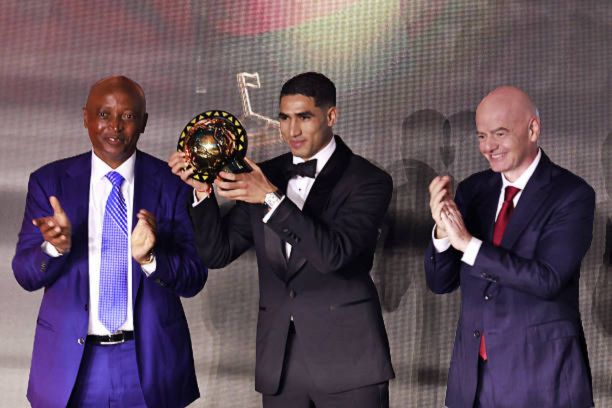
The history of African football is filled with extraordinary players who have entertained millions of fans, broken records, and inspired generations. From legendary strikers to commanding midfielders and exceptional goalkeepers, the continent has produced some of the greatest talents in world football. However, only a select group of players have earned the prestigious African footballer of the Year award more than once.
Winning the award is a remarkable achievement because it recognizes individual excellence, consistency, and influence at the highest level. Winning it repeatedly places a player among the true legends of African football history.
Over the years, celebrated names such as Samuel Eto’o, Yaya Touré, George Weah, Mohamed Salah, and Didier Drogba have earned their places among Africa’s footballing elite. Their achievements extend beyond individual trophies to domestic league titles, European competitions, international tournaments, and unforgettable performances for their countries.
But which players have won the award the most times? This article ranks the 11 players with multiple titles, examines their careers, and explains why they remain among the continent’s most respected sporting icons.
What Is the African Footballer of the Year Award?
The African Footballer of the Year award is one of the most prestigious individual honours available to a male footballer representing an African nation. It recognizes players who have demonstrated outstanding performances, consistency, and influence in club and international competitions.
The award was introduced in 1970 by the French magazine France Football. Mali’s Salif Keïta became the inaugural winner following his outstanding performances for Saint-Étienne in France. For more than two decades, France Football recognized leading stars, including Roger Milla, Thomas N’Kono, George Weah, and Abedi Pelé.
In 1992, the Confederation of African Football (CAF) established its own annual award. The two organizations operated overlapping awards for three years before France Football discontinued its African-specific honour after 1994. This historical distinction matters when comparing players from different generations.
For this ranking, each award-winning year is counted once, even if both bodies honoured a player in the same year. The comparison covers the broader historical award tradition, not solely CAF’s ceremony from 1992 onward.
Top 11 African Footballer of the Year Winners
- Samuel Eto’o
- Yaya Touré
- Abedi Pelé
- George Weah
- Mohamed Salah
- Sadio Mané
- Didier Drogba
- Nwankwo Kanu
- El Hadji Diouf
- Roger Milla
- Thomas N’Kono
11. Thomas N’Kono (1979 and 1982)
Thomas N’Kono is one of the most influential goalkeepers in African football history. At a time when individual awards were dominated by attacking players, he demonstrated that extraordinary performances between the posts deserved recognition.
N’Kono claimed his first African footballer of the Year honour in 1979 and won again in 1982, the year Cameroon appeared at its first FIFA World Cup. Cameroon finished unbeaten in the group stage, drawing with Peru, Poland, and eventual champions Italy. Although eliminated, the Indomitable Lions displayed impressive organization and resilience.
He possessed quick reflexes, physical strength, and the authority to organize defenders under pressure. At club level, he starred for Canon Yaoundé before moving to Espanyol in Spain. Italian goalkeeping legend Gianluigi Buffon has cited N’Kono as a childhood inspiration.
Why Thomas N’Kono Deserves Recognition
His two awards are especially noteworthy because goalkeepers seldom receive the individual attention enjoyed by strikers. N’Kono’s success helped establish Cameroon as an emerging international force and encouraged future generations of African goalkeepers.
10. Roger Milla (1976 and 1990)
Roger Milla remains one of football’s most recognizable figures because of his extraordinary performances at the 1990 FIFA World Cup, but his achievements began long before that tournament.
Milla first won the award in 1976, when his goalscoring instincts and attacking creativity established him among Africa’s best forwards. Fourteen years later, he claimed it again after one of the most memorable international performances of his career.
At 38, Milla scored four goals at Italia 1990 as Cameroon became the first African team to reach a World Cup quarter-final. His celebrations at the corner flag became iconic. Cameroon had shocked defending champions Argentina in the opening match, and Milla helped the side progress with decisive goals.
He also contributed to Cameroon’s victories at the African Cup of Nations in 1984 and 1988. In 1994, aged 42, he scored against Russia and became the oldest goalscorer in men’s World Cup history.
Roger Milla’s Lasting Influence
Few football players sustained such influence over nearly two decades. His awards, separated by 14 years, demonstrate exceptional longevity, while his World Cup achievements changed international perceptions of African national teams.
9. El Hadji Diouf (2001 and 2002)
El Hadji Diouf was among the continent’s most exciting attackers in the early 2000s, winning consecutive individual titles during Senegal’s rise on the international stage.
His performances for Lens in France drew admiration for their speed, dribbling, and creativity. Senegal reached the 2002 Africa Cup of Nations final, losing to Cameroon on penalties, before embarking on an extraordinary debut FIFA World Cup.
Senegal defeated defending champions France 1–0 in the opening game of the 2002 World Cup and eventually reached the quarter-finals. Diouf’s movement and willingness to challenge defenders made him central to their attacking approach.
After that tournament he moved to Liverpool and later played for Bolton Wanderers, Sunderland, Blackburn Rovers, and other clubs.
Why El Hadji Diouf Won Twice
His successive awards reflected both excellent club form and Senegal’s international breakthrough. Although his career was sometimes controversial, he remains a significant figure in the country’s football history.
8. Nwankwo Kanu (1996 and 1999)
Nwankwo Kanu is among Nigeria’s most celebrated footballers, famous for his creativity, remarkable close control, and trophies at the highest level. He won in 1996 and 1999.
Kanu rose to prominence at Ajax and formed part of the team that won the 1995 UEFA Champions League. Despite his height, he possessed the touch and imagination of a gifted playmaker.
His defining international moment came at the Atlanta Olympics in 1996, where Nigeria became the first African country to win men’s Olympic football gold. Against Brazil in the semi-final, Kanu scored a late equalizer and then a golden goal in extra time.
He later joined Arsenal and helped the club win Premier League titles and FA Cups, including participation in the famous unbeaten 2003–04 league campaign.
Kanu’s Place in African Football History
Kanu overcame a serious heart condition and established the Kanu Heart Foundation to assist children needing cardiac treatment. He represented Nigeria at the World Cup and AFCON and remains one of the nation’s most successful football exports.
7. Didier Drogba (2006 and 2009)
Didier Drogba is widely considered one of Africa’s greatest strikers. His combination of strength, intelligent movement, aerial ability, and clinical finishing made him a feared opponent throughout his Chelsea career.
Drogba won in 2006 and 2009, earning recognition for his performances in the Premier League and with Ivory Coast. He won numerous domestic trophies with Chelsea and developed a reputation for scoring crucial goals in major finals.
His outstanding club moment came in the 2012 Champions League final against Bayern Munich. He headed home a late equalizer and converted the decisive penalty as Chelsea captured its first European Cup.
Internationally, he led Ivory Coast to its first World Cup appearance in 2006 and helped his national team reach Africa Cup of Nations finals in 2006 and 2012, though he never won the tournament.
What Made Didier Drogba Special?
Drogba was exceptional at holding up the ball, finishing crosses, and influencing important matches. His humanitarian work and efforts to support peace in Ivory Coast also strengthened his standing beyond sport. Many football players scored prolifically, but few earned quite the same reputation as a big-game performer.
6. Sadio Mané (2019 and 2022)
Sadio Mané is one of Senegal’s most successful footballers and among the leading African attackers of the modern era. His two awards reflected outstanding performances for Liverpool and a defining international achievement.
After developing in France and excelling at Red Bull Salzburg and Southampton, Mané joined Liverpool, where he formed a prolific attacking partnership with Mohamed Salah and Roberto Firmino.
His pace, pressing, finishing, and intelligent movement helped Liverpool win the 2019 Champions League and 2019–20 Premier League. In the 2018–19 Premier League season, he shared the Golden Boot with Salah and Pierre-Emerick Aubameyang.
Mané’s most important international victory came at the 2021 Africa Cup of Nations, played in early 2022. Senegal defeated Egypt on penalties to claim its first continental title, with Mané scoring the decisive kick.
Sadio Mané’s Impact Beyond Football
Mané’s investment in healthcare, education, and community development in Bambali added to his influence. His combination of team success and individual excellence placed him among the most decorated African footballer of the Year winners.
5. Mohamed Salah (2017 and 2018)
Mohamed Salah is one of the most successful African forwards in modern European football. His consecutive awards in 2017 and 2018 followed an extraordinary start to his Liverpool career.
After spells at Basel, Chelsea, Fiorentina, and Roma, he signed for Liverpool in 2017. In the 2017–18 Premier League season, Salah scored 32 league goals, then a record for a 38-match season. His acceleration, movement, and left-footed finishing transformed Liverpool’s attack.
He helped the club win the 2019 Champions League and the 2019–20 Premier League, ending Liverpool’s 30-year wait for a league title.
Salah also became the central figure for Egypt’s national side. His crucial goals helped the country qualify for the 2018 World Cup after a 28-year absence, and he reached the Africa Cup of Nations final with Egypt in 2017 and 2021.
Why Mohamed Salah Is Among Africa’s Greatest
Salah has combined prolific goalscoring with remarkable consistency across multiple seasons. His influence extends throughout Egypt and the Arab world, and his career symbolizes the global standing of African football.
4. George Weah (1989, 1994 and 1995)
George Weah is a uniquely important name in African sporting history. He became the first African men’s Ballon d’Or winner in 1995, breaking a barrier in the recognition of world-class football talent.
Weah won the France Football African award in 1989 and 1994, and CAF’s award in 1995. After making his name under Arsène Wenger at Monaco, he excelled at Paris Saint-Germain and AC Milan.
His explosive pace, strength, and dribbling made him a formidable striker. In 1995, he won both the CAF honour and the Ballon d’Or after eligibility for the latter was opened beyond European players.
Weah produced many spectacular goals, including a remarkable solo run for Milan against Verona in 1996. Although Liberia never qualified for a World Cup during his international career, his club achievements brought global attention to African football.
George Weah’s Historic Achievement
His impact was greater than his goals alone: he changed perceptions about where elite talent could come from. After football, he entered politics and served as Liberia’s president from 2018 to 2024.
3. Abedi Pelé (1991, 1992 and 1993)
Abedi Ayew, known as Abedi Pelé, was among Africa’s most technically gifted midfielders. His three consecutive award-winning years made him one of the defining African players of the early 1990s.
His creativity, vision, close control, and ability to dictate attacking play were crucial to Marseille’s success. In 1993, Marseille defeated AC Milan in the Champions League final, with Abedi delivering the corner from which Basile Boli headed the decisive goal.
Abedi was also an important figure for Ghana. He belonged to the squad that won the 1982 Africa Cup of Nations and later helped Ghana reach the 1992 final, losing to Ivory Coast after an unusually long shootout.
His family’s football legacy continued through André Ayew and Jordan Ayew, who both became Ghana internationals.
Abedi Pelé’s Influence on Ghanaian Football
Abedi demonstrated that African midfielders could become the creative heartbeat of elite European teams. Although he never played at a World Cup, his continental and club achievements established an enduring legacy.
2. Yaya Touré (2011, 2012, 2013 and 2014)
Yaya Touré is among the most complete midfielders the continent has produced. He won four consecutive CAF Player of the Year awards between 2011 and 2014, a winning streak no other player has matched.
Touré starred at Barcelona, winning domestic titles and contributing to the club’s historic 2008–09 treble. He then joined Manchester City in 2010 and became central to the club’s rise as an English football powerhouse.
His blend of strength, ball-carrying, passing, defensive intelligence, and goalscoring was exceptional. In the 2013–14 Premier League season, he scored 20 league goals as City won the title.
Touré also represented Ivory Coast at major international tournaments and was part of the team that won the 2015 Africa Cup of Nations, a defining achievement for a gifted generation.
Yaya Touré’s International Achievements
Touré could control the midfield, transition quickly into attack, and deliver decisive goals. His four consecutive individual honours stand as evidence that midfield excellence could dominate a prize so often associated with forwards.
1. Samuel Eto’o (2003, 2004, 2005 and 2010)
Samuel Eto’o shares the record for the most CAF African Player of the Year awards, with four. He won in 2003, 2004, 2005 and 2010, building a reputation as one of the most lethal and successful forwards Africa has produced.
Eto’o made his name with Mallorca before joining Barcelona in 2004. His pace, off-the-ball movement, sharp finishing, and ability to score in decisive games became central to Barcelona’s success.
He scored an equalizer in the 2006 Champions League final against Arsenal and opened the scoring against Manchester United in the 2009 final. Barcelona won the continental title on both occasions and completed a historic treble in 2009.
Eto’o moved to Inter Milan, where he won Serie A, the Coppa Italia, and the Champions League in 2009–10. Playing under José Mourinho, he demonstrated tactical adaptability and a willingness to perform defensive duties for the team.
Internationally, Eto’o helped Cameroon win the Africa Cup of Nations in 2000 and 2002 and Olympic football gold in Sydney in 2000. He became his country’s leading goalscorer and remains the men’s Africa Cup of Nations record scorer with 18 goals.
Why Samuel Eto’o Ranks First
He shares the award record with Touré, but his major goals in European finals, consecutive trebles at different clubs, international honours, and long-term consistency make a persuasive case for placing him first in this editorial countdown.
Who Has Won the Most African Footballer of the Year Awards?
Samuel Eto’o and Yaya Touré jointly hold the CAF record with four wins each. Eto’o received the honour in 2003, 2004, 2005, and 2010, while Touré won every edition from 2011 through 2014.
Touré owns the record for four consecutive victories. Across the broader historical award tradition, George Weah and Abedi Pelé follow with three winning years each, while seven other players won twice.
Which African Country Has Produced the Most Multiple Winners?
Cameroon is represented by three players: Thomas N’Kono, Roger Milla, and Samuel Eto’o, who account for eight award-winning years. Ivory Coast has Didier Drogba and Yaya Touré, with six; Senegal has El Hadji Diouf and Sadio Mané, with four.
Nigeria, Ghana, Liberia, and Egypt each contribute one player to this particular list. These counts describe multiple winners only, not each nation’s total across every single-award winner.
Conclusion
The history of the African footballer of the Year award is filled with extraordinary achievements and players who reshaped the global perception of the continent’s football. Samuel Eto’o and Yaya Touré lead with four honours each, while George Weah and Abedi Pelé have three winning years.
Thomas N’Kono, Roger Milla, El Hadji Diouf, Nwankwo Kanu, Didier Drogba, Sadio Mané, and Mohamed Salah each earned two. Their achievements span generations and positions, showing how diverse the continent’s greatest footballing talents have been.
New stars may challenge these records in years ahead. For now, the 11 players on this list remain an enduring reminder of African football’s lasting impact on the global game.
Frequently Asked Questions
Question 1: Who has won the award the most times?
Ans: Samuel Eto’o and Yaya Touré share the CAF record with four titles each.
Question 2: How many times did Samuel Eto’o win?
Ans: Four: 2003, 2004, 2005, and 2010.
Question 3: How many did Yaya Touré win?
Ans: Four in succession, from 2011 to 2014.
Question 4: Has Mohamed Salah won?
Ans: Yes, in 2017 and 2018.
Question 5: How many times did Didier Drogba win?
Ans: Twice, in 2006 and 2009.
Image Credit: GettyImages
Read more here: History of African Footballer of the Year
Related Articles
Nigerian Jersey: Best 7 Kits of All Time!
Ranked! 5 Greatest Super Eagles Squads Ever
Top 11 Greatest Nigerian Goalkeepers of All Time!
What the Super Eagles’ Recent Friendlies Reveal About Their Defense