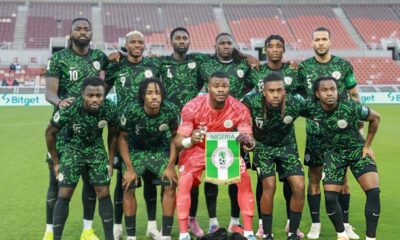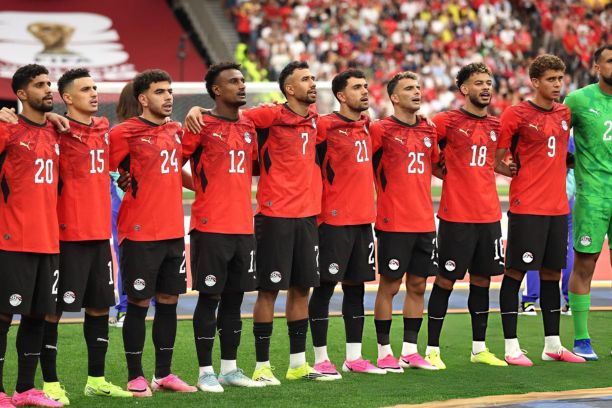
Africa has produced some of the most exciting football teams in international football, with countries such as Morocco, Senegal, Nigeria, Egypt, and Algeria consistently demonstrating their quality on the global stage.
From unforgettable FIFA World Cup performances to dramatic Africa Cup of Nations victories, the continent has developed a reputation for producing talented players, passionate supporters, and fiercely competitive national sides.
The latest FIFA ranking, released on October 7, 2026, provides a fascinating picture of the current hierarchy of African football. While traditional giants continue to dominate the upper positions, emerging contenders are challenging the established order and proving that success depends on much more than historical reputation.
These rankings offer a useful way to measure international performance, although they do not always tell the complete story. A country’s position reflects its results against international opponents, the importance of those matches, and the relative strength of the teams involved.
For football supporters, the rankings also raise interesting questions. Which African country currently has the strongest national side? Why does Morocco continue to dominate the continental standings? Can Nigeria recover from its recent decline, and which nations have the potential to challenge Senegal and Egypt?
In this article, we examine the seven highest-ranked African National teams, counting down from number seven to number one. We will discuss their histories, achievements, prominent players, playing styles, recent progress, and the challenges they must overcome to improve their international standing.
How Does the FIFA World Ranking Work?
Before examining the leading football teams in Africa, it is important to understand how FIFA determines the positions of international sides.
The FIFA Men’s World Ranking is a performance-based system that assesses national sides using results from recognized international matches. The current calculation system was introduced in August 2018 and replaced an earlier method that relied on averaging points over a specific period.
The newer system, called SUM, works by adding or subtracting points from a country’s existing total after eligible matches. It uses an Elo-based approach that considers several important factors, including the result of the game, the quality of the opposition, and the importance of the competition.
For example, defeating a highly ranked opponent in a competitive international fixture can provide a more significant ranking benefit than beating a much weaker country in a friendly. Similarly, losing to an opponent that a team is strongly expected to defeat can result in a notable deduction.
Matches at major international competitions also carry different weightings. World Cup fixtures, continental championship matches, qualifying games, and international friendlies do not necessarily have the same impact on ranking points.
This explains why countries can move up or down even when their overall performances appear reasonably consistent. Another nation’s results can change the order of the table, while the difference between two closely ranked sides may be only a handful of points.
The FIFA ranking is therefore a useful indicator of sustained international results rather than a guarantee of which team would win a particular match.
It also provides valuable context for international tournaments, where ranking positions can influence seeding arrangements and the composition of qualifying groups.
With that explanation in mind, here are Africa’s seven highest-ranked national sides as of October 2026.
National Football Teams: Top 7 Countries in Africa Ranked!
- Morocco (7th in the World)
- Senegal (18th in the World)
- Egypt (25th in the World)
- Algeria (28th in the World)
- Côte d’Ivoire (29th in the World)
- Nigeria (30th in the World)
- DR Congo (40th in the World)
7. DR Congo (40th in the World)
FIFA points: 1,506.37
The Democratic Republic of the Congo occupies seventh place among Africa’s highest-ranked football teams, with a global position of 40th. Known as the Leopards, DR Congo has a proud footballing history and is increasingly demonstrating its ability to compete with the continent’s established powers.
Although the country has experienced periods of inconsistency, its international pedigree should not be underestimated. DR Congo won the Africa Cup of Nations in 1968 and 1974, establishing itself as one of the continent’s successful early football nations.
The country also participated in the 1974 FIFA World Cup under its former name, Zaire. That appearance was historically significant because Zaire became the first sub-Saharan African nation to qualify for the tournament.
More than five decades later, DR Congo continues to work toward restoring its international reputation.
DR Congo’s Football History and Achievements
The Leopards have enjoyed several notable moments in African competition. Their two continental championships remain defining achievements, while strong performances in later Africa Cup of Nations tournaments demonstrate the country’s ability to develop competitive generations of players.
DR Congo finished third at the 2015 AFCON, an achievement that reminded supporters of the team’s potential.
However, one of its most important modern accomplishments came during qualification for the 2026 FIFA World Cup. After navigating the African qualification process, the Leopards defeated Cameroon in a continental playoff semifinal before overcoming Nigeria on penalties in the playoff final.
They subsequently secured a place at the 2026 World Cup through the intercontinental playoff tournament, marking a long-awaited return to football’s biggest competition.
The achievement demonstrated the team’s growing confidence in high-pressure encounters.
Key Players and Playing Style
DR Congo has benefited from players with experience in competitive European leagues and domestic African competitions.
Among the recognizable names associated with the national side are Yoane Wissa, Cédric Bakambu, Chancel Mbemba, and Arthur Masuaku. These players have contributed different qualities, from attacking movement and finishing to defensive leadership and international experience.
The team’s style often emphasizes physical strength, direct attacking transitions, and competitive midfield performances.
When the Leopards successfully combine defensive organization with quick attacking movement, they can create problems for opponents that enjoy greater possession.
The availability and fitness of key African players remain important factors in determining the team’s consistency.
6. Nigeria (30th in the World)
FIFA points: 1,567.97
Nigeria remains one of Africa’s most recognizable football teams, ranking sixth on the continent and 30th globally in the October 2026 standings.
The Super Eagles have built their reputation through memorable World Cup appearances, continental championship victories, and generations of talented attacking players.
Few African countries can match Nigeria’s combination of historical achievements, international visibility, and footballing potential.
However, the latest rankings also demonstrate that reputation alone cannot guarantee a high position.
Nigeria dropped four places globally, from 26th to 30th, in the October 2026 update. This followed a difficult international period in which inconsistent results undermined the team’s ranking points.
Nigeria’s Major Football Achievements
Nigeria has won the Africa Cup of Nations three times, lifting the trophy in 1980, 1994, and 2013.
The 1994 generation remains especially memorable. Featuring players such as Rashidi Yekini, Jay-Jay Okocha, Sunday Oliseh, and Emmanuel Amunike, the Super Eagles combined technical ability with attacking confidence.
That same year, Nigeria made its FIFA World Cup debut and reached the Round of 16.
The country repeated that achievement in 1998 and 2014, establishing itself as a regular competitor capable of challenging respected international opponents.
Nigeria also made history at the 1996 Atlanta Olympics, winning the men’s football gold medal after defeating Brazil in the semifinal and Argentina in the final.
Although Olympic football operates under different squad eligibility rules, that victory remains one of the most celebrated achievements in Nigerian football history.
More recently, the Super Eagles reached the final of the 2023 Africa Cup of Nations, which was played in early 2024, before losing to hosts Côte d’Ivoire.
Nigeria also finished third at AFCON 2025, demonstrating its continued ability to compete deep into major continental tournaments.
Nigeria’s Star Players
Nigeria has consistently produced outstanding football players who have competed in some of the world’s strongest leagues.
Victor Osimhen is among the country’s most prominent modern talents. Known for his pace, aerial ability, physical strength, and penalty-area movement, the striker represents a major attacking threat.
Ademola Lookman provides another important dimension through his creativity, dribbling ability, and capacity to score decisive goals.
Alex Iwobi offers technical quality and versatility, while Wilfred Ndidi has been an influential defensive midfield presence.
Nigeria also benefits from talented younger players looking to establish themselves at international level.
The challenge has rarely been a lack of individual ability. Instead, the Super Eagles must consistently translate that talent into coordinated team performances.
5. Côte d’Ivoire (29th in the World)
FIFA points: 1,569.32
Côte d’Ivoire, also known as Ivory Coast, ranks fifth among Africa’s leading football teams, occupying 29th place globally.
The Elephants have developed a reputation for combining physical strength, technical quality, and impressive attacking talent.
Their footballing identity has evolved across generations, but the country continues to demonstrate a strong ability to compete in major African competitions.
Côte d’Ivoire’s Continental Success
Côte d’Ivoire has won the Africa Cup of Nations three times, in 1992, 2015, and 2023.
Its most recent triumph was particularly dramatic.
As hosts of the 2023 AFCON, which took place in early 2024, the Elephants experienced a difficult group stage and appeared close to elimination.
However, they advanced to the knockout rounds and gradually transformed their campaign.
A series of determined performances culminated in a 2-1 victory over Nigeria in the final, securing a memorable championship on home soil.
The triumph highlighted the importance of resilience, squad depth, and collective belief.
It also strengthened Côte d’Ivoire’s reputation as one of the most successful modern African national sides.
Famous Players and the Current Generation
The country has produced some of the continent’s most celebrated stars, including Didier Drogba, Yaya Touré, Kolo Touré, and Gervinho.
Drogba, in particular, became an international symbol of Ivorian football through his goalscoring achievements and leadership.
Although that generation did not win the Africa Cup of Nations, its influence helped establish the country as a major footballing power.
The modern side features players such as Sébastien Haller, Franck Kessié, Simon Adingra, and Odilon Kossounou.
Haller offers a strong central attacking presence, while Kessié brings midfield experience and physical authority.
Adingra provides creativity and directness in advanced positions.
Together, these qualities give the Elephants several approaches to breaking down opposing defenses.
Strengths and Tactical Identity
Côte d’Ivoire’s greatest strengths include athleticism, midfield competitiveness, and the ability to create opportunities through wide attacking movements.
The team can operate effectively in matches where it dominates possession, but it is also capable of threatening opponents through counterattacks.
Its physical qualities make it particularly difficult to overcome in tightly contested international fixtures.
However, maintaining tactical balance is essential.
When fullbacks advance and attacking players commit forward, defensive spaces can emerge. Successful opponents may attempt to exploit those areas through rapid transitions.
Improving consistency against organized defensive teams could help the Elephants challenge the continent’s highest-ranked sides.
4. Algeria (28th in the World)
FIFA points: 1,574.77
Algeria occupies fourth place among the leading African football teams, ranking 28th globally.
Known as the Desert Foxes, Algeria has a distinguished history built around technical quality, strong midfield play, and tactical organization.
The country has produced memorable World Cup performances and earned recognition as one of North Africa’s most competitive football nations.
Algeria’s International Football History
Algeria has won the Africa Cup of Nations twice, in 1990 and 2019.
The 1990 victory was especially meaningful because the tournament was hosted in Algeria.
Nearly three decades later, the Desert Foxes returned to the summit of the continent with an impressive campaign in Egypt.
Their 2019 AFCON triumph featured disciplined defensive displays and dangerous attacking performances.
Algeria defeated Senegal 1-0 in the final, securing its second continental championship.
The country has also represented Africa at several FIFA World Cup tournaments.
Its 1982 campaign included a famous victory over West Germany, while the 2014 tournament saw Algeria advance to the Round of 16.
In Brazil, the Desert Foxes pushed eventual champions Germany into extra time before losing 2-1.
That performance remains an important example of Algeria’s ability to compete against elite international opposition.
Key Players and Attacking Quality
Algeria’s footballing reputation has been shaped by skillful attackers and technically gifted midfielders.
Riyad Mahrez is one of the most prominent figures in the country’s modern history.
His creativity, close control, and ability to deliver decisive moments have made him an influential player for club and country.
Other notable figures include Ismaël Bennacer, Houssem Aouar, and Baghdad Bounedjah.
The team’s attacking structure often depends on the movement of its creative midfielders and the ability of wide players to generate opportunities.
Algeria is also capable of controlling possession and dictating the rhythm of matches when its midfield operates effectively.
3. Egypt (25th in the World)
FIFA points: 1,585.86
Egypt is third among Africa’s highest-ranked football teams, holding 25th position globally.
The Pharaohs are widely regarded as one of the most historically successful national sides on the continent.
Their record in African competitions is exceptional, and their ability to remain competitive across different generations has helped sustain their reputation.
Egypt’s Unmatched AFCON Record
Egypt has won the Africa Cup of Nations a record seven times.
Its titles came in 1957, 1959, 1986, 1998, 2006, 2008, and 2010.
The country’s three consecutive victories between 2006 and 2010 represent one of the most impressive achievements in the competition’s history.
During that period, Egypt featured influential players such as Mohamed Aboutrika, Ahmed Hassan, Essam El-Hadary, and Mohamed Zidan.
The team combined intelligent possession, disciplined defending, and effective attacking movement.
Although Egypt has not added another AFCON title since 2010, it has remained a difficult opponent at continental tournaments.
The Pharaohs reached the finals in 2017 and 2021, underlining their ability to compete for major honours.
Egypt’s World Cup history is more limited than its African record, but the country has made several appearances on football’s biggest international stage.
Mohamed Salah and Egypt’s Modern Identity
Mohamed Salah is undoubtedly one of the most influential Egyptian players of the modern era.
His remarkable club career has made him one of Africa’s most recognizable sporting figures.
For Egypt, Salah provides exceptional attacking intelligence, acceleration, finishing ability, and leadership.
His presence can force opponents to adjust their defensive structure, creating opportunities for teammates.
Omar Marmoush represents another exciting attacking option, providing mobility, versatility, and the ability to threaten defensive lines.
Egypt also relies on midfield organization, defensive discipline, and experienced international performers.
While Salah remains a central figure, Egypt’s long-term success depends on building a balanced squad capable of performing even when its biggest star is unavailable or closely marked.
Egypt’s Tactical Approach
Egypt often emphasizes defensive organization and controlled attacking transitions.
Unlike sides that rely heavily on sustained attacking pressure, the Pharaohs can be comfortable allowing opponents possession before attempting to exploit spaces.
This approach has contributed to strong tournament performances, particularly in knockout fixtures where defensive concentration is crucial.
However, a cautious tactical structure can sometimes limit attacking opportunities.
When Egypt falls behind against opponents that defend deeply, it may struggle to create enough clear chances.
Greater attacking variety could make the team more difficult to predict.
2. Senegal (18th in the World)
FIFA points: 1,648.84
Senegal occupies second place among Africa’s leading football teams, ranking 18th in the world.
The Lions of Teranga have established themselves as one of the most competitive international sides produced by the continent.
Their rise has been built on a combination of outstanding individual talent, tactical discipline, strong defensive organization, and an increasingly successful tournament record.
Senegal’s Rise to Continental Prominence
Senegal first captured worldwide attention during the 2002 FIFA World Cup.
Making its tournament debut, the country defeated defending champions France 1-0 in the opening match.
That historic result immediately established Senegal as one of the competition’s most exciting teams.
The Lions of Teranga subsequently reached the quarterfinals, demonstrating their ability to compete with established international powers.
Senegal returned to prominence in later generations, gradually building a stronger and more consistent international identity.
Its first Africa Cup of Nations championship came in 2021, when the Lions defeated Egypt on penalties in the final played in February 2022.
That victory ended a long wait for continental honours.
Senegal added another AFCON title at the 2025 tournament, defeating Morocco 1-0 after extra time in the January 2026 final.
Winning against the tournament hosts further strengthened Senegal’s reputation as a major continental power.
Senegal’s Most Influential Players
Sadio Mané has played a central role in Senegal’s modern achievements.
His pace, movement, creativity, and ability to perform in decisive matches have made him one of the country’s most important attacking figures.
Mané’s influence extends beyond individual statistics. His international experience and leadership have helped establish higher expectations within the squad.
Kalidou Koulibaly has also been a significant figure, providing defensive strength and leadership.
Goalkeeper Édouard Mendy has contributed valuable experience, while Idrissa Gueye has been important in midfield.
A newer generation, including players such as Pape Matar Sarr, Nicolas Jackson, and Iliman Ndiaye, offers further opportunities for development.
Senegal’s strength lies not only in recognizable individuals but also in its ability to function as a coordinated unit.
Tactical Strengths and Competitive Mentality
Senegal combines physical strength with tactical awareness.
Its defensive structure is often compact, making it difficult for opponents to find space in dangerous areas.
The Lions can also transition quickly from defending to attacking, using the speed and movement of their forward players.
Midfield intensity is another important feature.
Senegal’s players are generally comfortable contesting physical encounters while maintaining the technical quality required at international level.
Perhaps the team’s greatest advantage is its competitive mentality.
Recent success in major tournaments has provided experience in managing difficult matches, handling pressure, and finding solutions when performances are not entirely convincing.
These qualities are particularly important during knockout competitions.
1. Morocco (7th in the World)
FIFA points: 1,805.34
Morocco is currently the highest-ranked nation among Africa’s football teams, occupying seventh place globally.
The Atlas Lions have become a symbol of Africa’s growing competitiveness in international football.
Their remarkable progress has been built on investment in player development, tactical organization, international experience, and the emergence of a talented generation capable of challenging elite opposition.
Morocco’s Historic World Cup Performances
Morocco’s most celebrated modern achievement came at the 2022 FIFA World Cup in Qatar.
The Atlas Lions became the first African country to reach a men’s World Cup semifinal.
Their remarkable campaign included victories over Belgium, Spain, and Portugal.
Those performances attracted worldwide attention and demonstrated that an African side could compete successfully with some of football’s most established nations.
Morocco’s achievement was particularly impressive because it combined defensive discipline with confidence in possession and dangerous counterattacking play.
The team did not depend solely on individual inspiration.
Instead, its success came from a clear tactical identity and outstanding collective organization.
Morocco continued demonstrating its international quality at the 2026 FIFA World Cup.
The Atlas Lions reached the quarterfinals after progressing through a challenging tournament that included a draw against Brazil, a penalty-shootout victory over the Netherlands, and a convincing win over Canada.
Although France eventually ended Morocco’s campaign, another deep tournament run reinforced the country’s position among the world’s strongest national sides.
Why Morocco Is So Difficult to Beat
Morocco’s tactical organization has been one of the defining features of its rise.
The Atlas Lions are comfortable defending in a compact structure, limiting space between midfield and defense.
They also possess the technical ability to move the ball efficiently and create opportunities through wide areas.
Hakimi’s attacking runs are particularly important because they can stretch opposing defenses and create additional passing options.
Morocco’s midfield contributes defensive protection while supporting transitions into attack.
The team’s tactical flexibility allows it to compete in different types of matches.
Against opponents that dominate possession, Morocco can defend patiently and counterattack.
Against less aggressive opponents, the Atlas Lions can take greater responsibility for controlling the game.
This adaptability has helped Morocco achieve results against countries with different playing philosophies.
Investment in Football Development
Morocco’s rise is also connected to broader investment in its footballing infrastructure.
The country has placed considerable emphasis on training facilities, coaching development, talent identification, and the integration of eligible players based abroad.
Its football development system has created opportunities for young talent while strengthening the country’s ability to compete internationally.
The Mohammed VI Football Academy has become an important example of that investment.
Rather than relying exclusively on short-term results, Morocco has worked to build structures that can support multiple generations.
Continued investment will be essential if the country hopes to sustain its current position.
Why Morocco Leads Africa
Morocco’s 1,805.34 ranking points place it comfortably ahead of Senegal and the rest of the continent.
The Atlas Lions were ranked fifth globally in September 2026 before slipping to seventh in the October update.
Despite that decline, Morocco remains ahead of major European and South American football nations.
Its position reflects years of consistent international progress, strong World Cup performances, and competitive results in African football.
Morocco’s challenge is now to maintain that standard rather than merely celebrate reaching it.
The country’s international reputation has created higher expectations, and opponents increasingly approach matches against the Atlas Lions with greater preparation.
If Morocco continues developing talent and delivering consistent results, it could remain Africa’s highest-ranked side for years.
Why FIFA Rankings Matter to African Football
Rankings influence how international football teams are perceived, but their importance extends beyond reputation.
A strong global position can improve a country’s chances of receiving favourable seeding in competitions where FIFA rankings are used to determine tournament pots.
This may affect the level of opposition encountered during qualifying competitions or tournament group stages.
Higher rankings can also attract greater international attention.
Countries performing consistently against respected opponents often receive increased media coverage and recognition.
That visibility may help strengthen commercial partnerships and international football development opportunities, although rankings alone do not guarantee those benefits.
For supporters, rankings provide a useful comparison between countries that rarely face one another.
They also create additional interest ahead of major international competitions.
However, rankings should be interpreted carefully.
A country positioned below another can still win a direct encounter, particularly in a single knockout match where tactical decisions, injuries, and individual performances can influence the outcome.
Senegal’s 2025 AFCON final victory over Morocco offers an important reminder that tournament results and global ranking positions measure different aspects of success.
The Future of Africa’s International Football Rankings
The future of the continent’s leading football teams will depend on how effectively they respond to increasing competition.
Morocco currently enjoys a substantial advantage, but sustained success is difficult in international football.
Injuries, squad transitions, coaching changes, and unexpected results can influence a country’s performance.
Senegal will aim to convert its continental achievements into further international progress.
Egypt and Algeria will seek greater consistency as they attempt to challenge the countries above them.
Côte d’Ivoire and Nigeria remain close enough in points that one international window could alter their positions.
DR Congo, meanwhile, has an opportunity to build on its recent progress and challenge the established order.
Greater investment in academies, domestic leagues, coaching education, and youth development could make the continent even more competitive.
If countries continue improving their development structures and giving younger players opportunities, the depth of talent across the region should increase.
That would benefit individual national sides and strengthen Africa’s presence at major international competitions.
Conclusion
The latest FIFA standings highlight the impressive quality and growing competitiveness of football teams across Africa.
Morocco leads the continent through its consistent international performances and historic World Cup achievements, while Senegal continues to demonstrate the value of tactical discipline and championship experience.
Egypt, Algeria, Côte d’Ivoire, and Nigeria remain major continental powers, with the ability to compete against respected international opposition. DR Congo’s progress also demonstrates that the gap between established nations and ambitious challengers is narrowing.
However, football rankings are never permanent. Every international window creates new opportunities for countries to improve their positions or lose ground.
As African nations continue investing in youth development, coaching, infrastructure, and competitive opportunities, the continent is well positioned to produce even more memorable achievements on the global stage.
For supporters, the most exciting prospect is that Africa’s footballing hierarchy will continue evolving, with talented generations competing to establish their countries among the world’s elite.
Read more here: Africa’s 10 FIFA World Cup Teams
Image Credit: GettyImages
Frequently Asked Questions
1. Which African country is number one in the latest FIFA rankings?
Ans: Morocco is Africa’s highest-ranked men’s national side as of October 7, 2026. The Atlas Lions occupy seventh position globally with 1,805.34 points, ahead of Senegal, Egypt, Algeria, Côte d’Ivoire, Nigeria, and DR Congo.
2. Which African country has won the most AFCON titles?
Ans: Egypt holds the record for the most Africa Cup of Nations titles, with seven championships. The Pharaohs won in 1957, 1959, 1986, 1998, 2006, 2008, and 2010.
3. Is Nigeria among Africa’s top five national sides?
Ans: Nigeria is currently sixth in Africa and 30th globally according to the October 2026 rankings. The Super Eagles remain one of the continent’s historically successful nations, but recent results have affected their position.
4. Which African team has achieved the best men’s World Cup finish?
Ans: Morocco holds the record for Africa’s best finish at the men’s FIFA World Cup after reaching the semifinals in 2022. The Atlas Lions became the first African nation to reach that stage of the competition.
5. How often does FIFA update its men’s world rankings?
Ans: FIFA publishes official ranking updates periodically, generally following designated international match windows. The rankings are not necessarily updated after every individual match. The next official men’s ranking update following October 7, 2026, is scheduled for November 18, 2026.
Related Articles
Nigerian Jersey: Best 7 Kits of All Time!
Ranked! 5 Greatest Super Eagles Squads Ever
Top 11 Greatest Nigerian Goalkeepers of All Time!
What the Super Eagles’ Recent Friendlies Reveal About Their Defense